


French Empire Tazza Pair
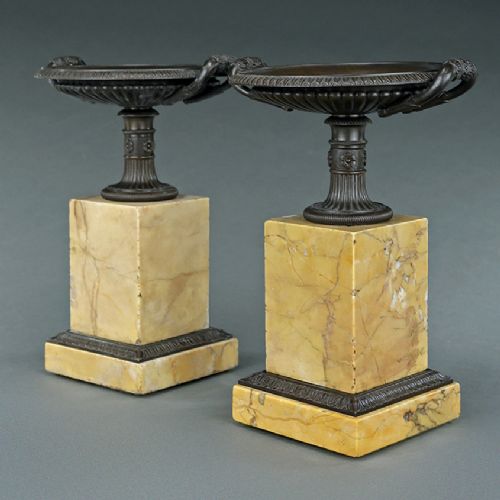
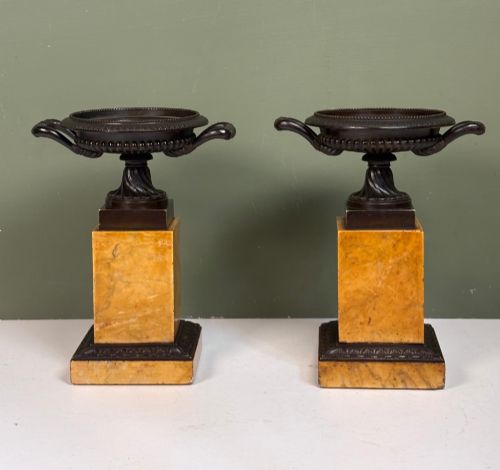
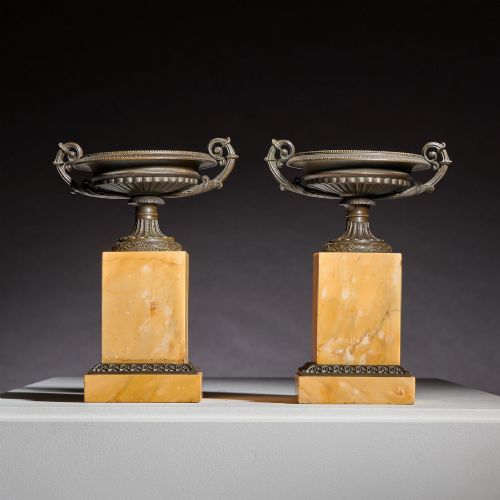
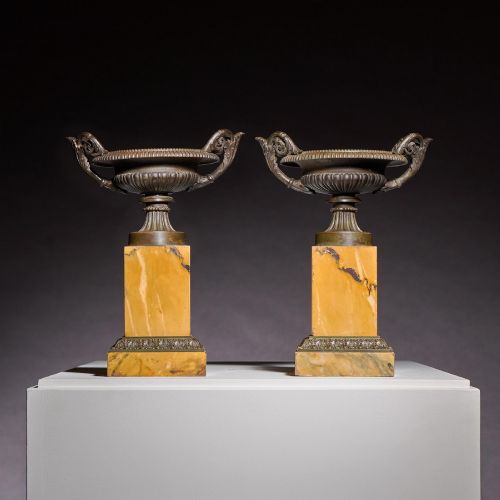
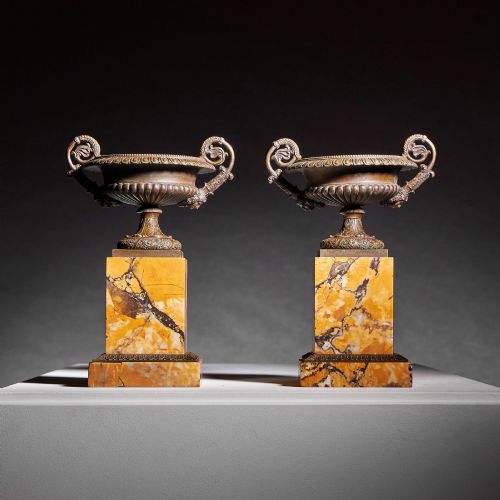
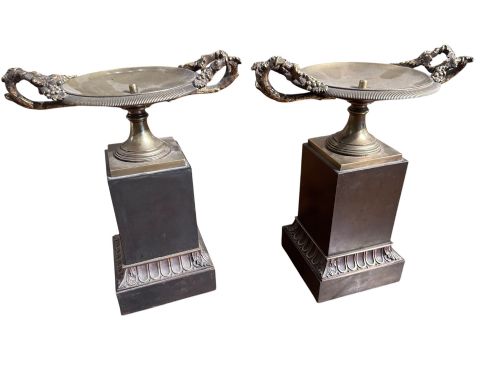
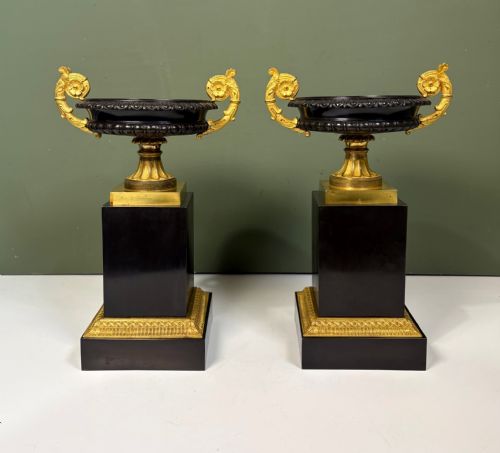
A french empire tazza pair brings classical symmetry and rich patinated metal to a room, combining architectural marble bases with cast bronze bowls.
French Empire Tazza Pair
When you search for a french empire tazza pair, you encounter decorative pedestal vessels created primarily during the nineteenth century in styles that echo neoclassical antiquity. These twin objects often combine shallow circular bronze bowls with substantial marble plinths, reflecting the grand tour aesthetic popular across European drawing rooms.
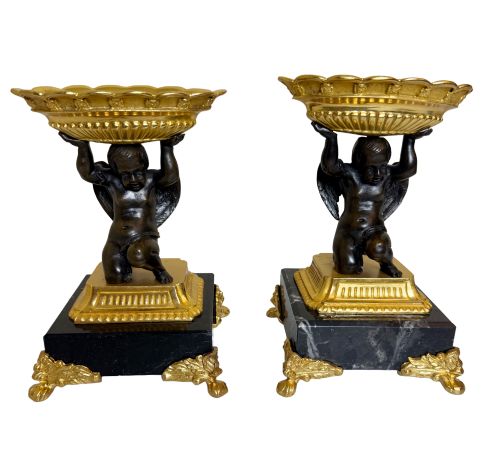
The versions most commonly met on this page span the early nineteenth century and the regency period, frequently pairing patinated or gilt bronze with Siena, black, or red marble. Makers utilised these classical proportions to anchor mantelpieces, side tables, and libraries with balanced decorative symmetry.
Evaluating quality and execution
The distinction between tiers rests upon the crispness of the bronze chasing and the selection of the marble base. Superior examples display sharply defined cast ornament and deeply chased foliage, whereas lesser pieces show softer, blurred contours from worn moulds.
Materials also dictate the standing of a piece, with richly figured Siena or rouge marble and heavy fire gilding marking out the finer workshops. The weight of the metal and the precision of the fit between the stone and the bronze reveal the original ambition of the maker.
Listings feature nineteenth-century forms in bronze, ormolu, and Siena marble, reflecting neoclassical and regency design.
The French Empire Tazza Pair Glossary
- Tazza
- A shallow cup or bowl mounted on a stem and foot, used historically for display or serving. These decorative objects draw inspiration from classical Roman drinking vessels.
- Ormolu
- Gilded bronze produced by applying a mercury and gold amalgam to a bronze base and heating it. This technique yields a durable, deep golden surface.
- Patinated Bronze
- Bronze treated with chemicals or heat to alter its surface colour to a dark brown or green tone. This finish protects the metal and defines sculptural details.
- Siena Marble
- A yellow ornamental limestone quarried in Italy, featuring dark grey or purple veining. It appears frequently on grand tour pieces from the nineteenth century.
- Grand Tour
- A traditional trip through Europe undertaken by upper-class young men to study art and antiquities. The souvenirs they collected included bronze and marble tazzas.
French Empire Tazza Pair: Frequently Asked Questions
What is a french empire tazza pair used for?
These decorative objects serve as architectural centrepieces on mantelpieces, side tables, and bookcases. Their balanced proportions bring symmetry to interior displays.
Historically, they evolved from ancient serving vessels into purely ornamental display pieces. Collectors place them in rooms where their classical lines complement traditional or eclectic furniture.
How do you date a nineteenth century tazza pair?
Dating relies on examining the casting quality of the bronze, the type of marble used, and the style of the mounts. Early examples often show sharper chasing and heavier proportions.
Period markers also include the specific shade of ormolu and the turning of the marble plinths. Pieces linked to the regency or grand tour eras typically display distinct neoclassical motifs.
What materials make up these tazzas?
The primary structural materials are cast bronze and turned natural marble. Founders used both patinated and gilt bronze for the bowls and decorative mounts.
Bases frequently feature Siena marble, black marble, or red marble with distinct veining. Some examples also incorporate silvered bronze highlights to contrast with the darker metal.
How should you care for bronze and marble tazzas?
Maintenance requires gentle dusting with a soft, dry cloth to prevent dirt accumulation on the patinated or gilt surfaces. Avoid chemical cleaners that can strip the historic finish from the bronze.
Marble bases need protection from moisture and acidic substances which can etch the polished stone. Placing the objects away from direct heat sources helps preserve the stability of the joined materials.