


Regency Marble Urns
Regency marble urns bring classic neoclassical authority into a room, pairing cold stone with warm cast metal mounts.
Regency Marble Urns
When you search for regency marble urns, you encounter decorative vessels, tazzas, and mounted vases drawn from nineteenth-century neoclassical design. These objects frequently combine turned stone bodies with cast metal mounts, serving as focal points on pedestals or tabletops.
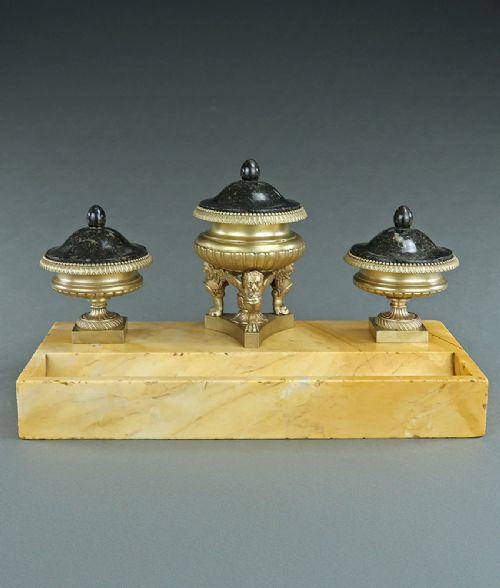
The pieces on this page span the nineteenth century, including Georgian, Regency, and William IV eras, alongside later revivals. Alongside traditional decorative urns, the selection incorporates related functional forms such as inkwells, plant stands, and lamp bases.
How they were made
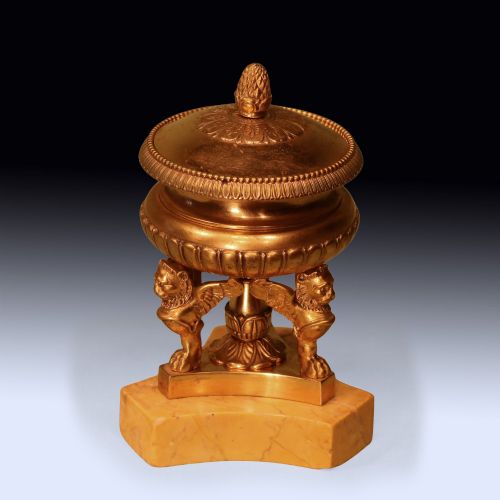
Craftsmen shaped dense materials like Sienna marble, alabaster, and faux marble on lathes, pairing the turned stone with cast bronze, gilt bronze, and ormolu mounts. The metal components were often chased and parcel gilt to create sharp contrast against the polished mineral surfaces.
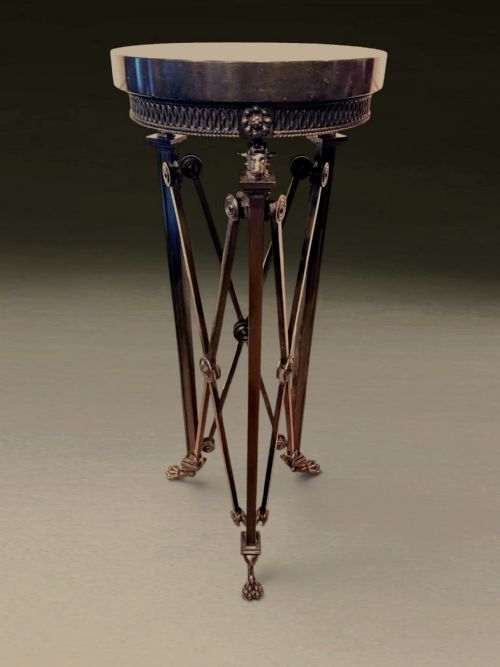
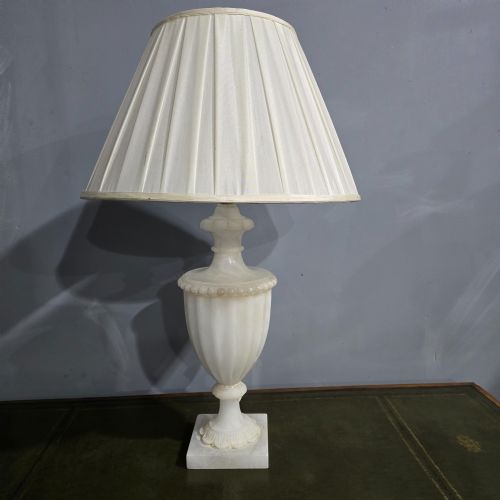
Structural elements frequently integrate secondary timbers such as walnut, mahogany, and rosewood, particularly in stands and pedestals designed to elevate the stone vessels. Fabric components also appear where lampshades are fitted to converted urns.
Sir Walter Scott and Robert Burns once stood in bronze on marble, watching over nineteenth-century studies.
What varies in quality
Quality in these pieces rests upon the crispness of the bronze chasing and the select grain of the marble or alabaster used for the vessel body. Superior examples demonstrate precise turning with tight joints between the stone and metal mounts.
The weight and finish of the ormolu or gilt bronze distinguish finer items, alongside the architectural proportion of the overall composition whether executed as a standalone urn or mounted upon a pedestal stand.
The Regency Marble Urns Glossary
- Sienna marble
- A yellow-brown Italian marble featuring dark veining, frequently utilised in neoclassical decorative objects. It provides a rich warm ground for bronze mounts.
- Ormolu
- Gilded bronze produced through a mercury amalgamation technique on cast metal. This finish yields a deep golden lustre characteristic of Regency metalwork.
- Tazza
- A shallow bowl or cup raised on a stem and foot, often fashioned in stone and bronze. These classical forms served primarily decorative functions in period interiors.
- Encrier
- A portable inkstand or inkwell desk accessory, sometimes executed in marble with bronze fittings. They combine utilitarian ink reservoirs with classical decorative design.
- Athenienne
- A tripod stand supporting a basin or urn, derived from antique furniture excavated at Pompeii and Herculaneum. This form became central to French Empire and Regency interiors.
Regency Marble Urns: Frequently Asked Questions
Are these urns solid marble?
Many urns feature turned solid marble or alabaster bodies, sometimes paired with marble bases supporting cast bronze elements.
Other pieces utilise faux marble finishes over alternative substrates while retaining the classical neoclassical silhouette.
How were these urns used originally?
Period urns served as purely decorative ornaments placed on mantelpieces, side tables, or dedicated pedestals to display classical taste.
Variations like jardiniere stands and wine cisterns held plants or chilled bottles during formal dining.
How do I identify Regency pieces?
Regency items typically display strict neoclassical proportions, drawing inspiration from Greek and Roman antiquities through bronze and marble combinations.
They often incorporate motifs such as paw feet, foliate handles, and stepped plinths characteristic of early nineteenth-century design.
Can I use these as table lamps?
Several urns and classical vases have been adapted to electricity over time, featuring fitted hardware for lighting.
These converted pieces retain their original nineteenth-century stone and bronze bodies while functioning as practical lamps.