
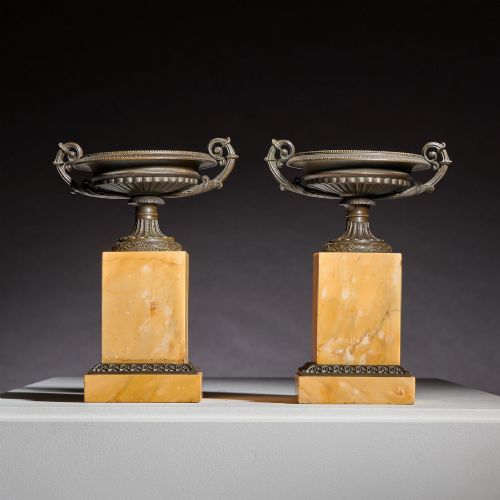
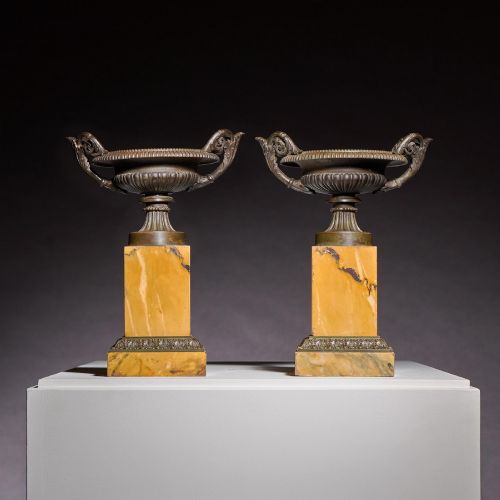

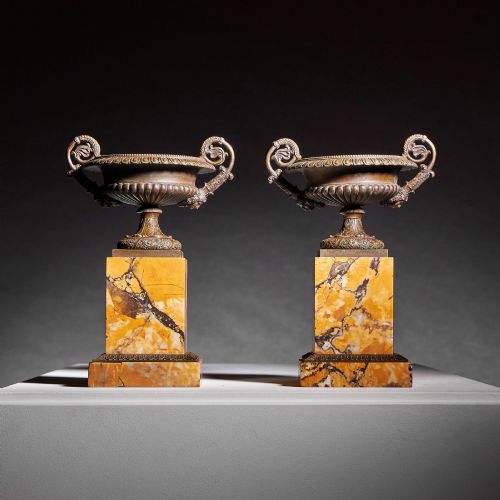
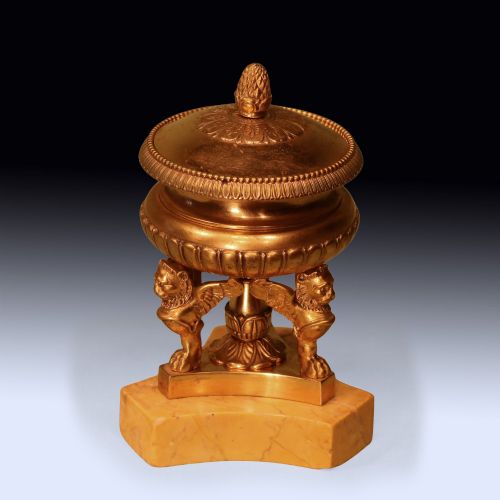


Yellow Marble Bronze Urns
Yellow marble bronze urns bring classical gravity into a room, combining warm stone with dark cast metal.
Yellow Marble Bronze Urns
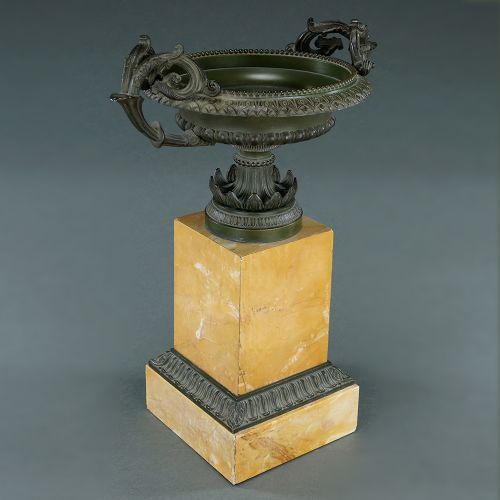
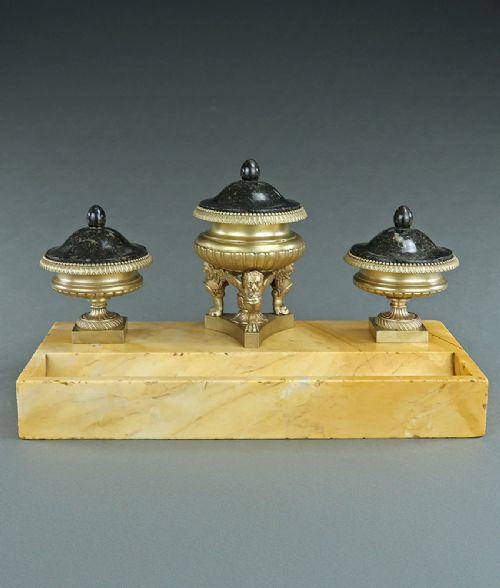
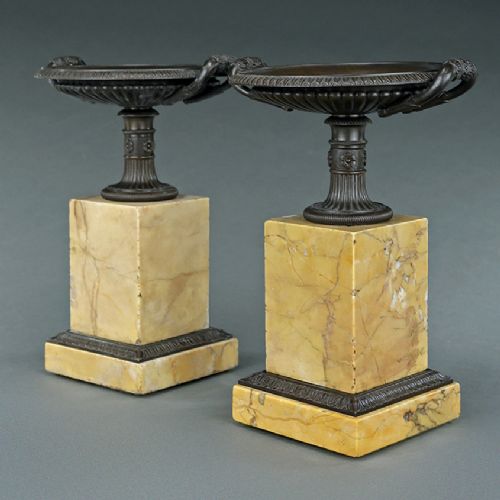
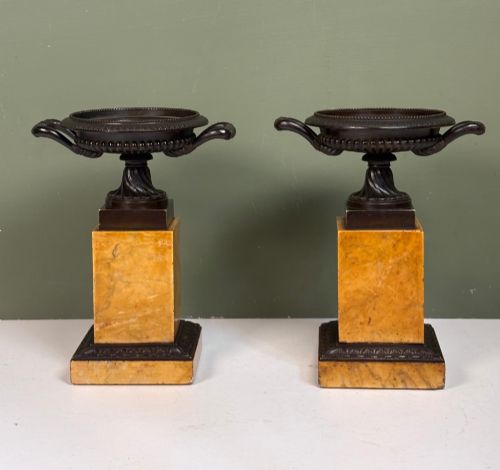
Yellow marble bronze urns group together decorative pieces created across the nineteenth century, including the Regency, Charles X, and French Empire periods. When you search this phrase, you find not only formal urns and cassolettes, but also tazzas, inkstands, mantel clocks, and candlesticks that unite the same heavy materials.
The objects on this page lean heavily toward French Neoclassical and Grand Tour designs, often produced as paired decorative ornaments for mantelpieces or side tables. Sienna marble forms the golden-yellow stone foundation, paired with patinated bronze, gilt bronze, or ormolu mounts.
Materials and construction methods
The makers of these pieces turned and polished Sienna marble to provide a rich, veined yellow base, contrasting sharply with the cast metal elements. Bronze components were shaped through traditional casting, often receiving either a dark patination or a fine layer of fire gilding known as ormolu.
Assembly relied on threaded rods and precise joinery to secure heavy stone plinths to metal bases, handles, and collars. The union of stone and cast metal required exact tolerances to ensure the pieces stood level and rigid.
Grand Tour travellers hauled heavy Italian marble home across rough roads, proving that an appreciation for ancient style beats travel comfort every time.
What separates the finest examples
Quality rests in the crispness of the bronze chasing and the depth of colour within the Sienna marble. Superior examples display sharp, hand-finished details in the foliate mounts and animal paw feet, whereas lesser pieces rely on softer, mold-worn castings.
The selection of the marble itself marks the distinction between standard production and exceptional commissions. Stones with lively, uninterrupted veining and high-polish finishes elevate the entire object.
The Yellow Marble Bronze Urns Glossary
- Sienna marble
- A decorative yellow limestone quarried in Italy, known for its deep golden tone and dark purple-grey veining. It was a favourite material for Grand Tour souvenirs and Regency mantel ornaments.
- Ormolu
- Finely chopped gold amalgamated with mercury and applied to bronze through heat, creating a durable golden surface. This technique was widely employed in French Empire workshops.
- Cassolette
- A dual-purpose decorative vase featuring a reversible lid that transforms the vessel from an urn into a burner. They appear frequently in nineteenth-century French interiors.
- Patinated bronze
- Metal treated with chemical solutions to produce a controlled dark surface colour. This finish highlights bright gilt mounts and yellow marble bases.
Yellow Marble Bronze Urns: Frequently Asked Questions
Were these urns used for ashes?
Despite the traditional shape, nineteenth-century decorative urns and cassolettes were purely ornamental objects. They stood on mantelpieces, consoles, and pedestals to display wealth and classical taste.
Many designs incorporate removable lids or inner wells, though these typically functioned to hold potpourri rather than serving a funerary purpose.
How do I identify a Regency piece?
Regency and French Empire pieces share a strong neoclassical vocabulary, but English Regency works often display slightly more restrained, austere lines. Look for cast brass or bronze paw feet, classical handles, and strict symmetrical proportions.
French equivalents from the same decades tend to employ richer ormolu mounts and more flamboyant figural details.
Is Sienna marble always yellow?
Sienna marble ranges from a bright, buttery yellow to deep ochre, heavily veined with dramatic purples, greys, and blacks. The intensity of the yellow ground depends on the specific block quarried in Italy.
Over time, exposure to light and wax polishing deepens the warmth of the stone surface.
Where should I place these in a room?
Because these pieces are heavy and visually striking, they demand stable surfaces like marble-topped console tables, heavy timber sideboards, or central mantelpieces. Their contrasting yellow and dark bronze tones work well against muted wall colours that allow the stone to stand out.
Keep them away from direct heat sources and strong sunlight, which can dry out old marble polishes and alter patinated finishes.