
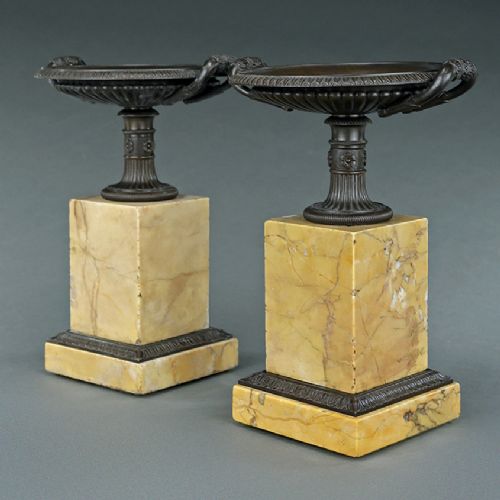
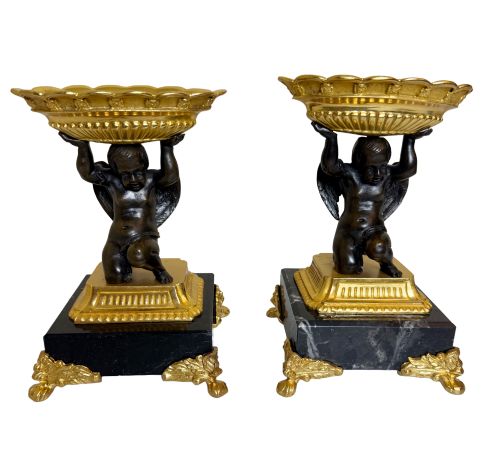
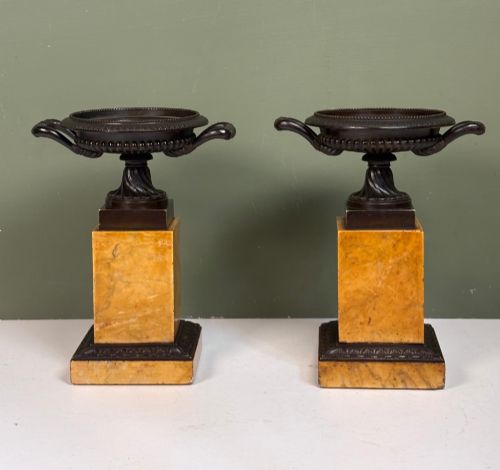
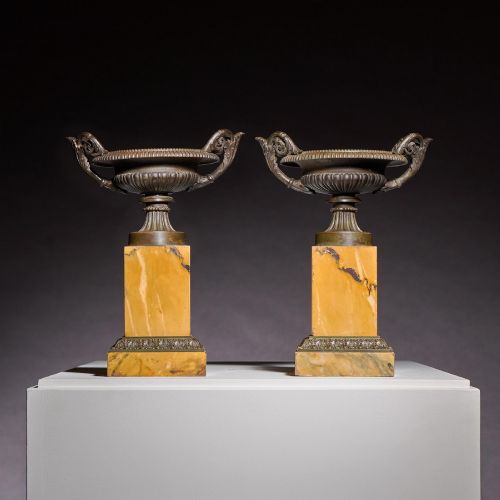


Bronze Compote Pair
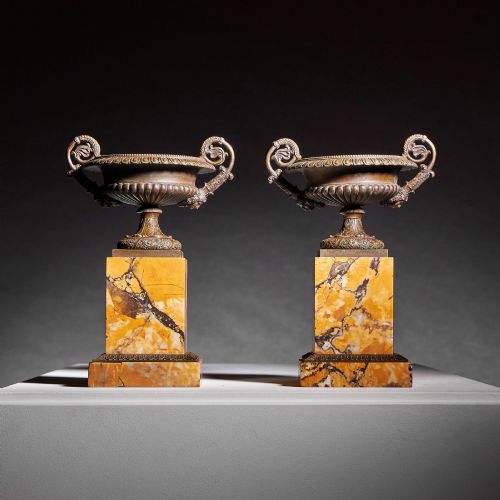
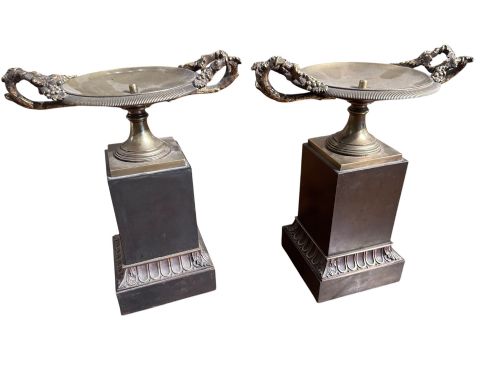
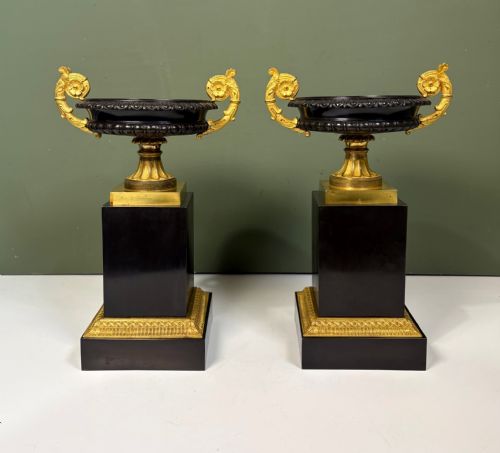
These bronze compote pair selections bring neoclassical formality and grand proportions to a room, offering striking centrepieces formed from heavy metal and carved stone.
Bronze Compote Pair
When you search for a bronze compote pair, you encounter decorative vessels designed for display, often taking the form of tazzas, urns, or comports from the nineteenth century. These objects function primarily as ornamental centrepieces rather than utilitarian tableware.
The versions most frequently met on this page combine cast bronze with contrasting elements like marble bases or mother-of-pearl dishes. French Empire, Regency, and Neoclassical styles dominate the selections available.
Originating largely from French workshops and Grand Tour souvenirs, these twin vessels frequently incorporate patinated bronze alongside gilt details. Collectors also find examples drawing on Chinese cloisonne enamel or Paris porcelain.
What varies in quality
The refinement of the cast ornament separates standard productions from exceptional works, visible in the crispness of acanthus leaves and classical motifs. Superior examples maintain tighter joinery between heavy marble bases and metal mounts.
Material selection dictates the upper tier of the range, particularly dense marbles with rich veining paired with heavy, finely chased bronze or fire-gilt ormolu rather than lighter base metals.
Materials documented across the inventory include bronze, ormolu, gilt bronze, patinated bronze, Siena marble, red marble, black marble, and mother-of-pearl.
The Bronze Compote Pair Glossary
- Compote
- A raised bowl or dish used for serving fruit or sweets, though antique decorative versions served strictly as ornamental centerpieces. They often feature shallow basins supported by distinct pedestals.
- Tazza
- A shallow saucer-shaped vessel mounted on a stem and foot, frequently employed interchangeably with compote in nineteenth-century descriptions. These items originated as ancient drinking vessels before evolving into display pieces.
- Ormolu
- Finely ground high-carat gold mercury-gilded onto a bronze object. This technique imparts a rich, durable metallic golden lustre common in French Empire and Regency decorative arts.
- Grand Tour
- A cultural trip undertaken by wealthy young Europeans in the eighteenth and nineteenth centuries to study classical antiquities. Tourists frequently purchased bronze and marble artefacts as portable souvenirs.
- Patinated bronze
- Metal treated chemically or exposed to natural elements to produce a controlled surface finish, ranging from deep brown to near black. This treatment highlights sculptural contours while preventing active oxidation.
Bronze Compote Pair: Frequently Asked Questions
What is a bronze compote pair used for?
These twin vessels serve primarily as formal decorative objects placed on sideboards, mantelpieces, or central tables. Historically, similar pieces held fruit or sweetmeats during dining, though antique examples function mostly as sculptural display items.
Their substantial weight and classical proportions allow them to anchor a room's decorative scheme. Collectors typically display them symmetrically on either side of a mirror or urn.
How do I identify Regency pieces?
Regency items often display restrained classical motifs, drawing heavily on ancient Roman, Greek, or Egyptian design vocabulary. You will frequently note darker patinated bronze paired with bright ormolu mounts and architectural marble bases.
Such pieces usually date from the early nineteenth century and reflect the prevailing British taste of the Regency era. Their lines tend to be disciplined and severe compared to later revival styles.
What is French Empire style?
French Empire design emerged during the rule of Napoleon, favouring symbols of imperial power, military might, and classical antiquity. These objects utilise laurel wreaths, sphinxes, swans, and heavy cast bronze.
The style prioritises symmetry, grandeur, and rich colour contrasts between dark patinated metal and brilliant fire-gilt ormolu. Pieces from this movement carry a distinct architectural presence.
How should I care for marble and bronze?
Dust bronze and marble surfaces regularly with a soft, dry cloth to prevent particulate accumulation. Avoid using chemical cleaners, abrasive cloths, or water on patinated metal and porous stone.
Applying specialised wax can protect marble from staining, while bronze requires minimal intervention beyond gentle dusting. Keeping these objects away from direct heat sources preserves the stability of stone and metal joints.