



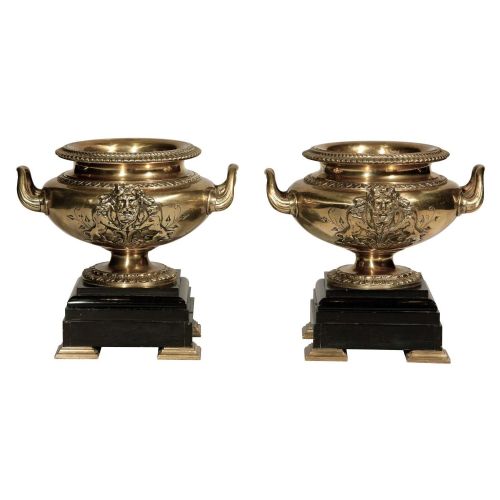


Antique Marble Campana Urn
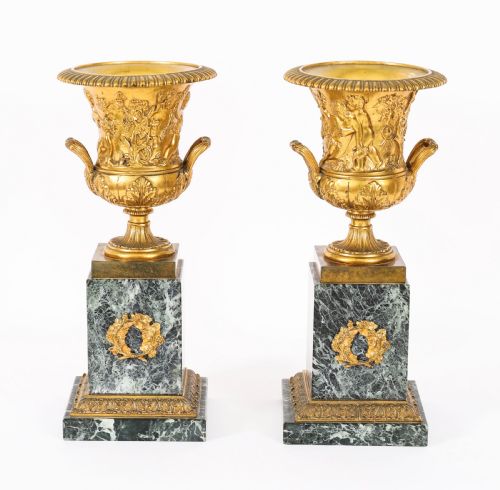
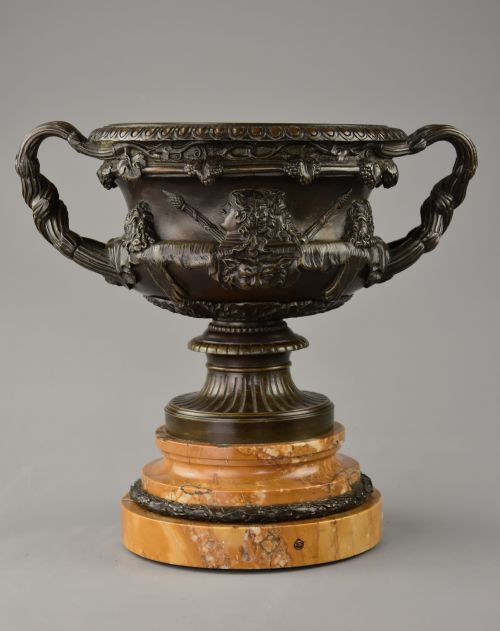
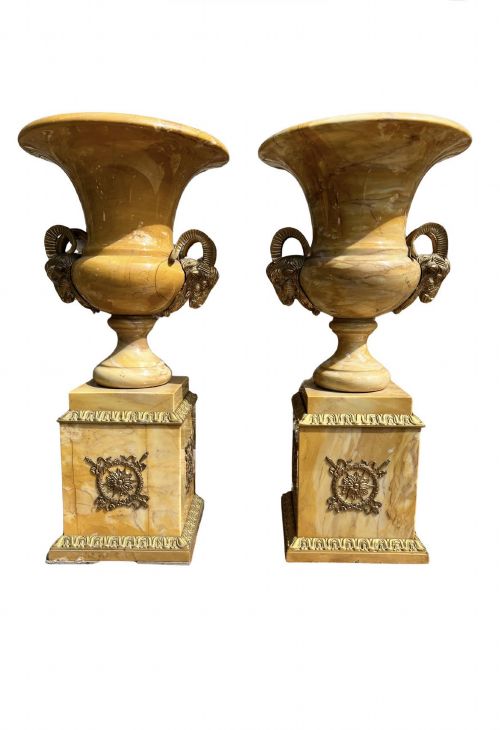
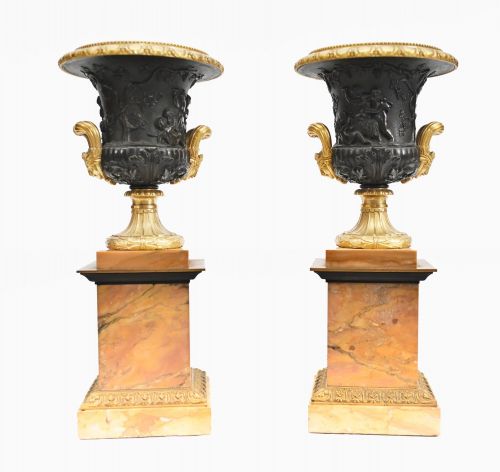
These antique marble campana urns bring classical form and heavy stone presence into a room, shaped for display since the nineteenth century.
Antique Marble Campana Urn
When you search for an antique marble campana urn, you encounter classical vessels modelled on ancient garden and table pottery, mostly produced during the nineteenth century. The standard form follows the inverted bell shape associated with the Grand Tour, often supplied in matched pairs for mantelpieces or side tables.
The selections appearing here lean heavily toward nineteenth-century French and Italian manufacture, ranging from the Charles X period through the late Victorian decades. Forms vary from simple classical shapes to elaborate decorative pieces bearing cast mounts and classical motifs.
How they were made
Makers fashioned the bodies from solid blocks of stone, utilising white, green, and siena marble alongside Ashford marble. These stone sections were turned on lathes and hand-finished to achieve the smooth, bell-shaped profiles characteristic of campana urns.
Metal components such as bronze, gilt bronze, ormolu, and brass were cast separately and applied as handles, rims, bases, and decorative reliefs. These metal mounts were often chased to sharpen the details of foliage, cherubs, or classical figures before being fitted to the stone.
Materials recorded on this site include siena marble, green marble, gilt bronze, ormolu, and brass.
What varies in quality
Proportion and weight also dictate the standing of a piece, as heavier stone bases and balanced handles separate superior decorative objects from lighter, plainer iterations.
Selim Bright
The Antique Marble Campana Urn Glossary
- Campana urn
- A bell-shaped vessel with a flaring rim and a footed base, derived from ancient Roman terracotta pottery. These forms became popular decorative objects during the nineteenth-century Grand Tour.
- Grand Tour
- A cultural journey undertaken by wealthy young Europeans through France and Italy to collect classical antiquities and art. This travel drove the production of bronze and marble reductions for domestic display.
- Ormolu
- Finely ground high-carat gold applied to a bronze base using a mercury amalgamation technique. This process creates a rich, durable golden surface on decorative mounts.
- Siena marble
- A yellow-brown Italian marble featuring dark grey or purple veins, prized for its warmth and dramatic patterning. It appears frequently on nineteenth-century decorative urns and vases.
Antique Marble Campana Urn: Frequently Asked Questions
What is a campana urn?
A campana urn is a bell-shaped vessel modelled on classical pottery forms. They were used historically as decorative garnitures on mantelpieces and sideboards.
Today they function as sculptural interior objects, bringing architectural lines and natural stone textures to classical or eclectic rooms.
Where did these urns come from?
Most pieces originate from nineteenth-century France and Italy, often produced for travellers touring European cultural centres. Workshops in Rome, Florence, and Paris catered to this demand with bronze and marble reductions.
These items were brought back to British homes as souvenirs of foreign travel and markers of classical taste.
How do I care for marble and bronze?
Marble benefits from dusting with a dry microfibre cloth and should be kept away from acidic liquids that can etch the polished stone surface. Bronze and ormolu mounts require only gentle dusting without commercial metal polishes.
Avoid using water or harsh cleaning agents on mixed-media pieces to protect the joints where stone and metal meet.
Are these urns usually sold in pairs?
Many nineteenth-century decorative urns survive as matched pairs intended for symmetrical placement on mantels or furniture. Single pieces also appear, reflecting losses over time or original standalone production.
Pairs generally command stronger interest from collectors seeking balanced room displays.