



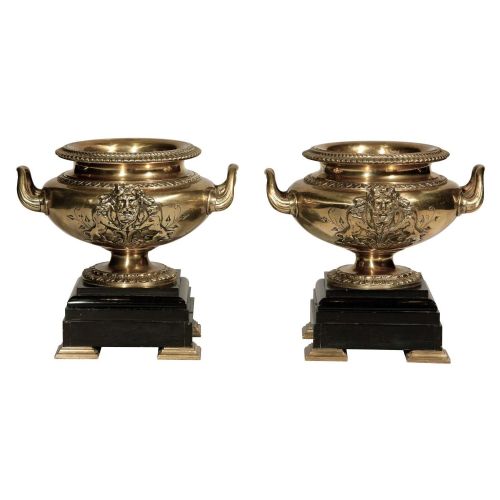


Campana Marble Vase
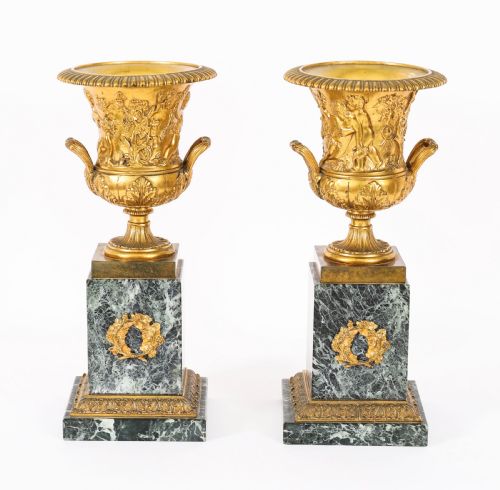
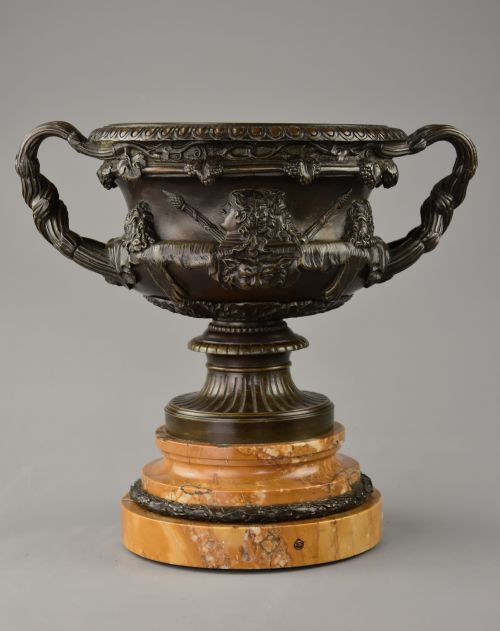
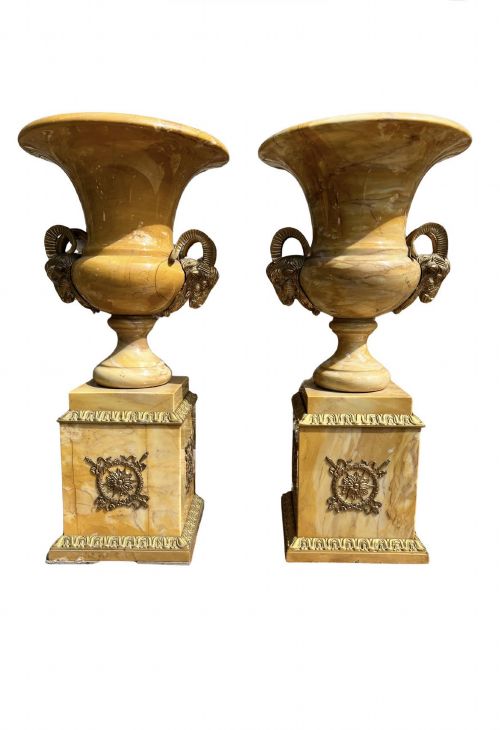
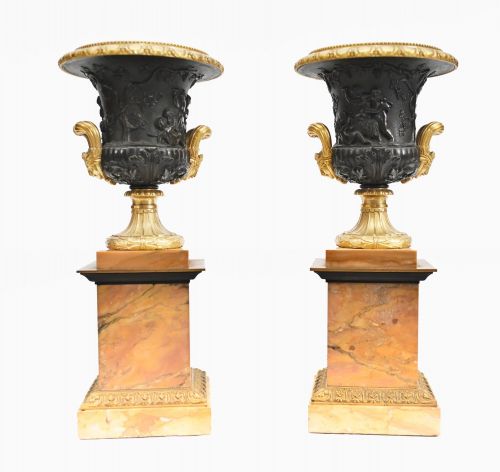
These campana marble vase examples bring classical urn forms into interior spaces, offering the sculptural weight of carved stone combined with cast metal mounts.
Campana Marble Vase
When you search for a campana marble vase, you encounter classical urn profiles modelled on ancient pottery and stone vessels. These decorative objects typically combine a flared crater bowl with stepped or square plinths.
You are most likely to meet nineteenth-century interpretations on this page, particularly French and Italian pieces associated with the Grand Tour. These often appear as pairs and integrate bronze or ormolu mounts alongside marble bodies.
How they were made
The construction of these pieces relies on turning and carving dense mineral substances such as Sienna marble, green marble, and Ashford marble to form the main body. Stonework is paired with metal components shaped through casting.
Gilt bronze, ormolu, and brass are utilised for handles, socles, and classical friezes, secured to the stone bases with threaded pins or adhesives. Metal details are chased and finished to contrast with the polished surface of the stone.
What varies in quality
The standard of a piece depends heavily on the crispness of the metal chasing and the depth of the marble veining. Finer examples display sharp definition in cast figures and securely fitted stone elements.
Proportion and scale dictate the visual success of the vessel, with superior objects maintaining balanced symmetry between the flared bowl and the supporting plinth.
Selim Bright
The Campana Marble Vase Glossary
- Campana
- A bell-shaped vessel form derived from ancient pottery types discovered at archaeological excavations in Italy. This silhouette widens gracefully toward the rim from a narrow stem.
- Grand Tour
- A traditional journey through Europe undertaken by upper-class scholars and collectors during the eighteenth and nineteenth centuries. Souvenirs acquired included classical bronzes and marble antiquities.
- Ormolu
- Finely ground high-carat gold applied to a bronze base using a mercury amalgamation process. This technique produces a rich, durable golden finish on decorative mounts.
- Sienna marble
- A yellow-brown Italian limestone featuring dark grey or purple veining. It is frequently used for the bases and bodies of classical decorative urns.
Campana Marble Vase: Frequently Asked Questions
How were these stone urns originally used?
These vessels served primarily as decorative ornaments on mantelpieces, pedestals, and side tables within wealthy nineteenth-century interiors. They functioned as displays of classical learning and refined taste rather than practical containers.
Over time, collectors placed them in libraries and drawing rooms to evoke the aesthetic of ancient sculpture and architectural ruins.
Are these objects meant to hold water?
These decorative pieces are constructed from multiple assembled parts, including joined stone and metal components that are not waterproof. Using them as functional vases for cut flowers risks damaging the interior joints and staining the porous marble.
Instead, they remain purely ornamental objects designed to be appreciated for their sculptural form and material contrast.
How do I date a nineteenth-century marble urn?
Dating relies on examining the tooling marks on the stone, the composition of the bronze alloy, and the style of the casting. Nineteenth-century pieces often reflect revival movements such as Neoclassical or Gothic Revival designs.
Comparisons with documented Grand Tour souvenirs from similar workshops help narrow down the period of production.
How should I clean marble and bronze surfaces?
Dusting with a dry, soft microfibre cloth prevents particulate accumulation without harming the polished stone or the delicate ormolu gilding. Liquid cleaners and abrasive agents strip the historic finish and should be avoided entirely.
Professional conservation advice is recommended if deeper cleaning becomes necessary to address accumulated grime.