
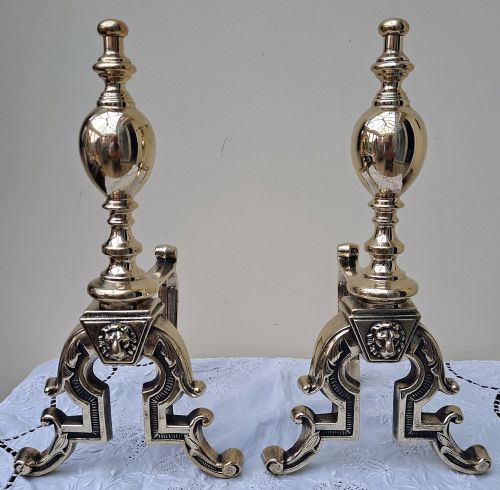
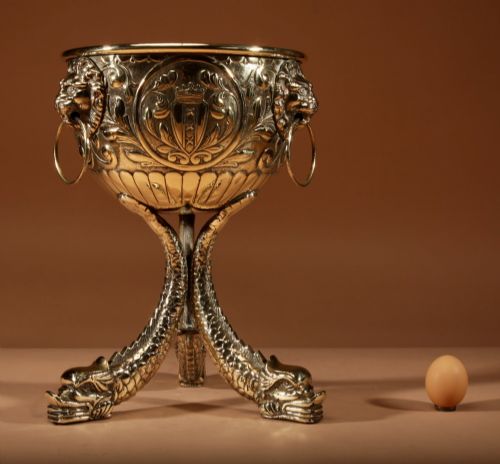
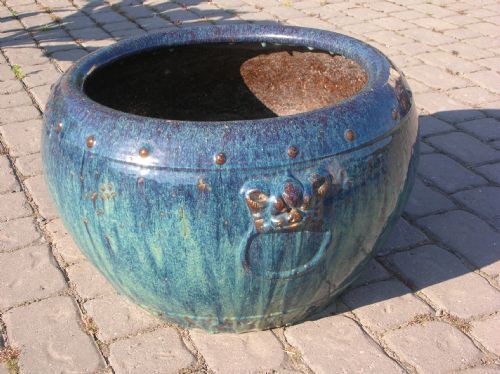


Lion Mask Urn
These lion mask urn pieces bring classical gravity and weight to a room, cast in heavy metals and fired in salt glaze.
Lion Mask Urn
When you search for a lion mask urn, you enter a domain of heavy vessels designed for planting, wine cooling, and fireside display. The pieces on this page span several centuries, drawing on Neoclassical, Renaissance Revival, and Regency traditions.
The form frequently appears as a jardiniere, a wine cooler, or a classical campana urn. These vessels served practical domestic roles in gardens and dining rooms while displaying sculptural cast ornament.
You will encounter works cast in brass, iron, and gilt bronze, alongside glazed ceramic and salt glaze pieces. English, French, Chinese, and German workshops all contributed to this tradition.
How they were made
Makers utilised casting techniques for metals such as brass, bronze, and iron, producing crisp relief details around the bowl and handles. Dinanderie methods governed the working of sheet and cast brass items.
Ceramic examples relied on throwing and moulding clay before applying salt glaze, majolica, or blue and white finishes. Stoneware and terracotta required precise kiln firing to achieve durability for garden and interior use.
Listings feature materials spanning brass, stoneware, silver plate, gilt bronze, marble, iron, glazed ceramic, and salt glaze across multiple centuries.
What varies in quality
Material choice dictates the visual weight and longevity of the piece, from heavy carved alabaster and marble to substantial cast iron and bronze mounts. Finer ceramic specimens show an even glaze distribution and deliberate coloration.
The Lion Mask Urn Glossary
- Campana urn
- A bell-shaped vessel with a flaring rim, originating in antiquity and revived during the Neoclassical period. It often stands on a square plinth base.
- Jardiniere
- An ornamental pot or stand designed to hold growing plants or flowers. They appear in ceramic, majolica, and heavy metals.
- Dinanderie
- An umbrella term for medieval and later brass or bronze wares produced in the Meuse valley. The technique involves both casting and embossing.
- Salt glaze
- A ceramic finish created by throwing common salt into the kiln during high-temperature firing. This produces a texture resembling orange peel.
- Majolica
- A type of earthenware glazed with tin opacifiers and painted with colourful metal oxides. It achieved great popularity in Victorian England.
Lion Mask Urn: Frequently Asked Questions
What is a lion mask urn?
It is a decorative vessel featuring cast or sculpted lion heads that often serve as handles or structural mounts. These pieces function as planters, wine coolers, or classical mantel ornaments.
They draw on historical styles such as Regency and Renaissance Revival, utilising materials like brass, marble, and salt-glazed ceramic.
Where were these urns placed?
Historically, larger iron and stone versions stood in gardens, courtyards, or grand entrance halls. Smaller brass and ceramic iterations occupied dining tables, mantelpieces, and drawing rooms.
Wine coolers sat near the dining table to chill bottles, while jardinieres housed indoor ferns and flowering plants.
How do I date a lion mask urn?
Dating relies on examining the material composition, casting technique, and stylistic markers of the period. For instance, nineteenth-century pieces often reflect Neoclassical or Victorian revival aesthetics.
Tool marks, patination, and underlying construction methods provide further clues to the manufacturing era.
How do I care for metal urns?
Bronze, brass, and iron pieces require gentle dusting and occasional cleaning appropriate for their specific metal finish. Avoid harsh abrasive polishes that strip away historical patina.
Keeping them away from excessive moisture protects iron from rusting and preserves the stability of mounts.