
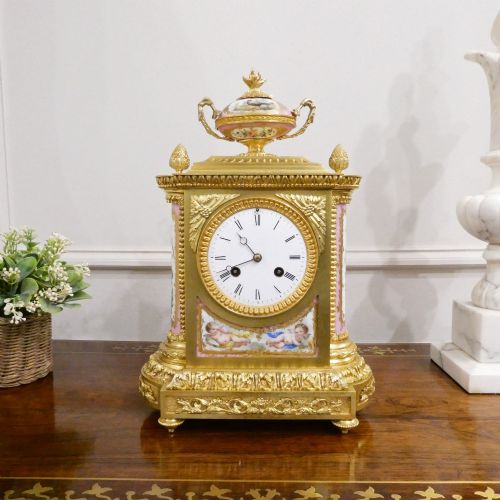
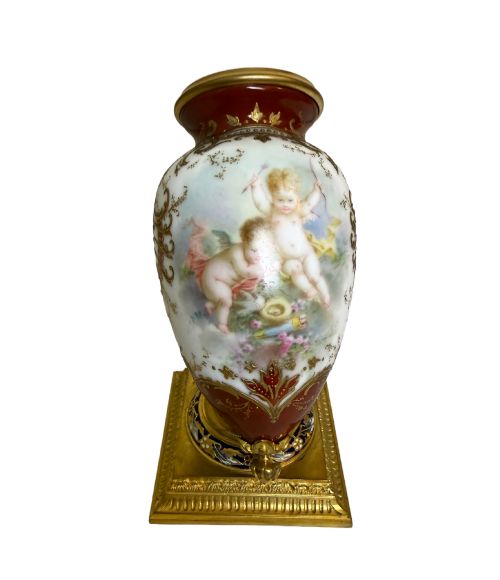
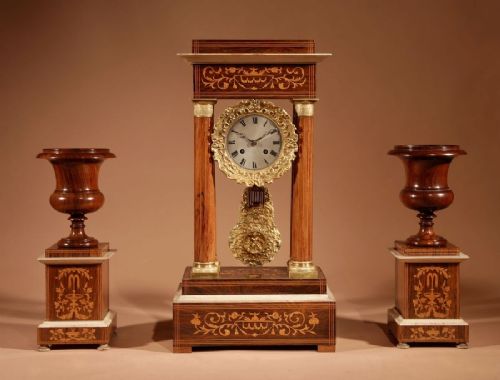
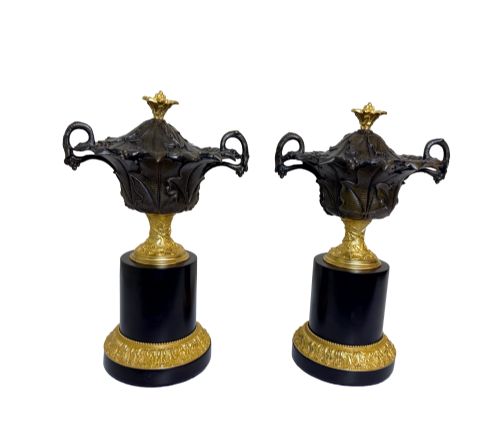
19th Century Ormolu Urns
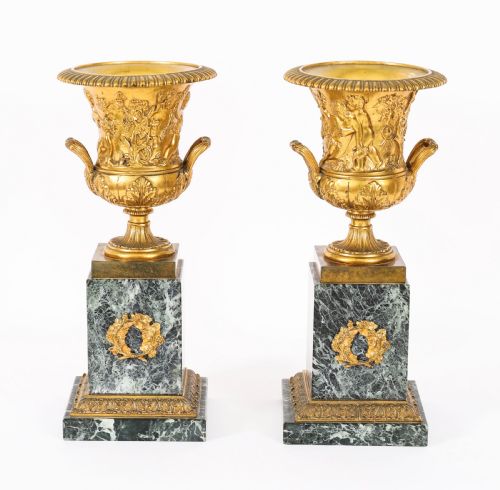
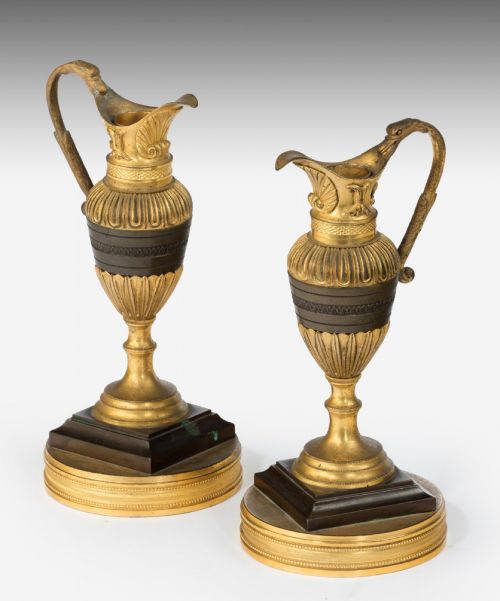
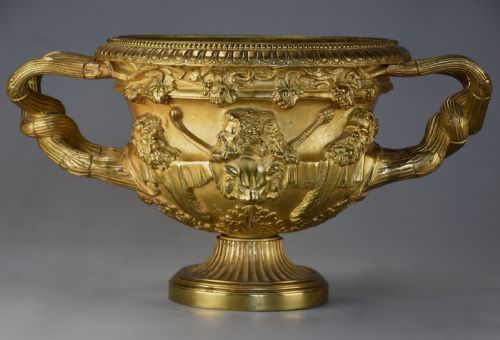
These 19th century ormolu urns combine cast bronze with mercury gilding to bring heavy classical presence into a room.
19th Century Ormolu Urns
Buyers seeking 19th century ormolu urns encounter decorative vessels cast from bronze and treated with gold amalgams, frequently paired with contrasting materials like marble, onyx, or porcelain. These ornamental objects trace lineage to French revival aesthetics, drawing heavily upon Neoclassical, Louis XVI, and Empire design vocabulary.
The pieces appearing on this page span the Victorian era, specifically concentrating between the eighteen-fifties and the turn of the twentieth century. Alongside dedicated decorative urns, the selection incorporates related forms such as tazzas, potpourri holders, and mounted vases designed to display mantelpieces and tabletops.
How they were made
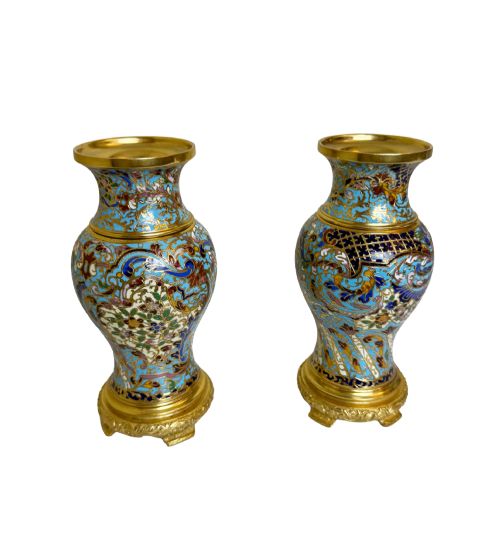
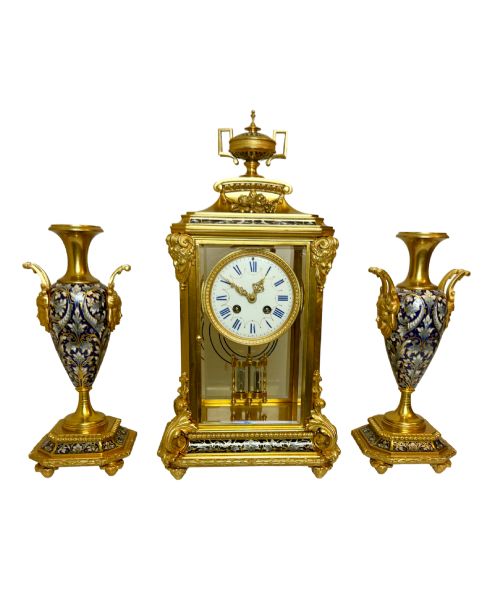
Makers produced these works through lost-wax or sand casting of bronze before applying a mercury-gilt finish to create the characteristic golden ormolu surface. This metallic groundwork was frequently combined with turned white or rouge marble bases, porcelain bodies from Sevres or Chinese export kilns, and intricate champleve enamel detailing.
Assembly required precise mechanical fitting, joining heavy bronze mounts to ceramic vessels or stone plinths using threaded pins and screws. Chased surface work imparted crispness to foliate scrolls, rams' head masks, and classical drapery motifs after casting.
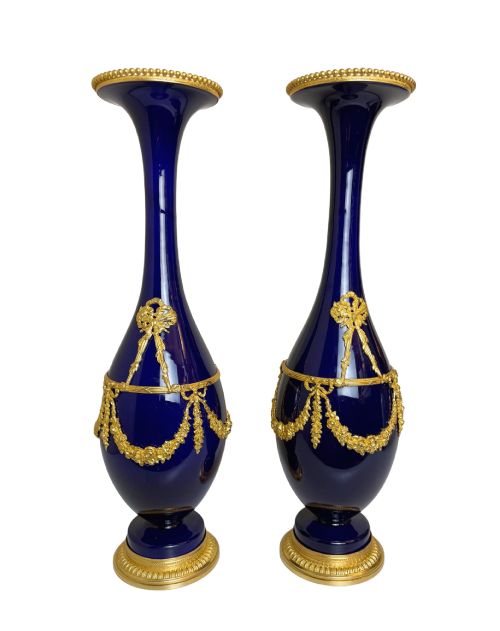
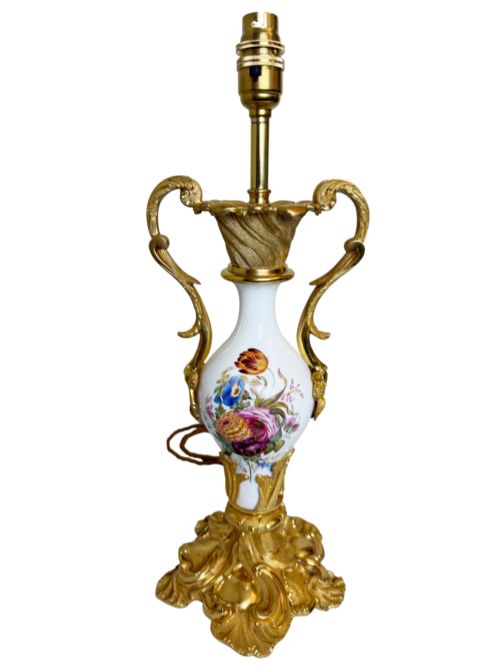
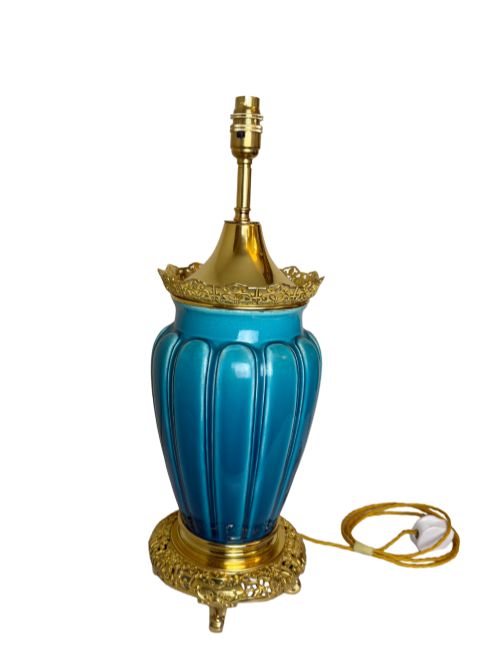
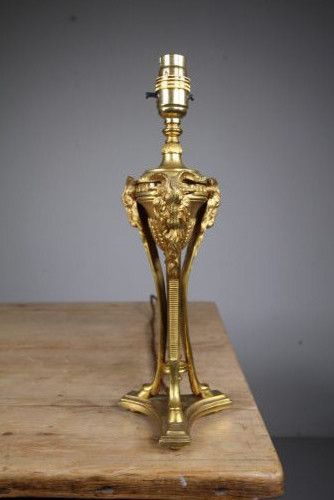
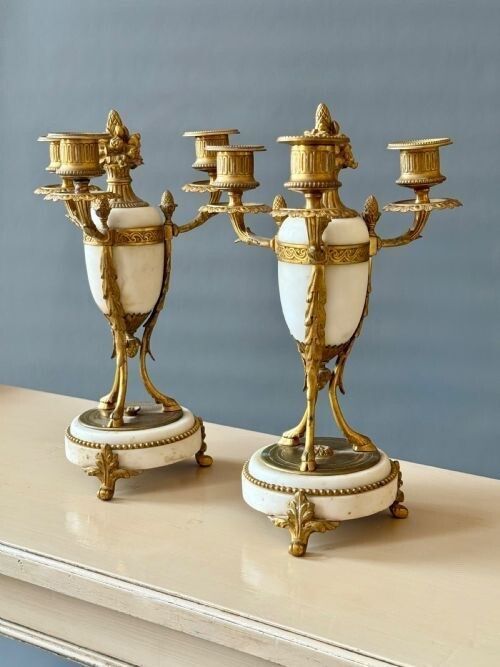
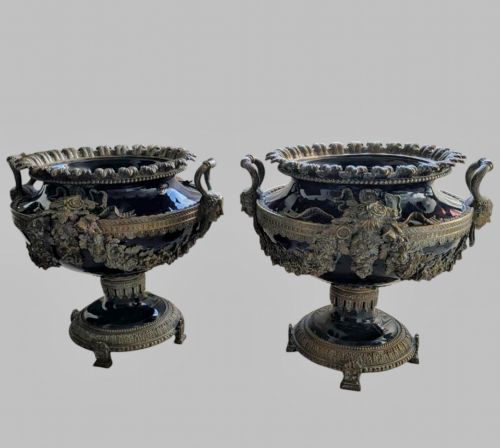
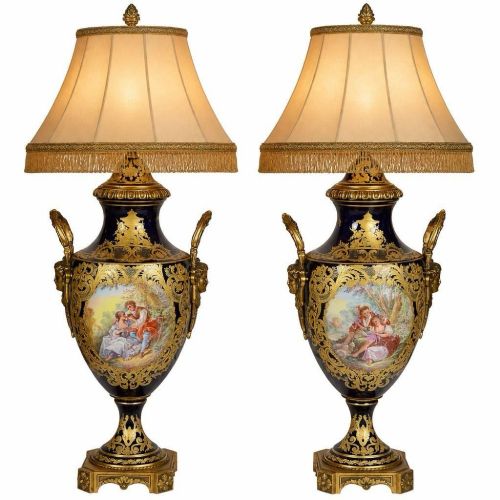
Listings feature gilt bronze, porcelain, enamel, and marble combined across nineteenth-century French and English decorative urns.
What varies in quality
Material selection dictates the tier of the object, distinguishing standard cast brass foundations from heavy, finely patinated bronze paired with flawless marble or hand-painted porcelain. The integration between the metallic mounts and the central stone or ceramic body reveals the level of specialist skill invested during assembly.
Jean-Baptiste Delettrez·Balling
The 19th Century Ormolu Urns Glossary
- Ormolu
- A term denoting gilded bronze, derived from the French phrase describing ground gold. It involves applying a high-carat gold and mercury mixture to a bronze base before heating.
- Champleve
- An enamelling technique where troughs or cells are sunk into the surface of the bronze and filled with vitreous enamel paste before firing.
- Grand Tour
- A period of European travel undertaken by upper-class young men to collect classical antiquities and art, inspiring many nineteenth-century bronze reductions.
- Tazza
- A shallow saucer-like ornamental cup or vase elevated on a stem and foot, frequently fashioned from marble with ormolu mounts.
- Garniture
- A set of three or more matching ornamental objects, typically comprising a central clock or urn flanked by matching vases or candelabra.
19th Century Ormolu Urns: Frequently Asked Questions
What is ormolu?
Ormolu refers to gilded bronze mounts applied to decorative objects, clocks, and furniture during the eighteenth and nineteenth centuries. The technique uses a mixture of finely ground gold and mercury fired onto a cast bronze body.
This process creates a warm, durable golden finish that does not tarnish in the manner of ordinary brass. Genuine period pieces display a soft, matte depth rather than the bright yellow shine of modern electroplating.
Where were these urns displayed?
Nineteenth-century households placed these decorative vessels on mantelpieces, credenzas, and pier tables as focal points of formal reception rooms. They often formed part of a garniture set flanked by matching candelabra or clock components.
Their substantial weight from bronze and marble construction meant they functioned primarily as stationary decorative art rather than utilitarian vessels.
How do I identify French revival styles?
French revival pieces from the nineteenth century borrow motifs from earlier royal reigns, notably Louis XVI and the Empire period. Look for symmetrical classical lines, laurel wreaths, urn shapes, and architectural marble columns.
Maker signatures or foundry stamps on the bronze elements occasionally help pinpoint the exact decade of manufacture during the Victorian era.
How should I clean ormolu?
Cleaning requires only a soft, dry cloth to remove surface dust without disturbing the delicate gold layer. Water, commercial brass polishes, and abrasive cleaners strip away the historic mercury gilding permanently.
Preserving the original patination maintains both the aesthetic integrity and historical character of the object.