
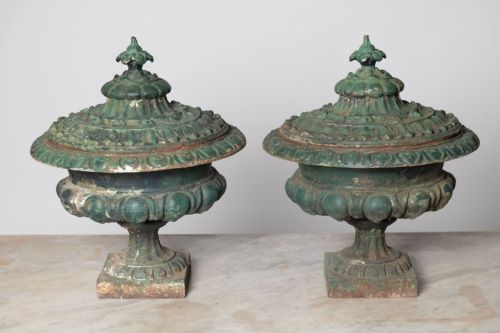


Pair of Ornamental Urns
A pair of ornamental urns brings symmetry and classical dignity to a mantelpiece or console table.
Pair of Ornamental Urns
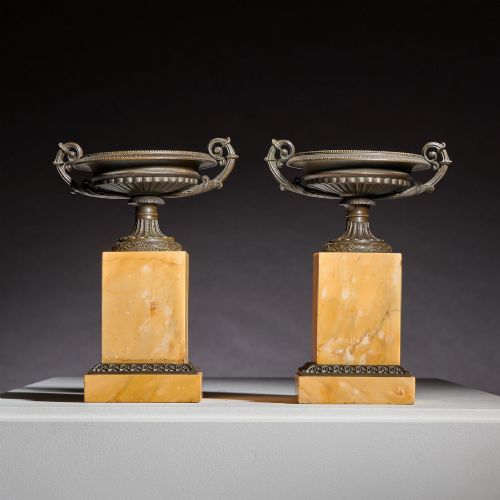
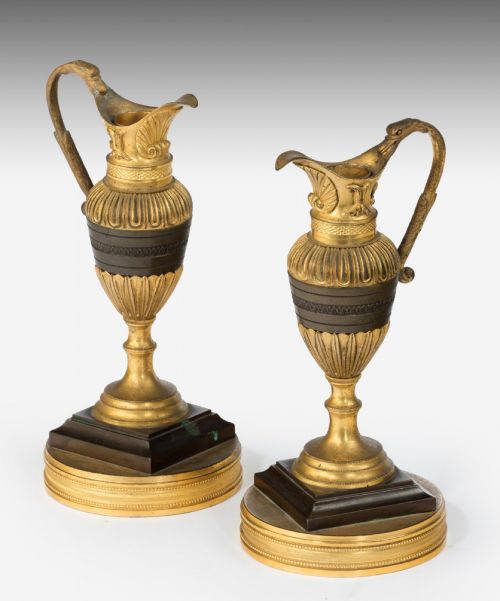
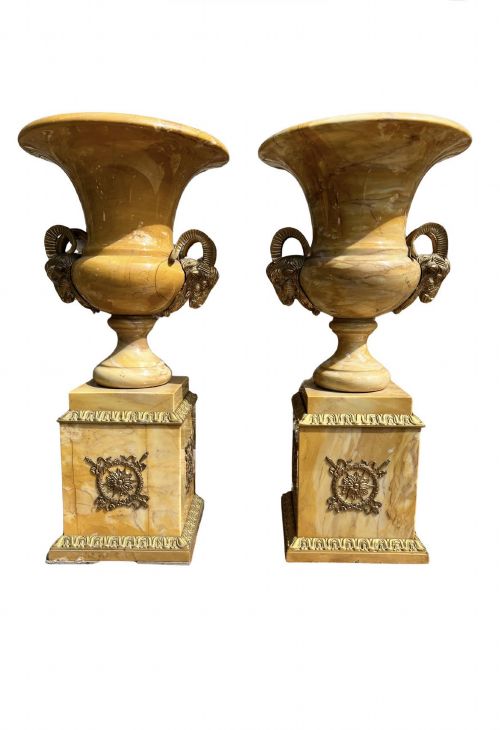
A pair of ornamental urns comprises matched decorative vessels shaped by classical antiquity and interpreted across the nineteenth and early twentieth centuries. These objects appear in forms such as campana urns, cassolettes, ewers, and tazzas, taking their cues from archaeological discoveries and Grand Tour travels.
The versions most commonly met on this page date from the nineteenth century, including Victorian interpretations and Regency designs. Makers utilised rich materials to create display pieces intended to anchor a room with architectural proportion.
Buyers encounter everything from marble and bronze table ornaments to porcelain vessels and converted lamp bases. Each pair reflects the prevailing revival styles of its era, moving from strict Neoclassical restraint to exuberant Rococo curves.
Materials and construction methods
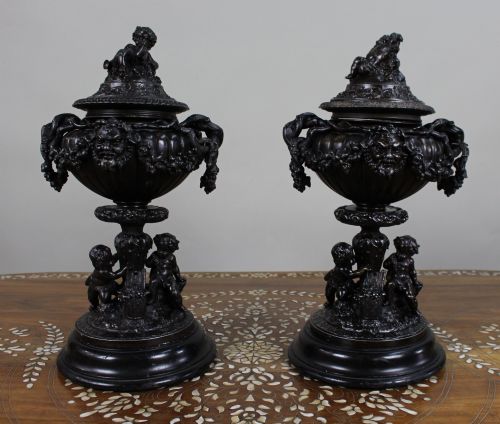
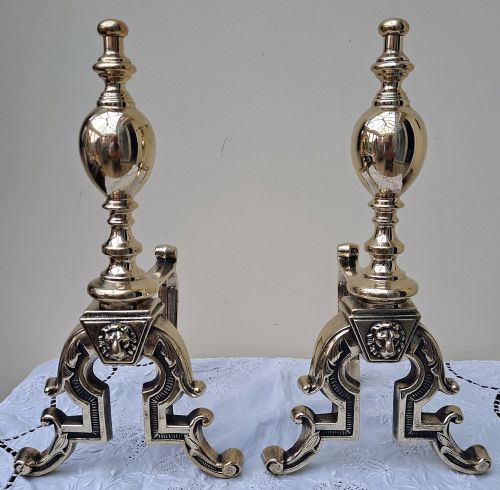
Foundries cast metals such as bronze, brass, ormolu, and spelter to form intricate handles, masks, and pedestal feet. Artisans frequently combined these metals with carved marbles like Sienna or green marble to create contrasting textures and heavy, stable bases.
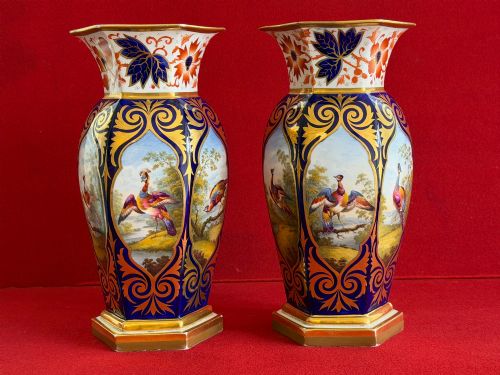
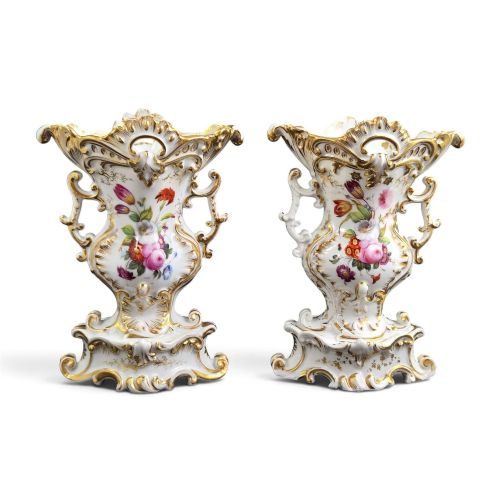
Ceramic pieces rely on fine porcelain bodies shaped into vases and ewers, decorated with hand-painting, gilding, and enamel work. Craftsmen applied gold leaf and gilding to highlight raised details and accentuate classical motifs.
Periods represented span the Regency, Victorian, and early twentieth centuries.
Distinctions in craftsmanship
The refinement of the casting and chiselling separates standard decorative items from superior works. Finer bronze and ormolu mounts display crisp relief work in the foliage and figures, whereas lesser examples show softer, more generalised contours.
Material selection and hand-finishing dictate the upper tier of these pieces. Hand-painted porcelain demands exceptional brushwork and precise enamel firing, and marble bodies require careful turning and polishing to reveal natural mineral patterns.
Flight Barr And Barr·Jacob Petit·Royal Vienna·Royal Worcester
The Pair of Ornamental Urns Glossary
- Campana urn
- A vessel shaped like an inverted bell, featuring a flaring rim and a tapered body on a pedestal base. This classic Roman form became a staple of nineteenth-century Neoclassical design.
- Cassolette
- A decorative vase or urn with a reversible lid that functions either as a solid vessel or an incense burner. These pieces often incorporate decorative marble and bronze mounts.
- Ewer
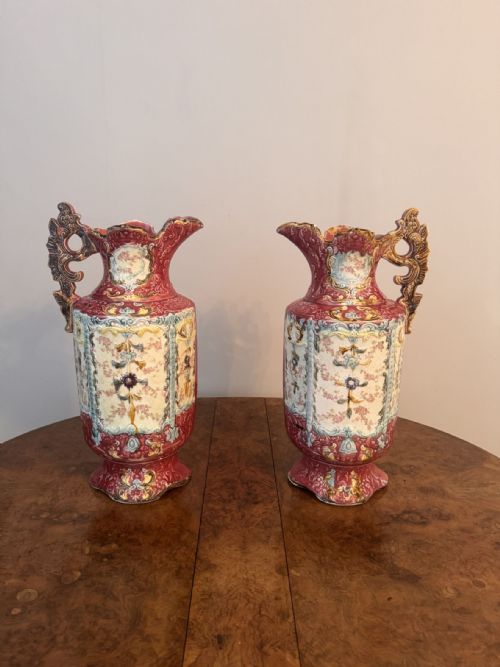
- A large jug with a wide spout and an ornate handle, designed for decorative display rather than utility. Nineteenth-century makers frequently produced them in matched pairs.
- Ormolu
- Finely chopped high-karat gold applied to a bronze base using a mercury amalgamation process. This technique gives metal mounts a rich, warm lustre.
- Tazza
- A shallow saucer-like vessel mounted on a stem and foot, used on tables and sideboards. They are frequently carved from decorative stones and marbles.
Pair of Ornamental Urns: Frequently Asked Questions
Where should I place a pair of ornamental urns?
These matched vessels suit symmetrical arrangements on mantelpieces, console tables, or pedestals where their classical proportions can be appreciated from multiple angles.
Because many pairs stand with considerable height or weight, ensure the supporting furniture offers a stable and secure surface.
Were these urns used for ashes?
Despite their classical shape derived from funerary urns, the vast majority of these nineteenth-century pieces were created purely for decorative display.
They served as architectural ornaments in drawing rooms and libraries, often reflecting the classical interests of collectors returning from the Grand Tour.
How do I identify a Neoclassical style urn?
Neoclassical pieces feature restrained geometric lines, symmetry, and motifs drawn directly from ancient Greek and Roman art, such as Bacchic masks and acanthus leaves.
Materials like bronze, Sienna marble, and patinated metals predominate in this style, emphasising architectural form over surface embellishment.
What does a conversion to a table lamp involve?
Some nineteenth-century bronze ewers and urns were later adapted to hold electrical fittings and lamp cords for domestic illumination.
This twentieth-century modification altered the original function of the vessel while preserving the decorative metalwork for modern interiors.