




Classical Relief Bronze Urns
These classical relief bronze urns bring the weight and mythology of antiquity straight into a nineteenth-century interior.
Classical Relief Bronze Urns
Classical relief bronze urns capture the nineteenth-century fascination with antiquity through cast metal vessels decorated with figural scenes and classical motifs. Buyers seeking these pieces encounter decorative urns, campana-shaped vases, ornamental ewers, and desk accessories created during the Victorian period and the wider nineteenth century.
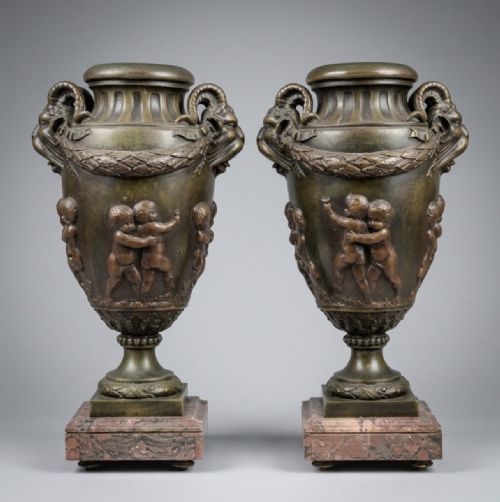
The majority of these objects emerge from French and Italian workshops catering to the Grand Tour market, often combining patinated or gilt bronze with contrasting green or black marble bases. Formats range from large display pieces and wine-coolers to smaller tabletop vessels and campaign inkwells.
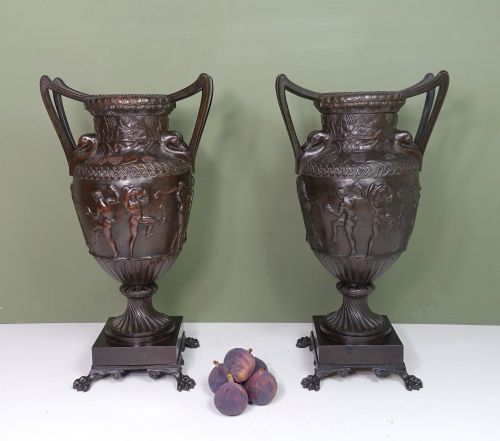
Stylistic influences draw heavily on neoclassical revivals, translating ancient Greek and Roman forms into domestic ornaments. Pieces frequently reference iconic antiquities such as the Warwick vase and the Townley vase, adapting them for nineteenth-century mantelpieces and studies.
Materials and construction
Foundry work relies on bronze casting, utilising both patinated and gilt surfaces to create tonal contrast on figural reliefs. Workshops also employ spelter as a substitute metal on specific decorative models, finishing the surface to imitate bronze.
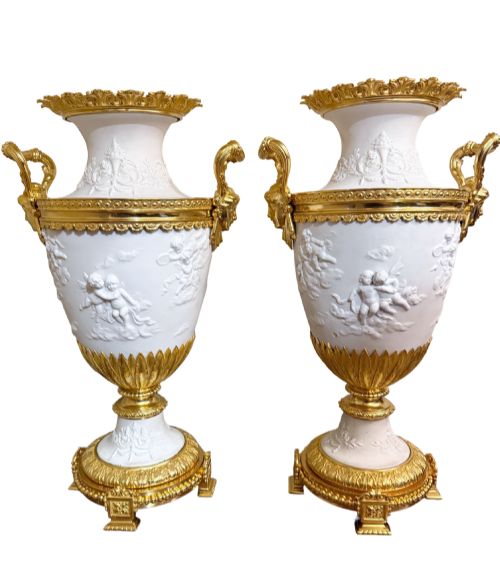
Mounts and structural elements frequently incorporate white porcelain and carved marble bases, anchoring the heavier metal vessels. Ormolu and silvered treatments provide additional metallic highlights across campana urns and lidded vessels.
Recorded object types span campana-shaped vases, ornamental ewers, and functional desk accessories like campaign inkwells.
Assessing quality and execution
Quality rests in the crispness of the cast relief work and the depth of the chasing, where sharper figures and defined drapery separate finer studio output from routine production. The handling of the patination or the application of gilding dictates how successfully the metal captures antique models.
The integration of secondary materials such as marble plinths and porcelain bodies reveals the ambition of the piece. Heavier gauge metalwork and more substantial stone bases indicate superior manufacturing standards within nineteenth-century foundry traditions.
Barbedienne, Paris
The Classical Relief Bronze Urns Glossary
- Grand Tour
- A traditional journey through Europe undertaken by upper-class young men to study art and antiquities, which generated a vast market for souvenir bronzes and decorative urns.
- Neoclassical
- A style spanning the eighteenth and nineteenth centuries that revived the classical forms, proportions, and decorative motifs of ancient Greece and Rome.
- Campana-shaped
- A vessel profile resembling an inverted bell, widely used in classical antiquity and copied extensively by nineteenth-century bronze founders.
- Spelter
- A zinc alloy utilised in nineteenth-century manufacturing as a cheaper alternative to bronze, usually given a bronze-colored metallic finish.
- Ormolu
- Finely ground high-carat gold applied to a bronze base through a mercury amalgamation process or modern electroplating, creating a rich golden surface.
Classical Relief Bronze Urns: Frequently Asked Questions
What are classical relief bronze urns?
These pieces are nineteenth-century decorative vessels cast in bronze, often featuring figural reliefs and classical motifs derived from ancient Greek and Roman antiquities.
They were produced extensively during the Victorian era, frequently as Grand Tour souvenirs or high-end neoclassical interior ornaments.
How were these urns originally used?
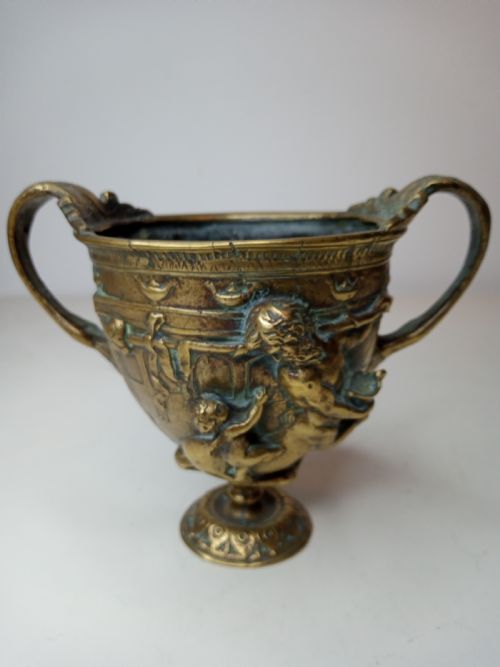
Many served purely as decorative display items on mantelpieces, pedestals, or library tables within nineteenth-century homes. Some variations functioned more specifically as wine-coolers, planters, or desk accessories like inkwells and goblets.
Their primary role was to signal the owner's classical education, refined taste, and engagement with European travel culture.
How do I style these urns at home?
These substantial metal and marble pieces anchor a room well when placed on heavy wooden furniture, sideboards, or dedicated pedestals. Pairing them with traditional interiors or contrasting them against modern minimalist spaces highlights their sculptural forms and patinated surfaces.
Because many include marble bases or delicate ormolu mounts, select stable surfaces away from high-traffic areas where they might be easily knocked.
How can I tell the period and style apart?
Look to the combination of materials, such as the use of distinct green or black marble plinths alongside patinated or gilt bronze, which typically points to nineteenth-century manufacturing. Stylistic references to specific ancient artefacts, such as the Warwick or Townley vases, help place them within the nineteenth-century neoclassical revival.
Examine the casting quality and surface finish, as nineteenth-century French and Italian workshops employed specific patination techniques that differ from later reproductions.