

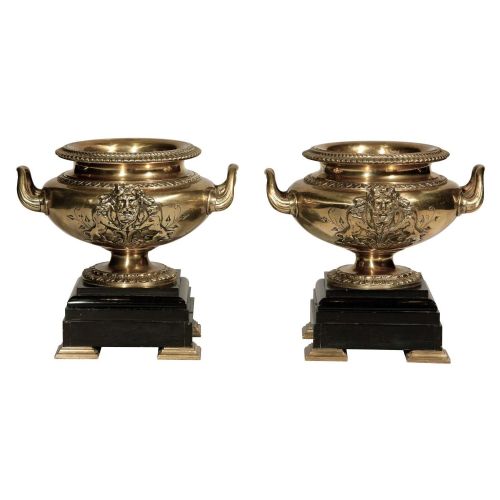


Ormolu Mantel Vases
These ormolu mantel vases bring nineteenth-century French display spaces alive with gilt bronze and porcelain.
Ormolu Mantel Vases
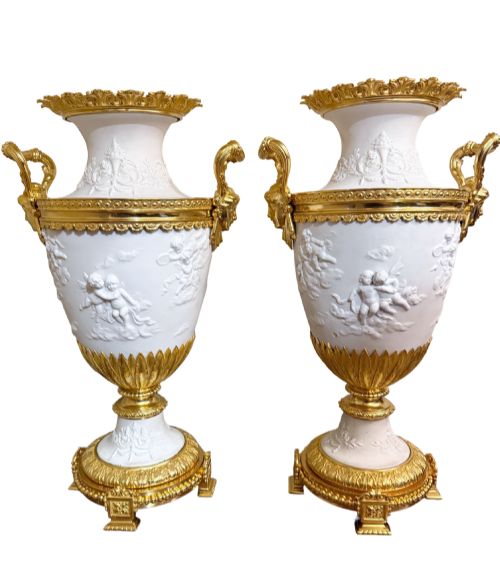
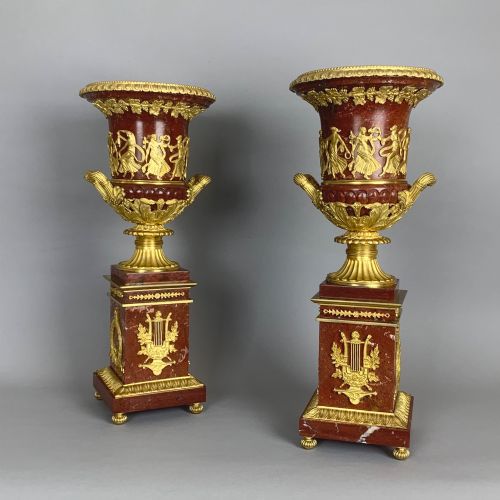
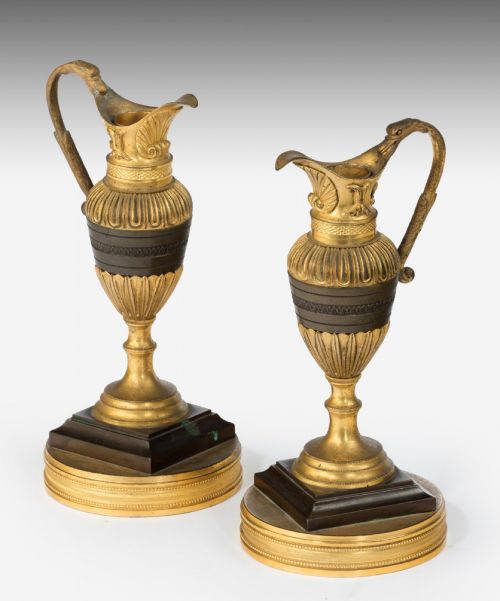
When searching for ormolu mantel vases, buyers encounter nineteenth-century decorative urns and cassolettes designed for prominent display on mantelpieces. These ornamental pieces frequently appear in pairs or garniture sets alongside clocks, originating predominantly from French workshops during the Victorian era. The selection centres on classical, Empire, and Rococo Revival forms intended to anchor a room's decorative scheme.
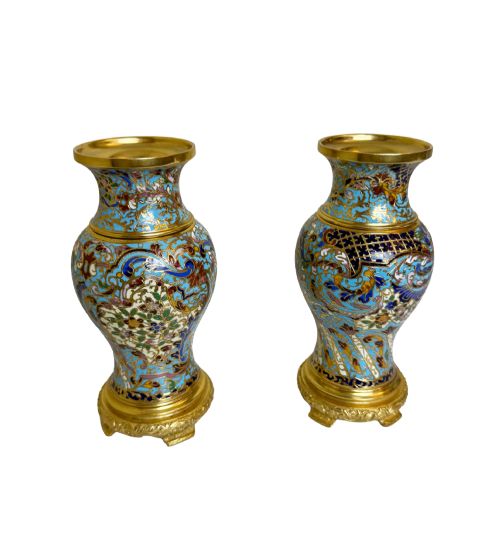
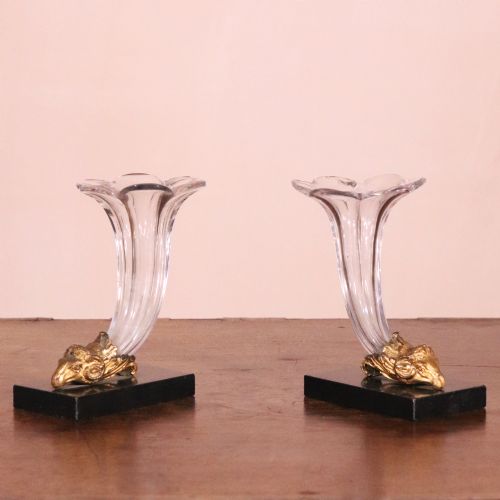
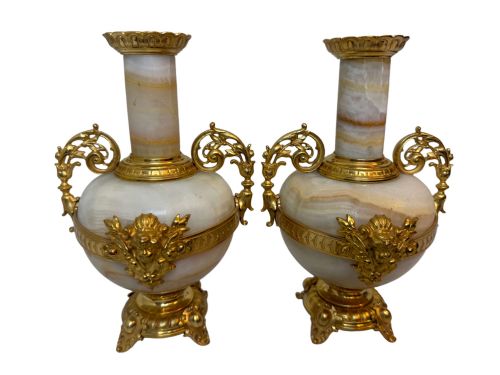
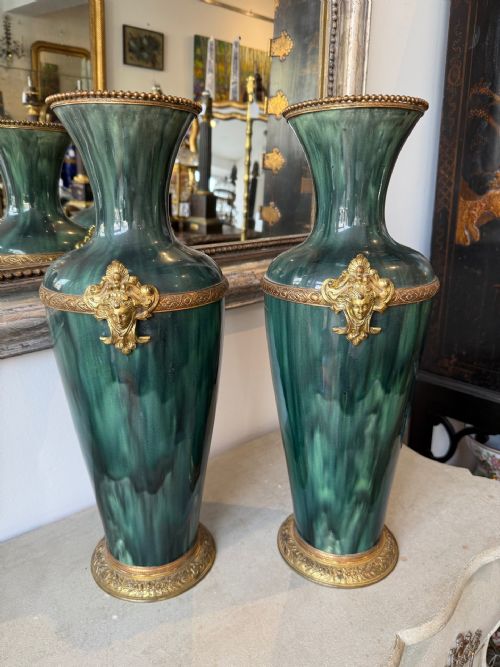
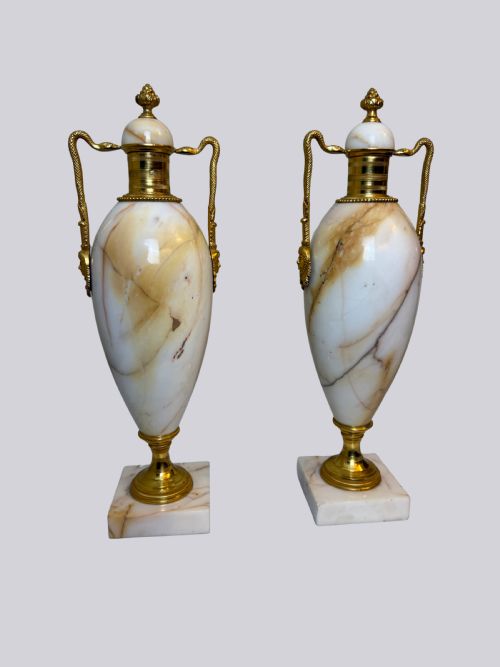
Makers utilised contrasting media, pairing gilt bronze or ormolu mounts with porcelain bodies in Sevres style, alongside white onyx, white marble, and rouge marble bases. Surviving examples range from lidded vessels to ewers and cornucopias, often decorated with champleve or cloisonne enamel. Buyers regularly find works reflecting mid to late nineteenth-century tastes for grand classical revivalism.
Metalwork and Mineral Bases
Craftsmen produced these objects by casting bronze into intricate classical or rococo mounts, then applying fire-gilding to create the characteristic ormolu finish. This metalwork was combined with turned marble, onyx, or porphyry to provide substantial weight and contrasting colour to the composition.
Porcelain components, particularly those executed in the Sevres style, were hand-painted and glazed before receiving their metal mounts. Artisans secured these disparate elements using threaded rods and screws, uniting ceramic bodies with metal handles, rims, and plinths.
Several vases double as lamps, proving that nineteenth-century decorators were entirely comfortable drilling through French porcelain.
The Distinction of Execution
Quality rests in the crispness of the bronze casting and the depth of the mercury gilding, where sharper chiselling separates superior mounts from softer, worn examples. The weight and selection of the stone bases, whether rouge marble, white onyx, or green marble, further distinguish the tier of the piece.
The hand-painted detail on porcelain bodies dictates the upper echelon of these objects, showing finer brushwork and richer enamel saturation. Superior pairings demonstrate a seamless integration between the ceramic body and the metal mounts, with every decorative flourish aligned to the prevailing French design style.
The Ormolu Mantel Vases Glossary
- Ormolu
- Finely chopped high-karat gold applied to a bronze base using a mercury amalgamation technique. This historic process yields a warm, enduring golden lustre distinct from modern electroplating.
- Cassolette
- A dual-purpose decorative vase featuring a reversible lid that functions as a small bowl or burner. These vessels form a staple category among nineteenth-century mantel ornaments.
- Garniture
- A coordinated set of three or more ornamental vases or figures displayed together on a mantelpiece. Central clock sets often accompany matching side urns.
- Champleve
- An enamelling technique where troughs are gouged into a metal surface, filled with vitreous paste, and fired. The resulting coloured glass designs contrast sharply with the surrounding metal framework.
- Bleu Celeste
- A bright turquoise blue ground colour developed at the Sevres porcelain factory. This distinctive hue frequently appears on nineteenth-century decorative urns.
Ormolu Mantel Vases: Frequently Asked Questions
How were ormolu mantel vases used?
These decorative objects served as formal ornaments designed to stand on the mantelpiece of a nineteenth-century drawing room or salon. They were primarily visual centerpieces meant to catch the light and reflect the owner's taste for classical refinement.
While some cassolettes featured reversible lids that could double as small burners, most pieces remained strictly decorative. They were frequently arranged symmetrically in pairs or as part of a three-piece garniture set flanking a mantel clock.
Are these vases purely French in origin?
The vast majority of these pieces follow French design idioms, including Empire, Louis XVI, and Rococo Revival styles. Workshops in France produced the dominant share of these gilt bronze and porcelain garnitures during the nineteenth century.
Makers frequently drew inspiration from classical antiquity or specific Parisian porcelain houses like Sevres. Even when created elsewhere, makers closely adhered to French aesthetic standards of the period.
How do I date a nineteenth-century mantel vase?
Dating relies on examining the combination of materials, casting techniques, and stylistic markers recorded in the piece. Mid nineteenth-century examples often lean towards heavier Empire and classical revival forms, utilising cast bronze and solid marble.
Later Victorian pieces from the 1880s and 1890s frequently incorporate champleve enamel, onyx, or elaborate Sevres style porcelain. The construction of the internal mounting bolts and the wear patterns on the gilding also provide clues to the age.
How should I clean ormolu mounts?
Maintenance requires gentle dusting with a soft, dry brush to prevent abrasive particles from scratching the delicate gilt surface. Moisture and chemical cleaning agents must be avoided, as they can strip or discolour the historic mercury gilding.
If the metal requires more attention, consult a professional conservator specialising in historic bronzes. Aggressive polishing will permanently damage the underlying patina and the ormolu finish.