




Gilded Bronze Urns
Gilded bronze urns bring classical French and Victorian elegance to a room, combining cast metalwork with marble, porcelain, and enamel.
Gilded Bronze Urns
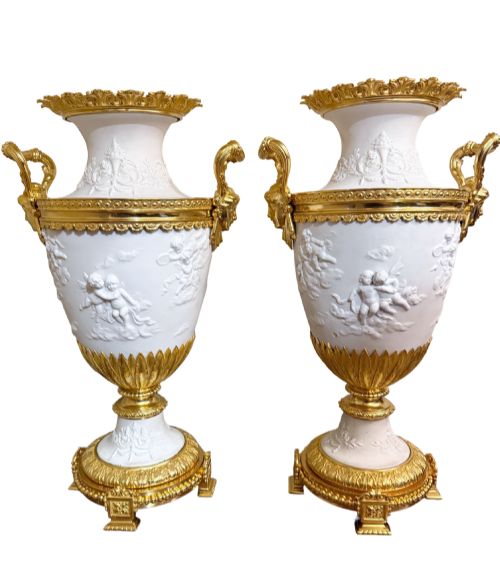
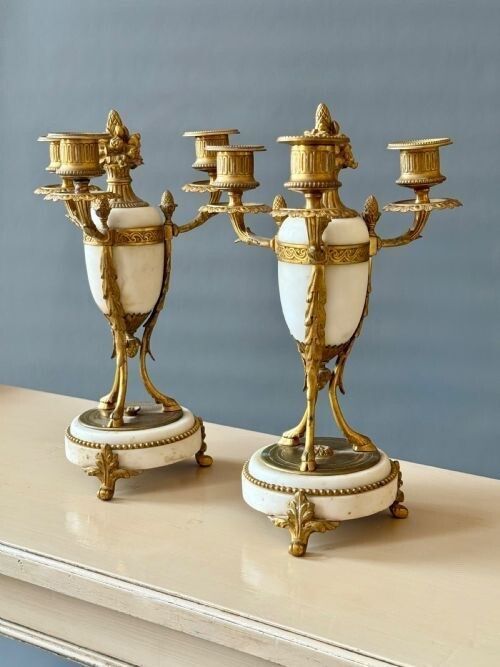
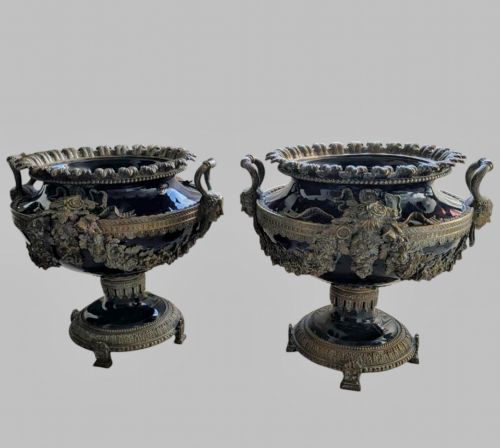
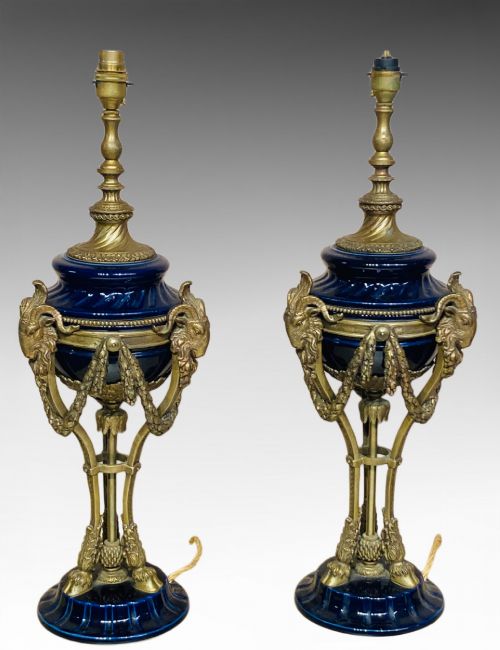
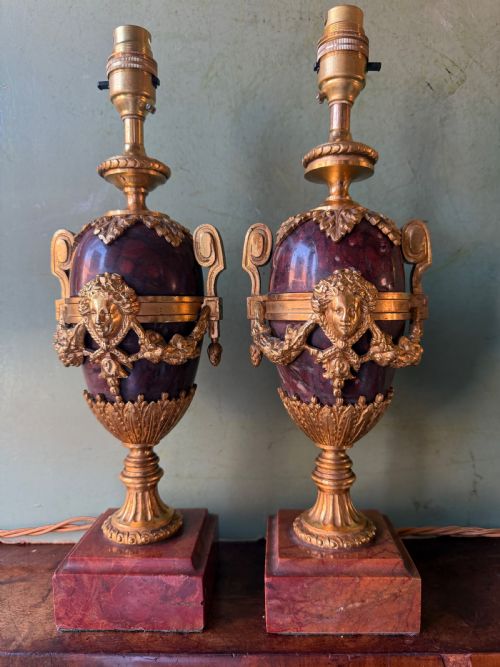
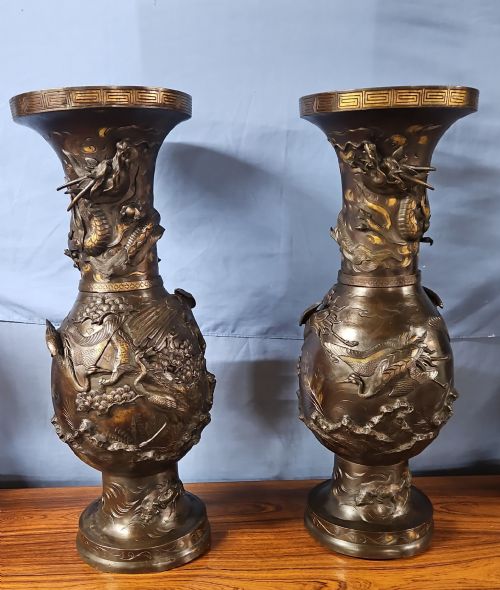
When you search for gilded bronze urns, you encounter nineteenth-century decorative metalwork, often paired with Sèvres style porcelain, white marble, or rouge marble. These pieces frequently appear as pairs of lidded cassolettes or decorative vases originating from French workshops.
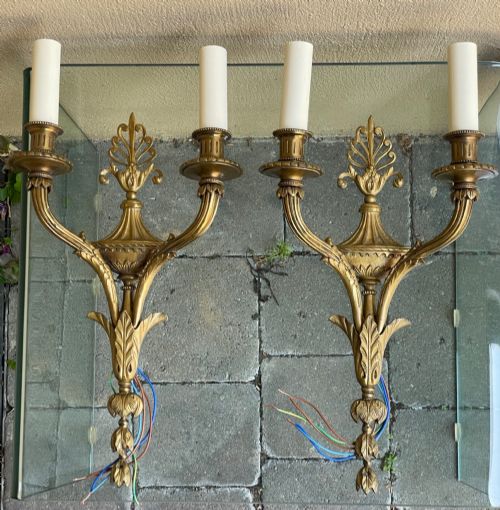
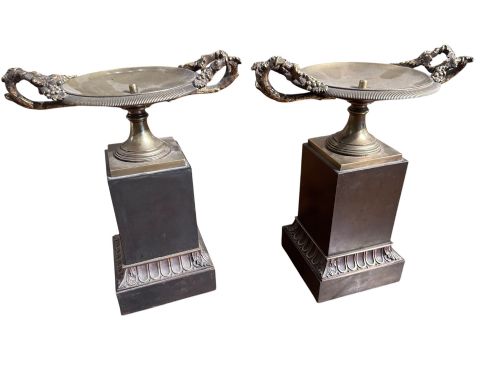
The selection includes items shaped by nineteenth-century revival styles such as Louis XVI, French Empire, and French Rococo. Alongside dedicated vases and urns, related forms appear on this page, including mantel clocks, table lamps, tazzas, and candelabras.
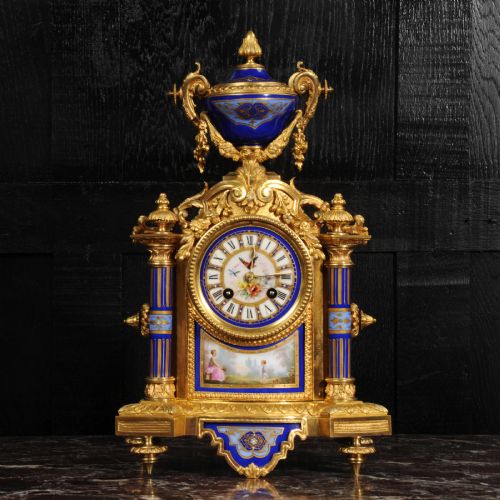
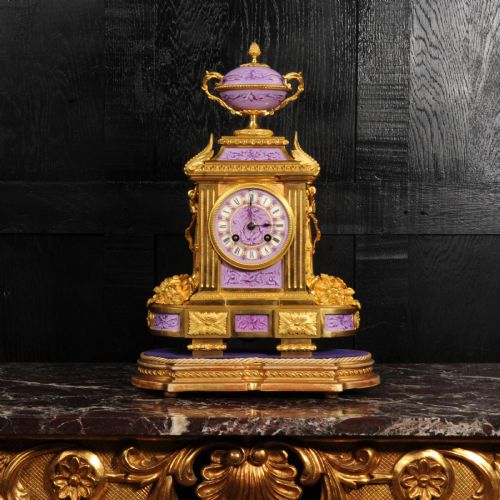
Many examples reflect nineteenth-century European taste for classical antiquity, incorporating mounts, handles, and pedestal bases cast in ormolu and bronze. Certain items incorporate ceramic bodies painted in cobalt blue or pink, mounted with gilt bronze foliage and scrollwork.
Materials and technique
Makers utilised bronze, brass, and copper alloys treated with mercury gilding or electrogilding to create the bright ormolu surface characteristic of these decorative objects. This gilded metal was cast and chased by hand to sharpen details on acanthus leaves, scroll mounts, and figural handles.
Porcelain elements, notably Sèvres style ceramic bodies, were often hand-painted with cobalt blue glazes and polychrome scenes before being fitted into metal mounts. Marble components, including white and rouge varieties, were turned on lathes and polished to support the heavy cast metal collars and plinths.
Quality variations
The degree of hand-chasing on the ormolu surfaces dictates much of the visual distinction across these pieces, separating sharp, deeply articulated floral and figural reliefs from softer, shallower castings. Heavier gauge bronze and substantial marble plinths indicate sturdier construction and greater material cost during manufacture.
The integration between the metal mounts and the ceramic or stone bodies demonstrates the skill of the assembler, where flush joints and secure fixings elevate the finished object. Finer porcelain hand-painting and richer gilding tones on the ceramic reserves further mark out superior examples within the nineteenth-century range.
Japy Freres·Achille Brocot·Charles Korschann·Vincenti of Paris·JP Delettrez
The Gilded Bronze Urns Glossary
- Ormolu
- Gilded bronze produced by applying a mercury-gold amalgam to a bronze base and heating it to drive off the mercury. This technique creates a durable, golden surface frequently seen on nineteenth-century French decorative objects.
- Cassolette
- A decorative vase or urn with a reversible lid that functions either as a closed vessel or as a candleholder. These pieces often feature ormolu mounts fitted to marble or ceramic bodies.
- Garniture
- A set of three or more matching decorative objects, typically comprising a mantel clock flanked by matching candelabras or vases. These sets formed symmetrical decorative schemes on nineteenth-century mantelpieces.
- Campana urn
- A bell-shaped classical vessel with flared rims and handles, often cast in bronze or brass. Grand Tour examples from the nineteenth century frequently replicate ancient Roman shapes.
Gilded Bronze Urns: Frequently Asked Questions
What is an ormolu mount?
An ormolu mount is a cast and gilded bronze decorative element attached to the body of a vase, clock, or piece of furniture. These mounts were shaped into floral scrolls, foliage, or figures to enhance the appearance of marble and porcelain.
In nineteenth-century workshops, artisans chased the cast metal with tools to define the details before applying the gold finish. This process added textural contrast to the smooth ceramic or stone surfaces beneath.
How do I identify a French Empire piece?
French Empire pieces rely on strict classical proportions, drawing inspiration from ancient Roman, Greek, and Egyptian motifs. You will notice symmetrical designs featuring military trophies, palmettes, swans, and formal acanthus leaves.
The metalwork on these items usually combines bright mercury-gilded bronze with dark patinated bronze bodies. Marble bases are heavy and square, supporting clean architectural silhouettes.
Where were these urns displayed?
Nineteenth-century households placed these urns on mantelpieces, console tables, and side cabinets, frequently as part of matching garniture sets. They served purely decorative purposes, adding colour and classical formality to reception rooms.
Pairs were positioned symmetrically around central clocks or mirrors to balance the interior arrangement. Their reflective gilded surfaces were intended to catch candlelight and natural daylight.
Are porcelain sections hand painted?
Porcelain sections on nineteenth-century ormolu-mounted pieces often feature hand-painted details, particularly on Sèvres style vases and clock dials. Artists applied cobalt blue glazes and enamel colours by hand before firing the ceramics in kilns.
While some background panels use printed transfer outlines, the finer floral sprays and portraits received individual brushwork. Gilding on the ceramic borders was also applied by hand using powdered gold.
What is a Grand Tour object?
Grand Tour objects are souvenirs purchased by nineteenth-century travellers visiting cultural sites in Italy and France. These pieces included bronze campana urns, marble tazzas, and miniature sculptures designed to emulate classical antiquities.
Travellers collected them to demonstrate education and refined taste upon returning home. Workshops in Paris and Italy produced these quality reductions specifically for the tourist market.