


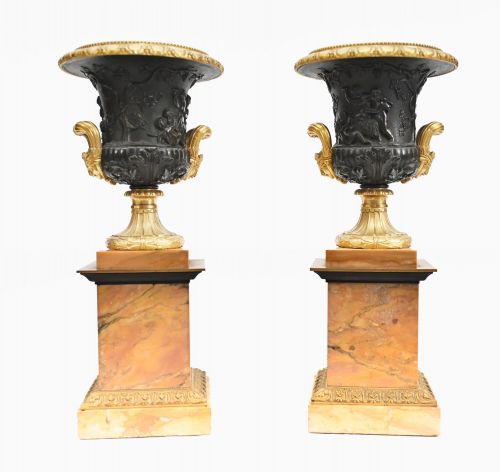


French Urns on Plinths
French urns on plinths are sculptural bronze and marble ornaments that anchor a room with classical symmetry.
French Urns on Plinths
French urns on plinths combine classical vessel forms with elevated bases, bringing architectural presence to interior spaces. When you search for french urns on plinths, you encounter decorative objects designed to display neoclassical taste.
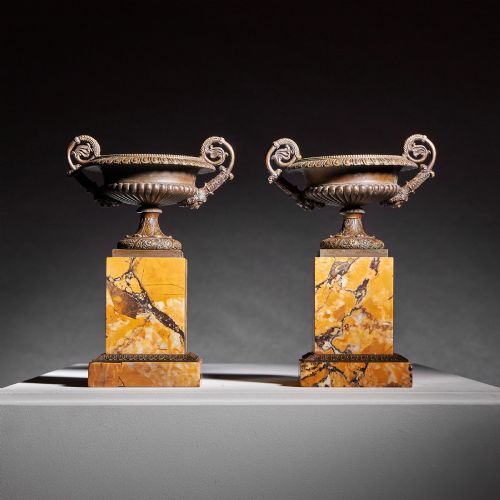
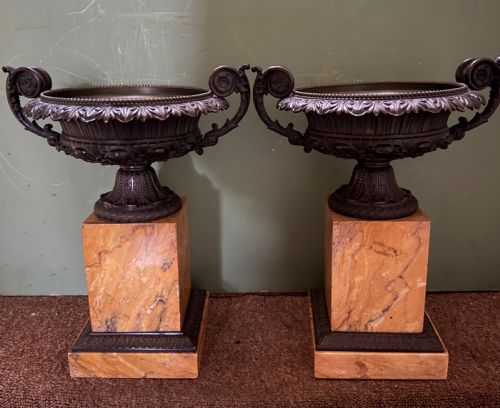
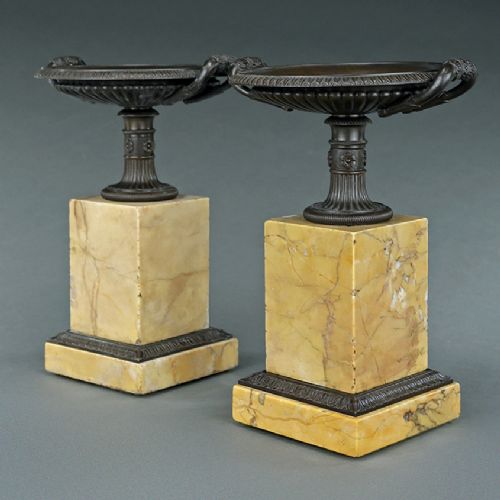
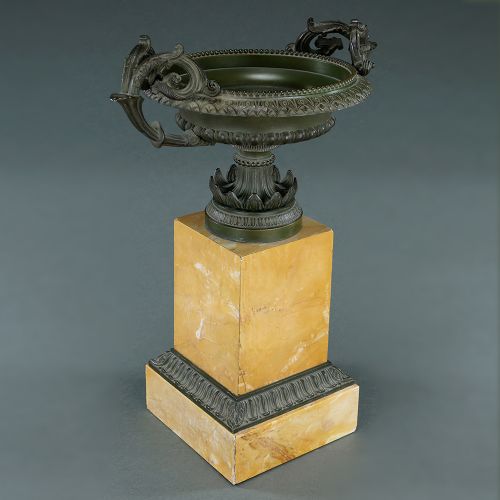
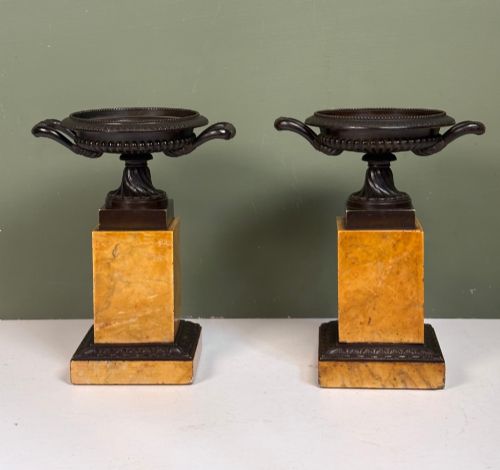
The pieces listed here predominantly date from the nineteenth century, drawing heavily on Grand Tour aesthetics and French Empire designs. These works typically take the form of campana vases, tazzas, and covered urns mounted upon dedicated marble or wood plinths.
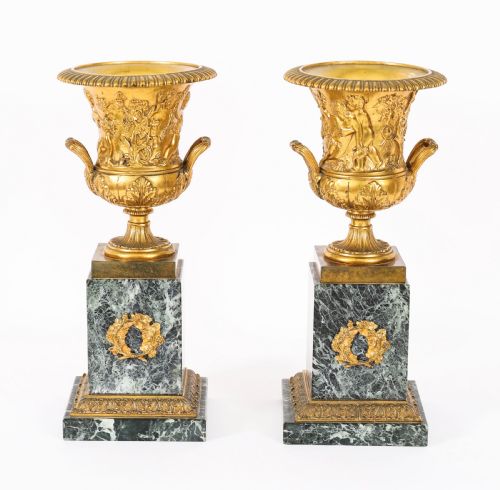
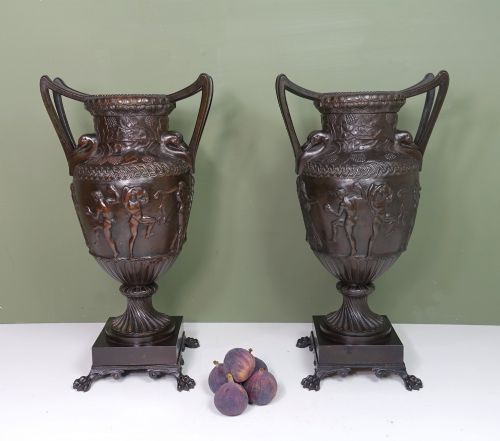
Makers of this period utilised classical motifs such as cherubs and bacchus figures, echoing ancient Roman and Greek models. Such items served primarily as mantel ornaments or cabinet centerpieces in formal nineteenth century interiors.
How they were made
Foundries produced the metal components using traditional casting methods in bronze, gilt bronze, or cast iron, often finishing surfaces with fine chording and patination. Spelter also appears in late nineteenth century examples as an alternative metal medium.
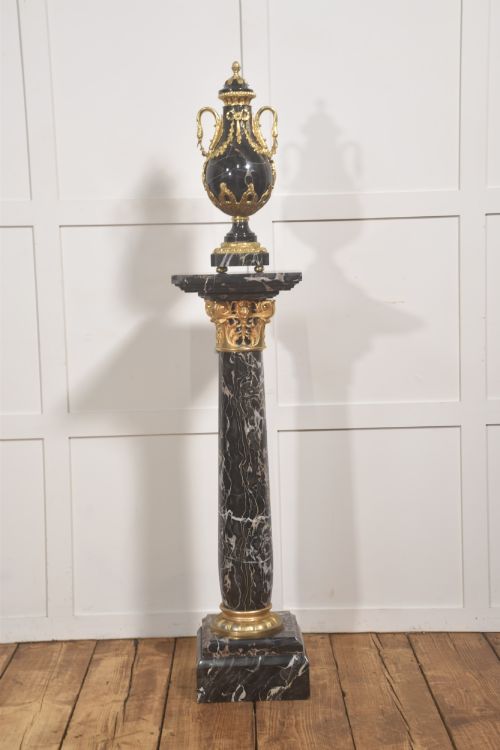
Statuary marble and green marble formed the bases and body sections, carved and turned to support the heavy metalwork. Ormolu mounts and cast brass elements were subsequently applied to enhance the decorative scheme.
French Urns on Plinths Retail Price Guide 2026
Typical asking prices for french urns on plinths among the pieces listed under this phrase on Sellingantiques today, from the lower quarter to the upper quarter. They describe what is for sale here now, not the wider market.
Listings feature nineteenth century pieces spanning bronze, marble, cast iron, and mahogany pedestals.
What varies in quality
The crispness of the chased detail on the bronze surfaces separates superior examples from simpler castings. Sharp relief in figures and foliage indicates skilled handling by the foundry artisan.
The selection and density of the marble plinths dictate overall visual weight and stability. Rich veining and precise corner turning distinguish the finest mountings from standard production pieces.
The French Urns on Plinths Glossary
- Campana
- A bell-shaped vessel form popular in classical antiquity and revived during the nineteenth century. These urns feature flared rims and tapering bodies.
- Ormolu
- Gilded metal mounts applied to furniture, marble stands, and decorative urns. The technique involves applying a gold amalgam to bronze.
- Grand Tour
- A cultural journey undertaken by wealthy young Europeans to study classical antiquities. This travel directly inspired the production of miniature bronze urns and souvenirs.
- Gadrooned
- A decorative carved or cast ornamental band consisting of convex curves. This pattern commonly encircles the rim or base of classical urns.
French Urns on Plinths: Frequently Asked Questions
What are french urns on plinths?
These decorative objects are nineteenth century sculptural vessels cast in bronze, iron, or spelter, paired with carved marble bases.
They reflect classical revival tastes and were designed as ornamental centerpieces for grand interiors.
Where were they placed?
Nineteenth century households positioned these pieces on mantelpieces, library tables, and dedicated pedestals.
Their elevated plinths allowed them to command attention as focal points within formal rooms.
How do I style them?
Pair symmetrical pairs of bronze and marble urns on console tables or sideboards to create classical balance.
Allow sufficient surrounding space so the patinated metal and marble details remain visible.
How are periods told apart?
Earlier nineteenth century works feature heavier cast bronze and dense statuary marble with refined hand-chasing.
Later pieces from the end of the century often utilise spelter or simpler stepped plinth bases.