



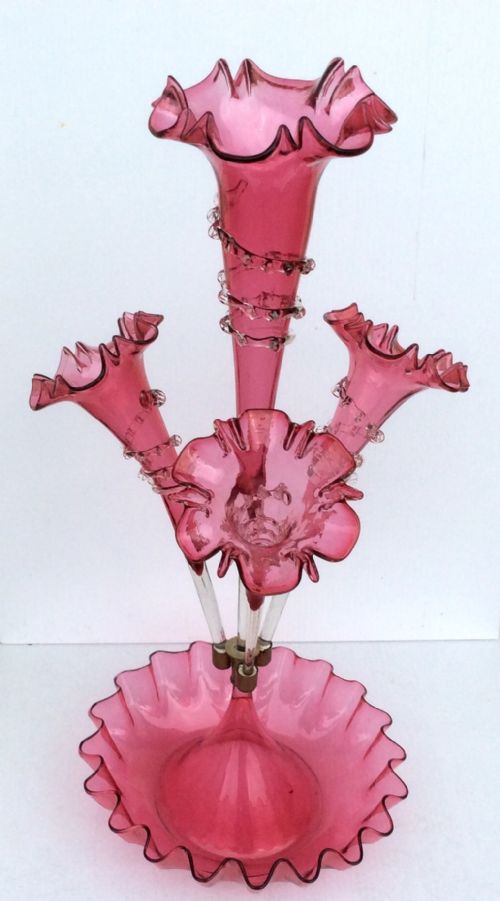
Glass Flower Epergne
A glass flower epergne is a striking table centrepiece designed to display blooms across multiple trumpets, bringing height and colour to a room.
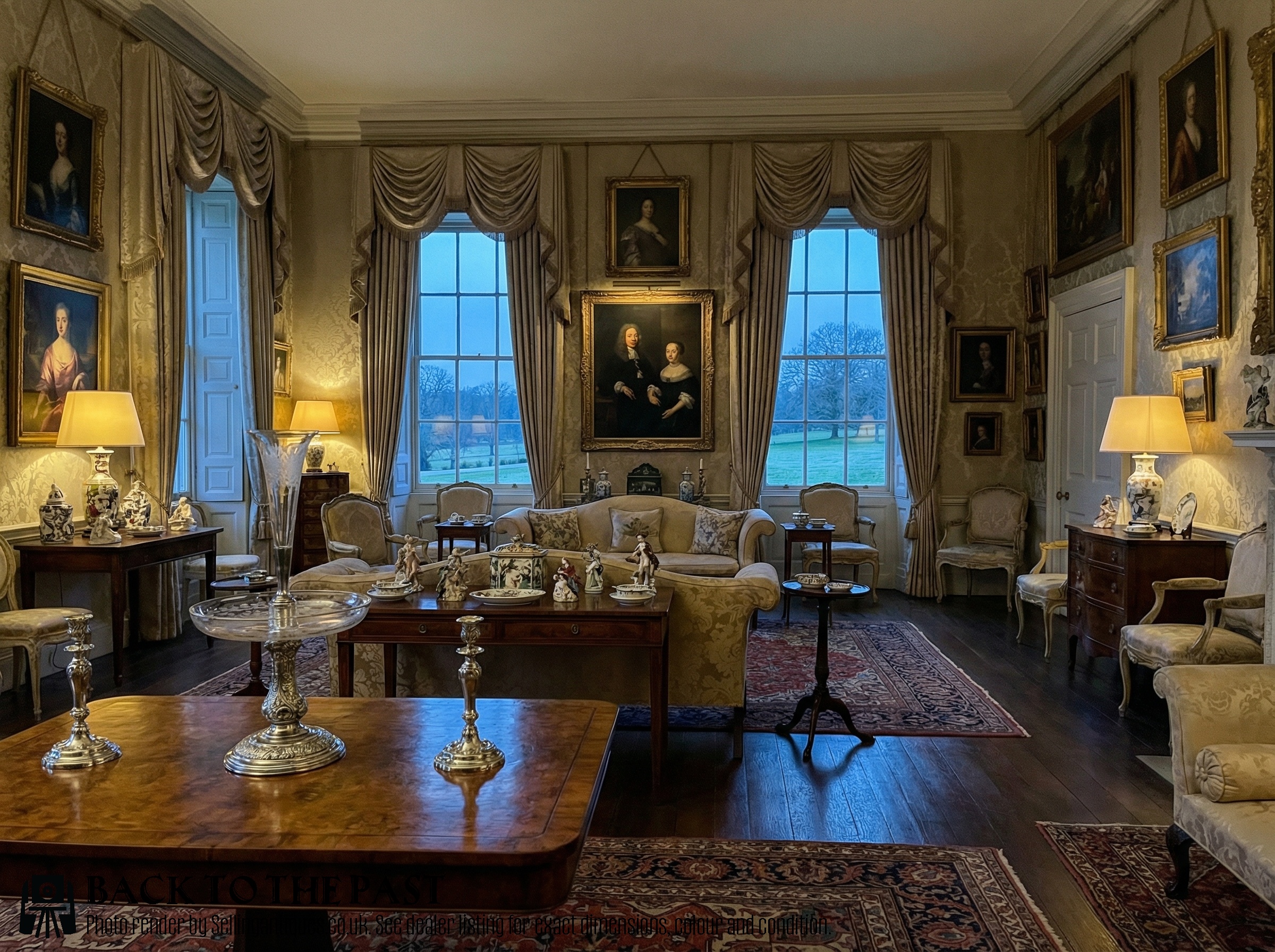
Glass Flower Epergne
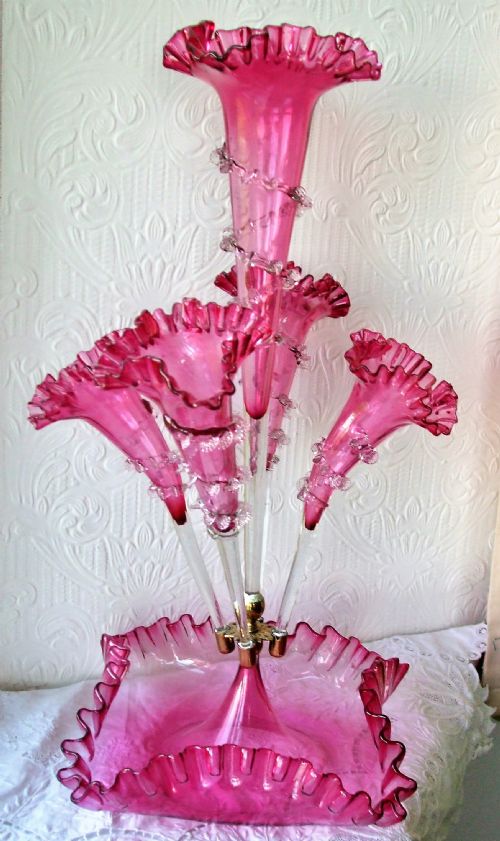
A glass flower epergne is a multi-stemmed vessel designed for dining tables, combining a central bowl with detachable trumpets or flutes for elaborate floral arrangements. When you search for this phrase, you meet Victorian cranberry glass examples most often, alongside later Art Nouveau, Art Deco, and Edwardian interpretations.
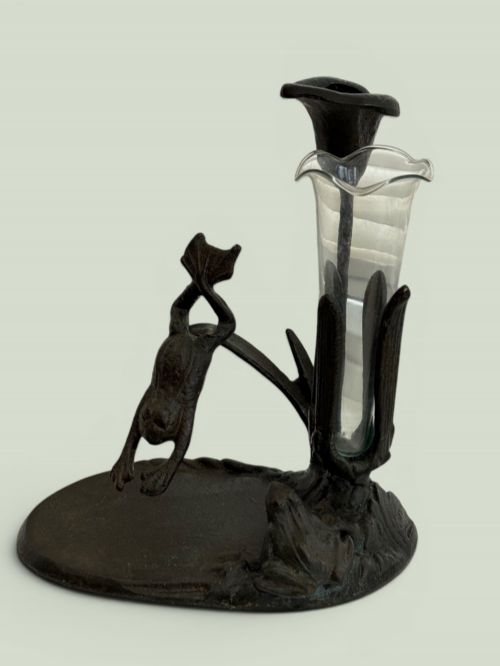
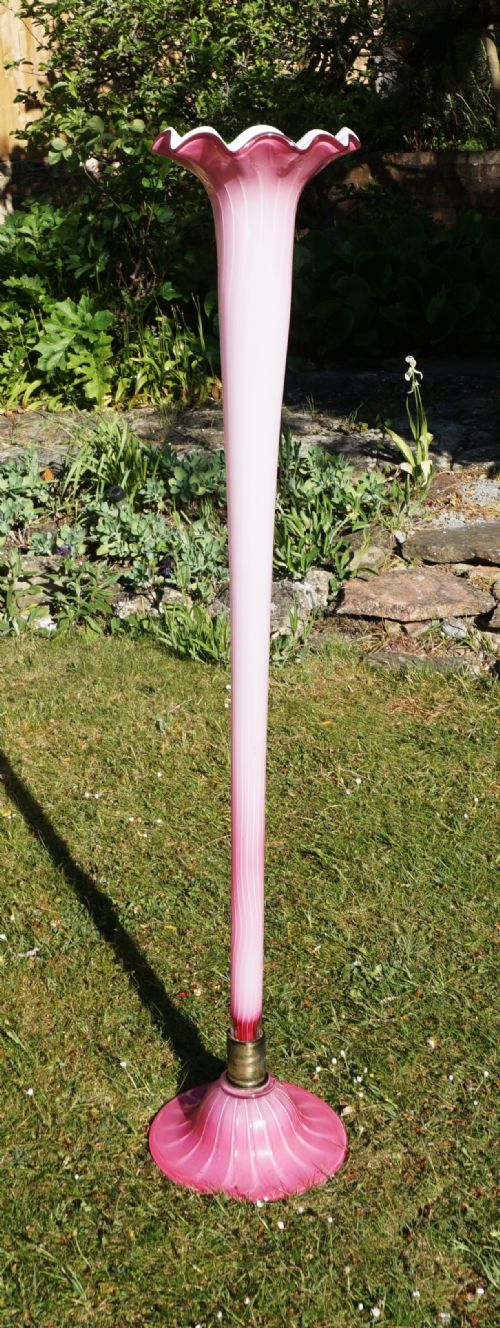
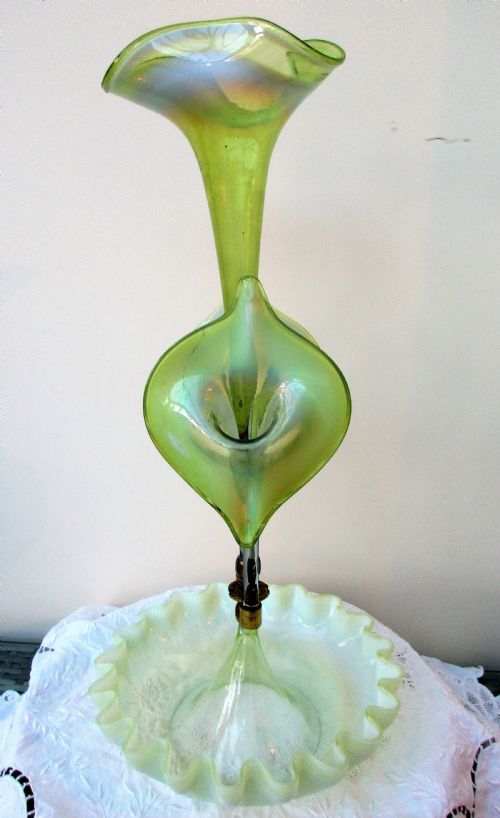
The forms range from single tall lily vases and posy vases to grand centrepieces featuring silver plated or bronze bases. Victorian pieces frequently utilise rich cranberry or vaseline glass, whilst French examples from the late nineteenth and early twentieth centuries incorporate gilt bronze and crystal.
These multi-piece table centrepieces served as the focal point of formal dining, allowing hosts to arrange flowers at varying heights. Surviving specimens demonstrate the shift in decorative tastes from ornate nineteenth-century designs towards cleaner twentieth-century lines.
How they were made
The glass elements of a glass flower epergne are typically free-blown or mould-blown, often utilising cased glass techniques where layers of different coloured glass are fused together. Cranberry, ruby, green, and pink hues are achieved through the addition of metallic oxides to the molten batch during manufacture.
Metal mounts, frames, and bases are cast in brass, bronze, or silver plate, sometimes receiving a gilt finish to contrast with the coloured glass. Etched details on the glass surfaces and hallmarks on the silver plated or sterling silver components indicate the collaborative work of specialist metalworkers and glasshouses.
Victorians loved these so much they used them for celery too.
What varies in quality
The quality of a glass flower epergne lies in the depth and uniformity of the glass colour, the complexity of the pulled trumpets, and the integrity of the fitted base. Finer examples display crisp etching, heavier metal casting, and balanced proportions across all detachable stems.
Complete sets where every flute matches in tint and form command greater attention than assembled groupings. The marriage of replacement trumpets to older bases occurs frequently, making the harmony of the components the primary indicator of a superior piece.
Walker And Hall
The Glass Flower Epergne Glossary
- Cranberry Glass
- A transparent pinkish-red glass coloured with gold chloride. It appears frequently in Victorian tablewares.
- Vaseline Glass
- A transparent yellowish-green glass containing uranium dioxide, which fluoresces under ultraviolet light. It is often found in Victorian posy vases.
- Trumpet Vase
- A flared, funnel-shaped vessel resembling a musical horn. These form the detachable stems of multi-vase epergnes.
- Cased Glass
- Glass made by fusing two or more layers of different coloured glass together whilst molten. This technique creates rich contrasts when cut or etched.
- Posy Vase
- A small vessel intended for a short bunch of cut flowers. They appear as standalone pieces or as satellite holders on larger centrepieces.
- Silver Plate
- A thin layer of silver bonded to a base metal such as copper or brass. Many Victorian and Edwardian frames utilise this method.
Glass Flower Epergne: Frequently Asked Questions
What is a glass flower epergne?
A glass flower epergne is a decorative table centrepiece featuring a central bowl and multiple detachable vases or trumpets. They were designed to hold elaborate floral displays for dining tables.
These pieces combine blown glass components with metal stands made from brass, bronze, or silver plate. The design allows flowers to radiate outwards at various heights.
How were epergnes used on the dining table?
Victorian hosts placed the epergne in the centre of the dining table as the main decorative focal point. The multiple trumpets held cut flowers whilst the base bowl sometimes served for floating blooms or fruit.
Because they were tall, makers designed them so guests could converse beneath or around the outstretched glass stems. They marked formal dining occasions throughout the nineteenth and early twentieth centuries.
How do I care for an antique epergne?
Cleaning requires gentle hand washing in lukewarm water with mild soap, avoiding sudden temperature changes that can crack historical glass. Metal components should be dusted carefully without harsh chemical polishes.
Store or display the pieces away from direct sunlight and vibrations. Because the trumpets lift out of the base, handling each component individually prevents accidental drops.
How can I tell a Victorian epergne from a later piece?
Victorian examples typically feature rich cranberry or vaseline glass with ruffled rims and applied trailing. They often rest on silver plated or brass stands with ornate floral casting.
Later pieces from the Art Nouveau and Art Deco periods show sleeker lines, different colour palettes such as Julien glass, or simpler geometric metal bases. Hallmarks and registration marks on the metal parts also help confirm the period of manufacture.