


Silver Epergne Centrepiece
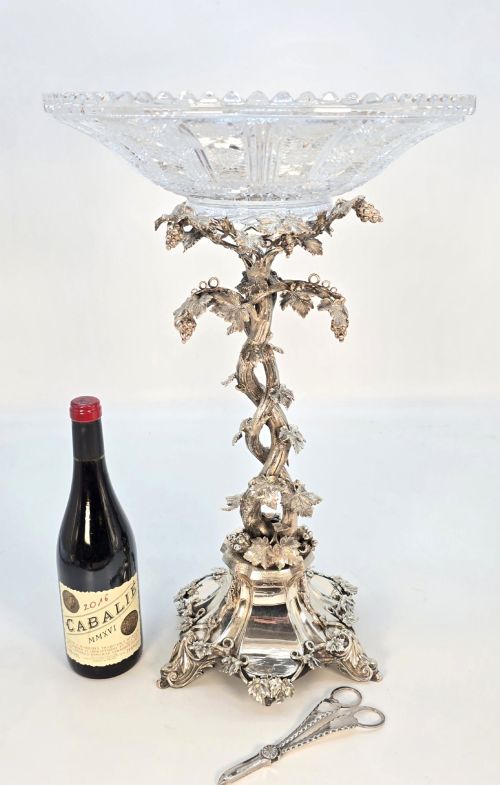
A silver epergne centrepiece anchors the dining table with branching crystal flutes and tiered dishes designed to hold fruit and flowers.
Silver Epergne Centrepiece
A silver epergne centrepiece combines a central stand with multiple detachable baskets, trumpets, or dishes to create a grand display for the dining table. The pieces found here span from the George III period through the Victorian and Edwardian eras, with many examples originating in the nineteenth century.
Most entries follow traditional forms such as trumpet vases, multi-arm candelabras, and low bowls, while others adopt naturalistic or nautical themes involving palm trees or camels. Makers often incorporated supplementary holders for flower pots, sweetmeats, or fruit, resulting in versatile table architecture.
Judging the work
Quality rests on the weight and integrity of the metal frame, the precision of the piercing, and whether the glass elements match the age of the base. Pieces by established workshops display crisp casting details on figural elements such as palm trees or camels rather than soft, worn contours.
The survival of original matched glass flutes and crystal baskets determines the desirability of a piece. Assembled items with replacement liners diverge noticeably from those kept intact since their manufacture.
Some Victorian examples feature three small sitting camels stationed permanently at the base, guarding the fruit above.
Fox & Grapes·Walker & Hall·Royal Worcester·James Deakin·James Dixon & Sons·Francis Crump·Mappin & Webb
The Silver Epergne Centrepiece Glossary
- Epergne
- A large table centrepiece featuring a central vessel surrounded by smaller branching dishes or trumpet vases. It serves as a formal centrepiece for fruit, flowers, or sweetmeats.
- Old Sheffield Plate
- A composite material made by fusing a thin sheet of silver to a thicker copper base before rolling. This technique predates modern electroplating.
- EPNS
- Electroplated Nickel Silver, a common base metal method utilised extensively for nineteenth century dining wares. It provides the appearance of solid silver at a different scale of production.
- Opaque Glass
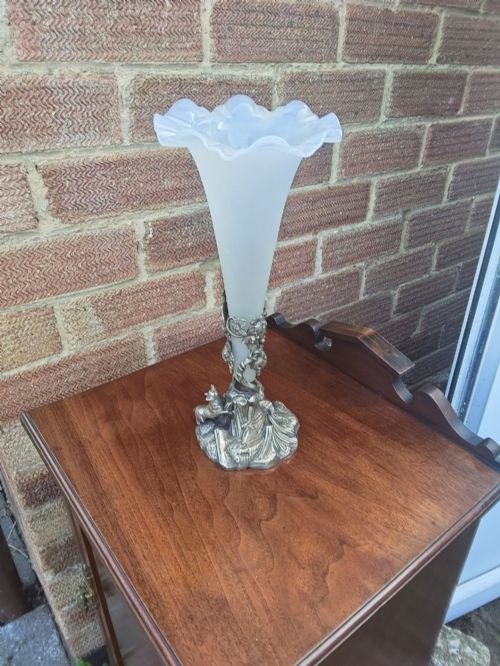
- A dense, milky glass variety utilised for Victorian and Edwardian trumpet inserts and bowls. It contrasts sharply with the reflective polished metal of the frames.
- Trumpet Vase
- A flared, funnel-shaped vessel that slots into the arms of an epergne. These containers hold floral displays above the table level.
Silver Epergne Centrepiece: Frequently Asked Questions
How do I clean a silver epergne centrepiece?
Use a soft cloth and a gentle silver cream formulated for plated or sterling surfaces, avoiding abrasive pads that wear down thin plating. Remove all glass inserts before cleaning to protect them from moisture and cleaning agents.
Wash the cut glass or opaline vessels separately in warm soapy water and dry them completely before reassembling the structure.
Are the glass inserts usually original?
Many pieces retain their matched period glass, though trumpet vases and small baskets were frequently broken and replaced over decades of use. Look for consistent wear patterns and matching hues between the central bowl and the surrounding flutes.
Minor bubbles or manufacturing imperfections in the glass often confirm period production rather than modern reproduction.
What was an epergne used for?
These tall structures dominated formal dining tables during the Georgian, Victorian, and Edwardian periods as ornamental centerpieces. Hosts filled the tiers with fresh fruit, sweetmeats, and floral arrangements to impress guests during dinner parties.
Lower bowls also functioned as standalone receptacles when the branching arms and trumpets were detached.
How can I tell Victorian from Edwardian pieces?
Victorian examples often favour heavy ornamentation, naturalistic floral motifs, and elaborate silver plating combined with deep-cut crystal. Edwardian designs frequently lean towards lighter proportions, pierced silver work, and pearlescent or opaline glass.
Hallmarks on sterling silver components provide exact assay office symbols and date letters for precise dating.