


Etched Glass Centrepiece
An etched glass centrepiece commands the middle of a dining table, catching the light and holding fruit or flowers with Victorian or later presence.
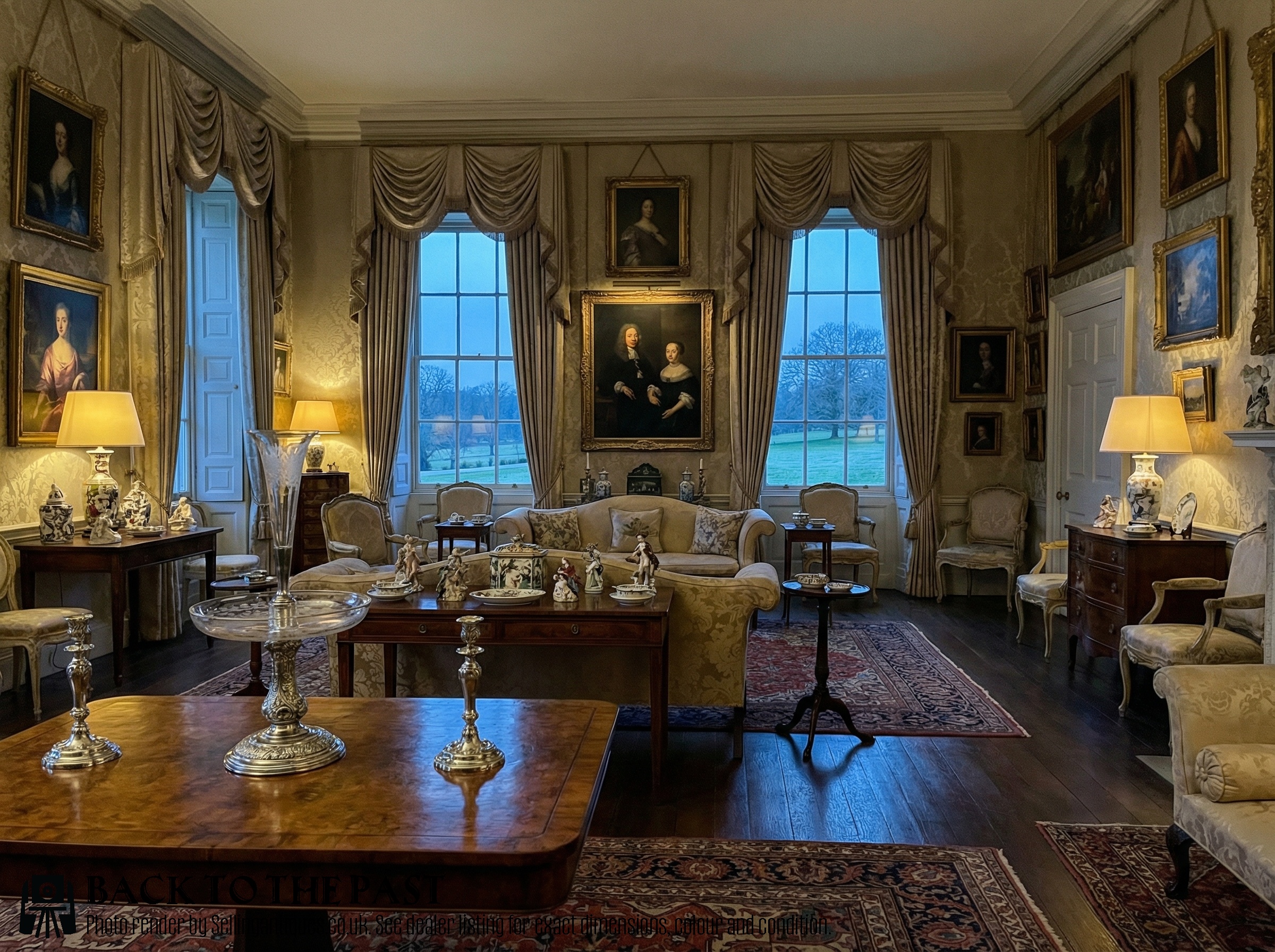
Etched Glass Centrepiece
When you search for an etched glass centrepiece, you encounter a gathering of heavy glass vessels and plateau stands designed to anchor a formal table setting. The examples on this page span the nineteenth century through to the mid twentieth century, encompassing Victorian pedestals, Edwardian mirrors and Bohemian coloured bowls.
You meet various forms ranging from low tazzas and decorative bowls to tall epergnes incorporating silver plate or carved wooden mounts. The Victorian period supplies pedestal bowls and lead crystal tazza stands, while later decades offer Czech decorative arts pieces and mid-century Italian work.
Materials and construction
Makers utilised lead crystal, clear glass, cobalt glass and frosted glass, shaping them through blowing, moulding and cutting. Surface decoration relied on wheel engraving and acid etching to create opaque or translucent patterns against polished clear fields.
Many elevated examples integrate structural supports of silver plate, gilt bronze or carved Black Forest wood. These mixed media pieces combine heavy glass bowls with substantial metal or wooden bases to hold complex arrangements.
Some Victorian dining tables required mirrored plateaus simply to bounce candlelight upward and trick guests into thinking the room had twice as many candles.
Judging quality and execution
Quality rests upon the crispness of the wheel cutting and the depth of the acid etching on the glass vessel. Finer pieces display sharply defined motifs and smooth, highly polished surfaces without distortion in the material.
The sophistication of the supporting mount distinguishes standard production from superior examples. Integrated silver plate by known makers or substantial gilt bronze and carved wooden bases elevate the overall authority of the object.
Venini·Carlo Scarpa·Baccarat·Walker And Hall
The Etched Glass Centrepiece Glossary
- Epergne
- A large table centrepiece featuring a central bowl with branching holders for fruit, flowers or sweetmeats. These structures often combine cut crystal with silver plate or bronze mounts.
- Tazza
- A shallow ornamental bowl raised on a high foot or pedestal. Victorian examples frequently employ lead crystal with etched decoration.
- Plateau
- A mirrored table base designed to sit beneath a centrepiece or decorative objects to reflect candlelight. They typically feature wooden or metal frames.
- Lead crystal
- Glass containing lead oxide to increase weight, brilliance and refractive index. This material allows for deeper and sharper cutting.
Etched Glass Centrepiece: Frequently Asked Questions
What is an etched glass centrepiece?
An etched glass centrepiece is a decorative vessel or stand placed in the middle of a dining table. They were traditionally used to display fruit or flowers during formal meals.
Today these pieces function as decorative table focal points or mantel displays. Their etched patterns reflect ambient light and add texture to a room.
How do I date an etched glass piece?
Dating relies on examining the style of the etching, the weight of the glass, and any accompanying metal mounts. Victorian pieces often feature heavy lead crystal and ornate floral motifs.
Later pieces from the twentieth century show simpler geometric lines or distinct modernist forms. Comparing the manufacturing technique with known period styles helps narrow the date.
What is the difference between a tazza and an epergne?
A tazza is a single shallow bowl raised on a pedestal foot. It holds a modest display of fruit or stands alone as an ornament.
An epergne is a more complex multi-tiered centrepiece with a central bowl and additional branching trumpets or baskets. This allows for elaborate arrangements of flowers and sweetmeats.