



Footed Crystal Bowl
Footed crystal bowl selections bring heavy glass and elevated forms together, offering deep pedestals and cut surfaces that hold fruit or catch the light.
Footed Crystal Bowl
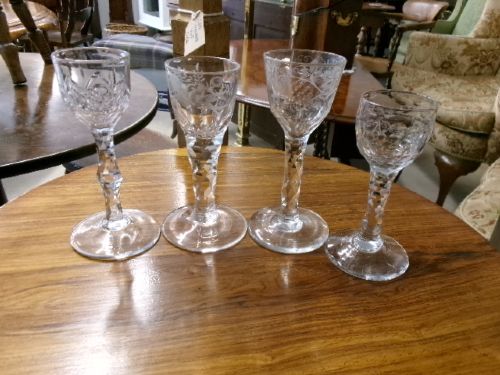
When you search for a footed crystal bowl, you look at items raised on a base, pedestal, or feet, spanning Georgian drinking glasses to Victorian table centrepieces and later decorative bowls.
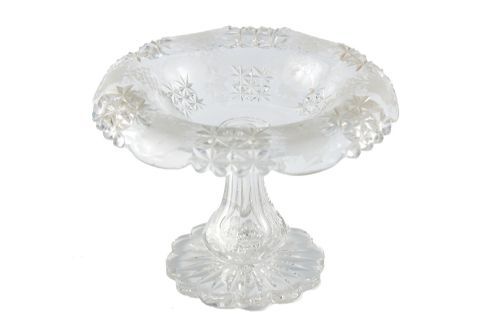
The versions you meet most often on this page include heavy cut glass pedestal bowls from the nineteenth century, alongside tazza stands and handled jelly or fruit vessels.
Makers and workshops from English, French, and Bohemian origins produced these works in lead crystal, clear glass, and flashed over-crystal formats.
How they were made
Artisans formed these pieces using hand-blown and mould-blown techniques, shaping heavy lead glass and flint glass while hot before applying manual cooling.
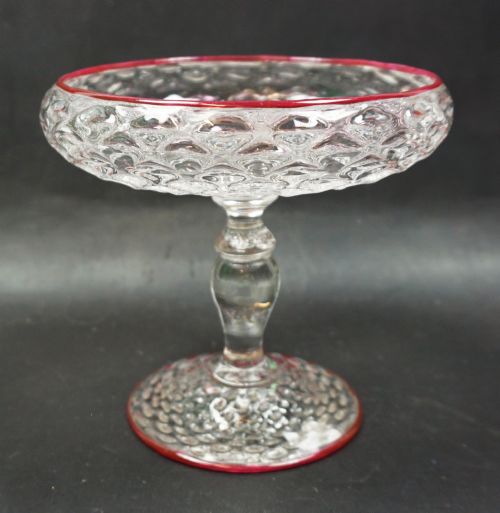
Workers decorated the cooled vessels through wheel-cutting, facet cutting, hobnail patterning, and surface etching, frequently adding enamel or red and yellow over-layers.
Some examples incorporated applied silver mounts, gilt enamelling, or contrasting coloured canes fused into the crystal matrix during initial manufacture.
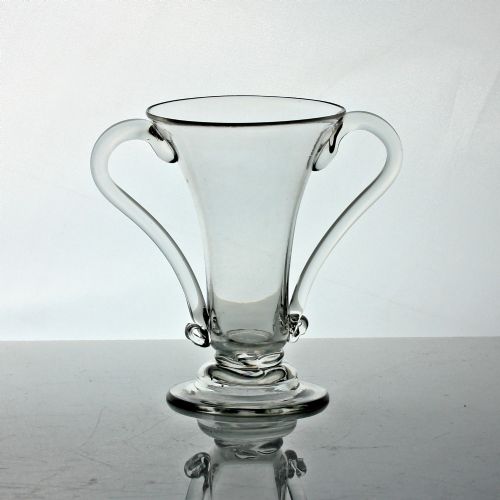
Even a humble jelly glass from the seventeen-forties manages to sport a folded foot designed to survive a hearty thump on a wooden dining board.
What varies in quality
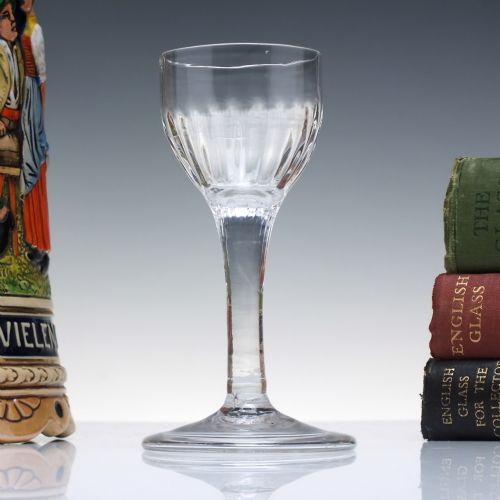
The depth and crispness of the cutting separate ordinary items from superior examples, where facets and hobnail patterns remain sharp to the touch.
Weight and metal purity define the material standard, with high lead content producing a clearer ring and greater light refraction through the bowl.
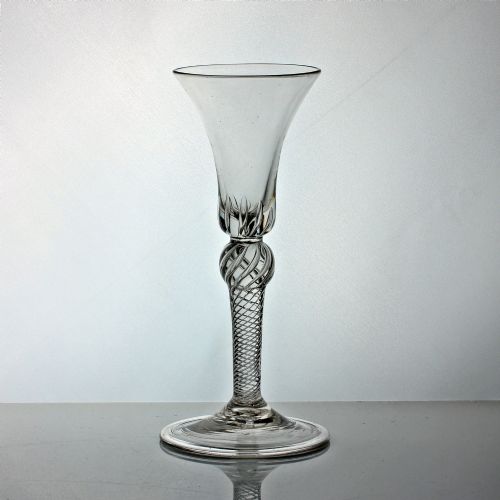
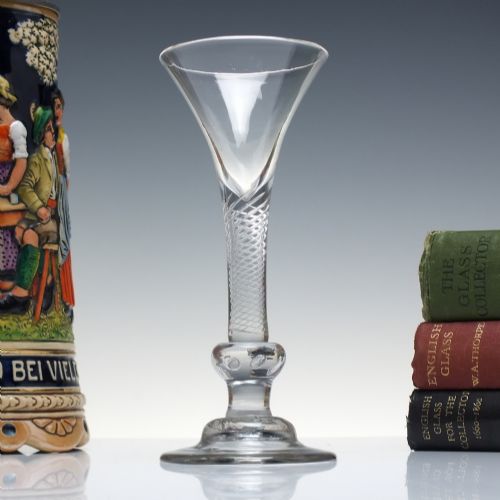
Design ambition also marks the range, separating simple pressed forms from elaborate hand-blown pedestals with air twist stems, folded feet, or overlaid colours.
St Louis glassworks·Stuart for Liberty·Baccarat·Waterford
The Footed Crystal Bowl Glossary
- Tazza
- A shallow bowl or plate mounted on a stem and foot, used historically for serving fruit or small sweetmeats.
- Comport
- An ornamental pedestal dish designed for holding fruit or centrepiece displays on the dining table.
- Lead crystal
- Glass containing lead oxide, which increases weight, brilliance, and softness for easier cutting.
- Hobnail
- A raised, pointed diamond-shaped pattern cut into the surface of glass to catch and reflect light.
- Folded foot
- A rim turned under during glassblowing to add stability and strength to the base of a stem or bowl.
- Air twist
- A spiral formation of tiny air bubbles trapped inside a drawn glass stem during manufacture.
Footed Crystal Bowl: Frequently Asked Questions
How do I clean a crystal bowl?
Wash the glass by hand in lukewarm water using a mild detergent, avoiding sudden temperature changes that might crack the material.
Dry the surface immediately with a lint-free linen cloth to maintain the clarity of the cut facets.
How can I tell an 18th century glass from a Victorian one?
Eighteenth-century drinking vessels and sweet dishes often display characteristic pontil marks, lighter lead weights, and simpler hand-pulled stems or folded feet.
Victorian pieces tend to be heavier, utilising deep hobnail cutting, coloured over-layers, and elaborate pedestal bases moulded with greater industrial precision.
Were these bowls used for food?
Many of these vessels held fruit, jelly, or sweetmeats during formal dining and dessert courses in Georgian and Victorian households.
Others functioned purely as decorative centrepieces or display items intended to showcase the clarity of the crystal.
What does lead glass mean?
Lead glass contains a percentage of lead oxide added to the silica mixture during the melting process.
This addition lowers the melting point and increases the refractive index, giving the glass its characteristic heavy feel and bright sparkle.