


Diamond Cut Glass
Diamond cut glass brings weight and sharp brilliance to the table, catching the light through deep geometric facets.
Diamond Cut Glass
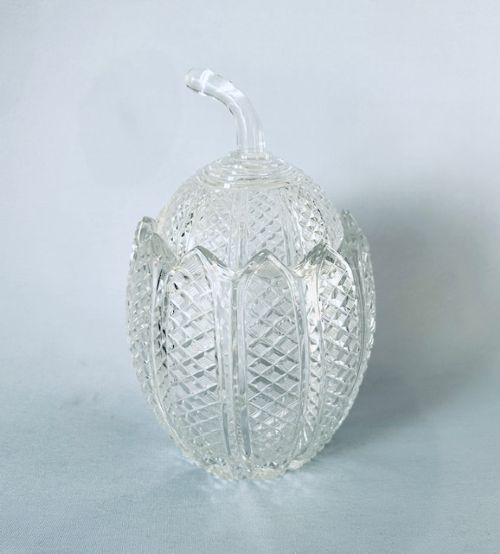
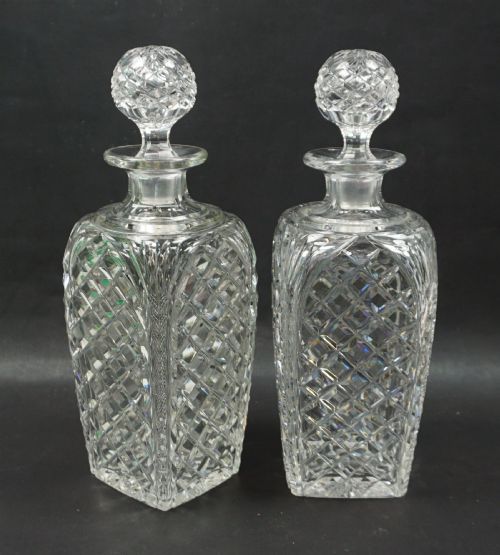
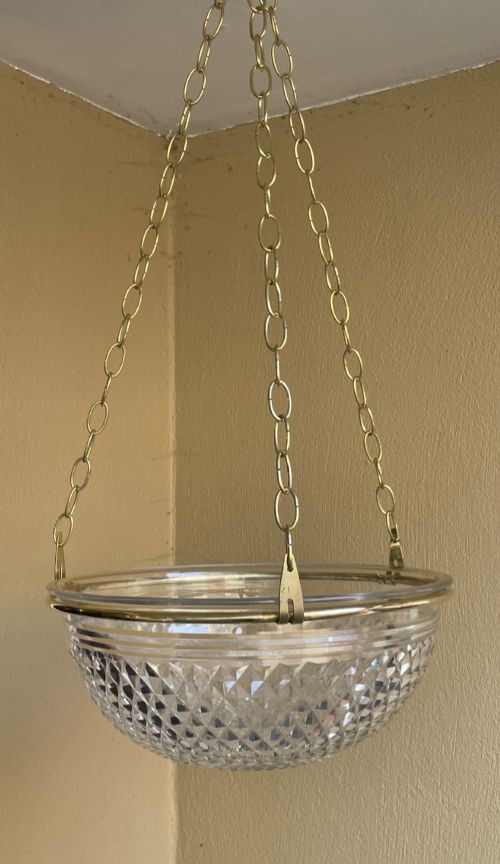
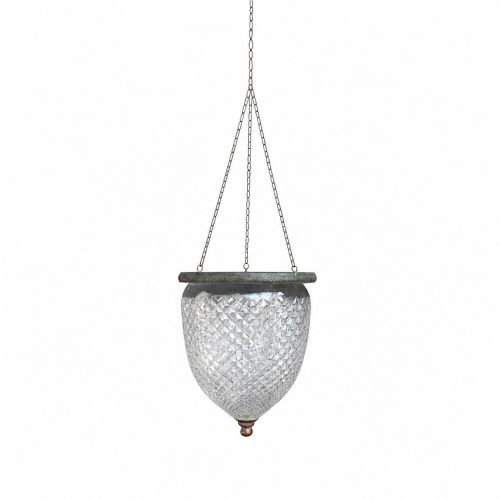
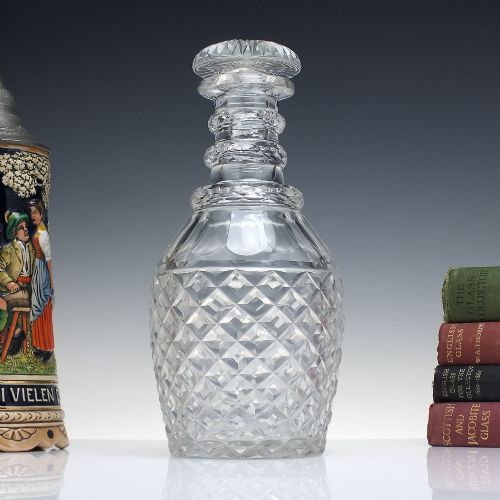
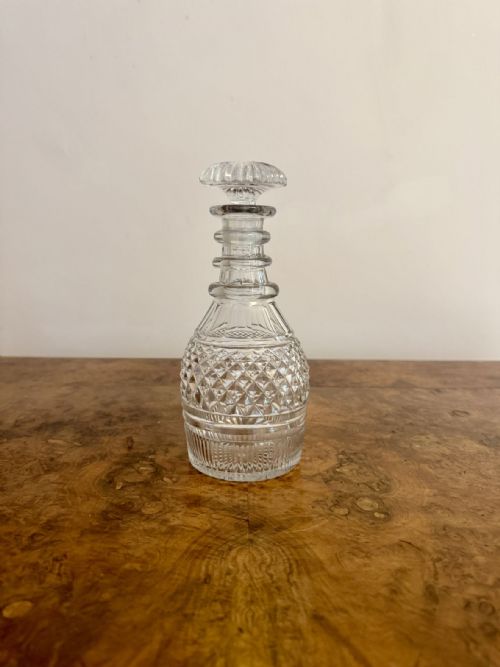
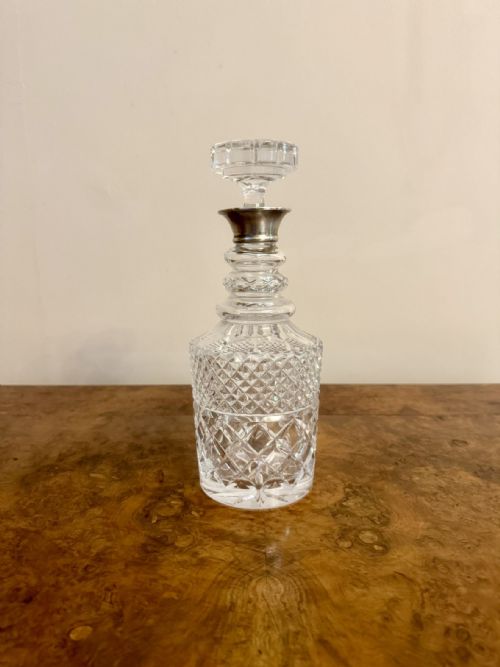
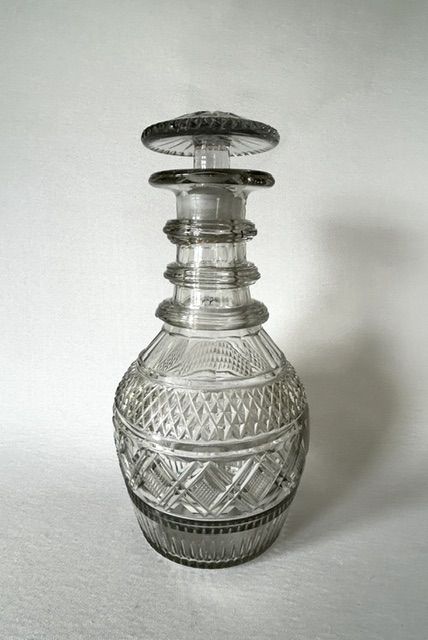
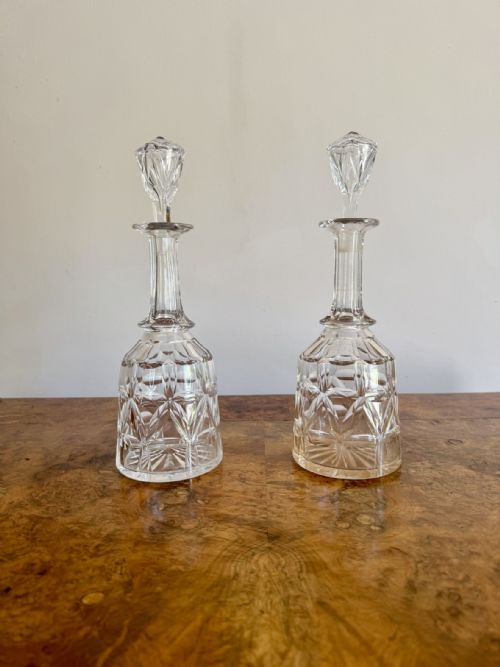
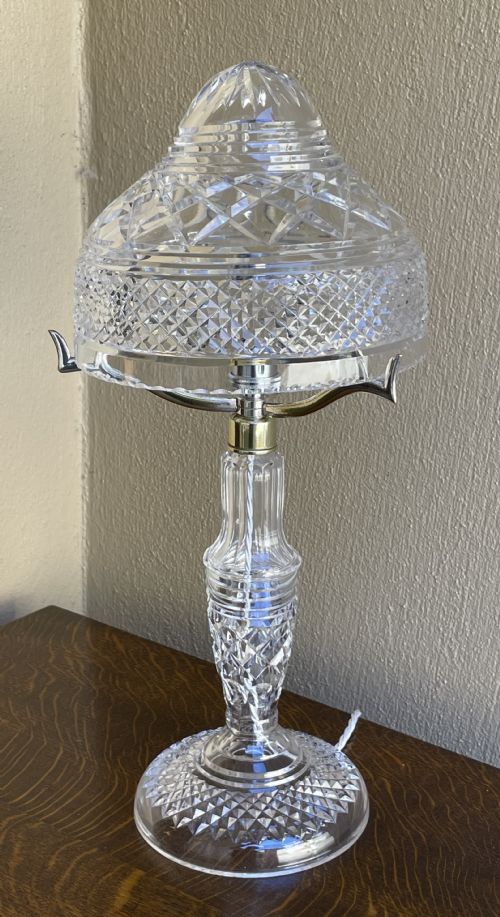
Diamond cut glass encompasses a wide variety of drinking vessels, decanters, bowls, and lighting fixtures produced across the Georgian, Victorian, and Edwardian eras. Buyers searching for diamond cut glass seek pieces defined by precise geometric patterning that creates intense light refraction. The forms range from heavy 18th-century castors and salts to tall Edwardian decanters and plafonnier ceiling lights.
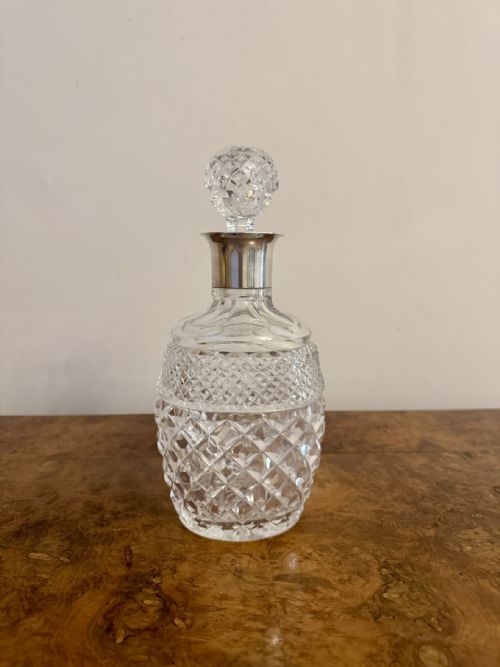
The most common examples encountered on this page stem from the Edwardian period and the 19th century, particularly decanters, jugs, and tablewares. These items often feature combinations of silver plate, brass, or sterling mounts alongside the glass bodies. Irish pieces from the Georgian and Regency periods also appear, prized for their deep wheel-cut facets.
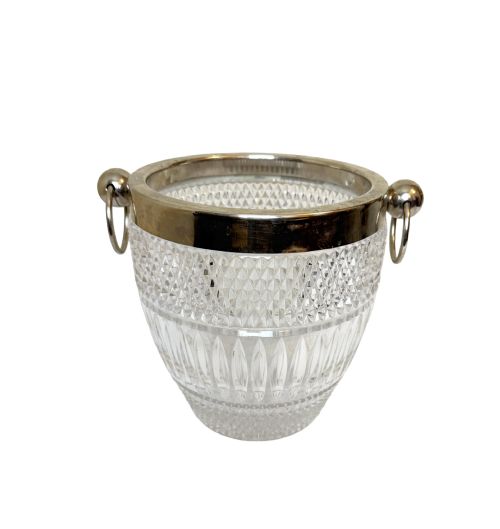
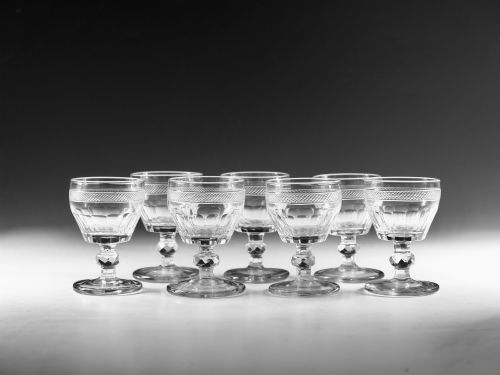
Vessels span both utilitarian table service and decorative display, including claret jugs, ice buckets, and champagne coolers. Smaller items such as port glasses, cruets, and inkwells demonstrate how the cutting technique was applied to objects of daily use. Each piece relies on the interplay between clear glass and sharp, intersecting linear cuts.
Materials and Techniques
The material foundation rests upon heavy lead glass, lead crystal, and cut crystal, which provide the density and clarity required for deep facets. Artisans ground patterns into the surface using rotating wheels fed with abrasives, followed by polishing to restore transparency to the cut channels. This combination of heavy-metal glass and abrasive wheel work produced the characteristic crisp edges.
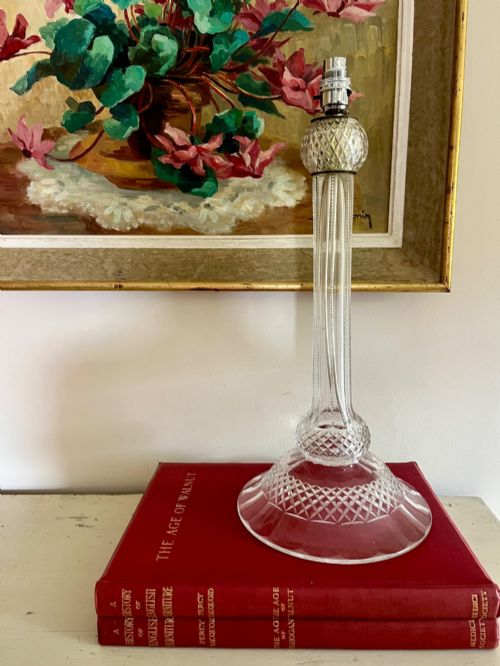
Many items incorporate functional mounts made of silver plate, brass, or sterling silver, attached to necks and rims. These metal components were fitted directly to the glass bodies of decanters, claret jugs, and perfume bottles during assembly. Gilt bronze mounts occasionally appear on larger decorative coolers and lamps from the 19th century.
One Edwardian piece stands out as a glass replica of the massive, uncut Cullinan Diamond.
Assessing Quality
Quality rests primarily on the crispness and depth of the wheel cutting rather than the mere presence of decoration. Superior examples display sharp, well-defined facets that meet cleanly without ragged edges or softening in the troughs. The weight of the raw material also dictates standard, with denser lead crystal holding a more resonant ring and heavier balance.
Proportion and the integration of secondary materials separate standard production from finer work. In mounted pieces, the fit between the glass body and the silver plate, brass, or sterling collar must be exact. The clarity of the base metal and the absence of clouding in the glass further distinguish higher tiers.
James R Gregory
The Diamond Cut Glass Glossary
- Decanter
- A vessel used for holding and serving wine or spirits, typically fitted with a matching stopper. These objects feature heavily cut necks and bodies to aid gripping.
- Lead Crystal
- Glass containing a high percentage of lead oxide, which increases weight, brilliance, and refractive index. This material forms the base of the sharpest cut patterns.
- Plafonnier
- A bowl-shaped ceiling light fixture mounted flush or close to the ceiling. Edwardian examples frequently utilise cut glass bowls to diffuse interior illumination.
- Claret Jug
- A specialised pouring vessel for red wine, usually combining a cut glass body with a hinged silver-plate or sterling mount and handle.
- Star Cut Base
- A decorative motif ground into the underside of bowls, decanters, and vases. It utilises radiating cuts to form a star shape that reflects light upward through the object.
Diamond Cut Glass: Frequently Asked Questions
How do I date an antique cut glass piece?
Dating relies on observing the form, the weight of the metal mounts, and the style of the cutting. Georgian and Regency pieces often feature heavier, simpler forms with deep prismatic cutting, while Victorian and Edwardian items introduce more complex fan and star motifs.
Examine the base for signs of wear, such as fine scratches known as base wear, which indicate age. Silver-plate or brass mounts can also provide a reliable stylistic timeframe matching the 19th or early 20th century.
What is the difference between glass and crystal?
Crystal contains a significant proportion of lead oxide, which adds substantial weight and increases the refractive index of the material. This composition allows artisans to cut deeper, sharper facets that sparkle more intensely than standard soda-lime glass.
Standard glass is lighter and lacks the same resonance when struck. Most fine cut tableware from the 18th century onward utilises lead crystal to achieve its crisp detailing.
How should I display heavy cut glass pieces?
Place heavy items on stable, level surfaces away from the edges of shelves or tables. Ensure that display cabinets have sturdy glass or wooden shelves capable of supporting the substantial weight of lead crystal decanters and bowls.
Position pieces near natural light sources or internal cabinet lighting to maximise the refractive properties of the facets. Avoid overcrowding to let each object catch the light individually.