


Georgian Salt Cellars
These georgian salt cellars bring small-scale silver, glass, wood and ceramic craftsmanship to the dining table with enduring utility.
Georgian Salt Cellars
When you search for georgian salt cellars, you encounter open salts designed for dining tables rather than modern enclosed shakers. The forms range from simple trencher salts and tripod cauldrons to boat shapes, pedestal dishes, and scallop shells.
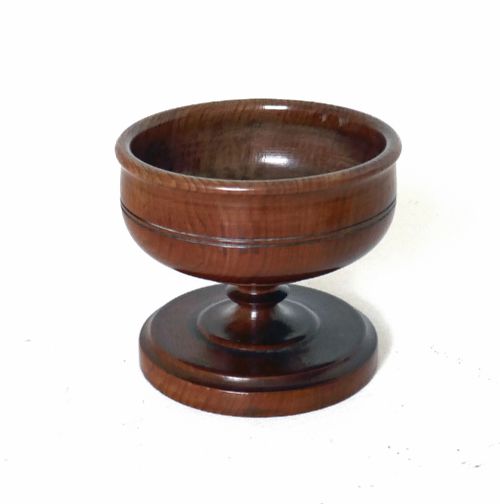
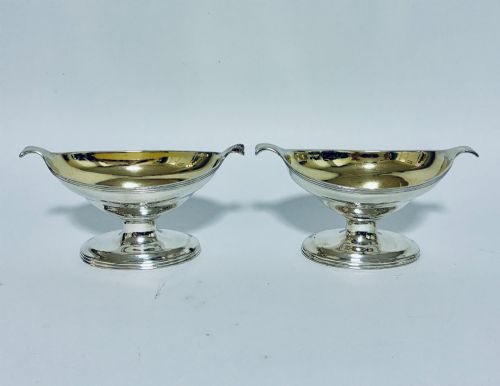
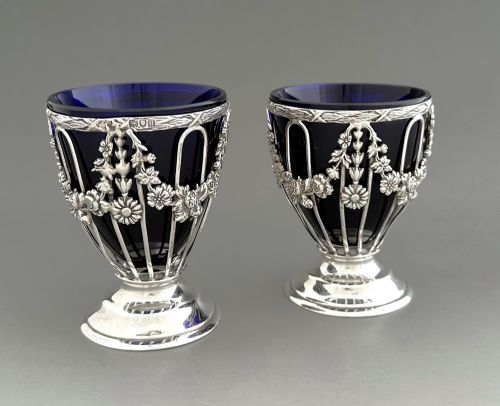
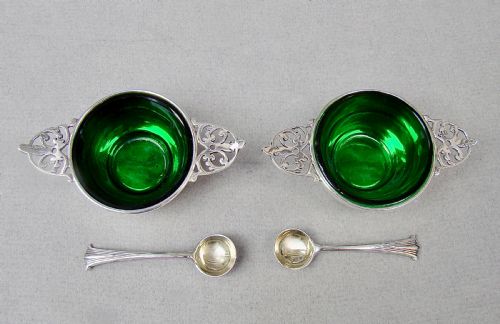
Silver versions frequently retain original cobalt glass, cut glass, or lead crystal liners, while alternative materials include turned yew wood, laburnum, delftware, and ironstone china. You find single pieces, pairs, and matched sets numbering up to six.
While many date directly to the eighteenth and early nineteenth centuries, the category also encompasses later revival pieces and related condiment vessels such as mustard pots and cruet sets.
How they were made
Silversmiths formed sterling silver vessels through casting, hammering, and wirework, often applying silver gilt, gold gilt, or vermeil to interior surfaces. Master makers also utilised hand-cut glass and lead crystal, pairing them with fitted saucers and blue glass liners.
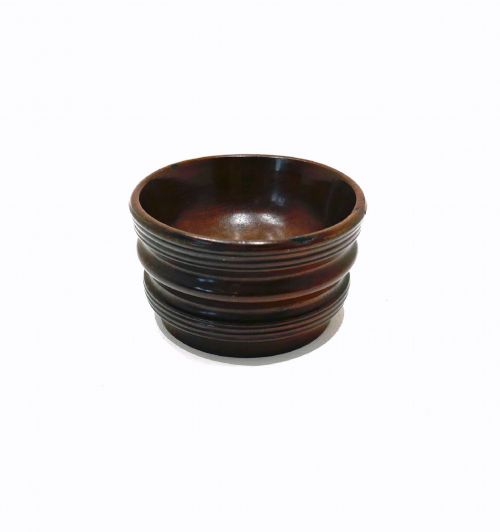
Treen examples demonstrate precision woodturning using yew and laburnum on raised bases, whilst ceramic variants display hand-painted blue and white decoration on tin-glazed earthenware and ironstone.
Materials span sterling silver, silver gilt, cobalt glass, lead crystal, yew wood, laburnum, delftware, and ironstone china across multiple centuries.
What varies in quality
The standard of execution rests upon the crispness of chased and embossed motifs, such as rococo scrollwork, naturalistic flower designs, and draped swag patterns. Substantial gauge silver, maker marks, and well-preserved gilding distinguish finer examples.
For glass and treen pieces, quality reveals itself in the depth of hand-cutting, clarity of lead crystal, and rich natural colour in turned timber.
David Hennell·John Edmonstone·William Bateman·Edward Farrell·Edward Wood·Josiah Williams and Co·Paul Storr·Viners·Joseph Felix Podio·Barnard·S and C Younge and Co·J T Younge Walker and Crowder
The Georgian Salt Cellars Glossary
- Trencher salt
- A low, often rectangular or octagonal salt cellar placed directly on the dining table for individual use. They date back to the early eighteenth century.
- Cauldron salt
- A small bowl-shaped salt cellar raised on three feet, commonly styled in the rococo taste with ornate borders.
- Silver gilt
- Sterling silver that has been coated with a thin layer of gold on the interior to prevent corrosion from salt. This finish appears frequently in pedestal dishes.
- Treen
- Small handmade wooden objects produced by turning on a lathe. Early specimens utilise dense hardwoods like laburnum and yew.
- Monteith
- A bowl with a scalloped rim, related in form to certain glass and silver table vessels found alongside condiment sets.
Georgian Salt Cellars: Frequently Asked Questions
How do I use open salt cellars?
Open salt cellars hold loose table salt, which diners scoop using small salt spoons or pinch with clean fingers.
They sit beside individual place settings or function as central table condiments.
What are glass liners for?
Glass liners protect sterling silver bowls from the corrosive properties of salt.
Cobalt blue liners also provide a decorative contrast beneath pierced or wirework silver designs.
How do I date silver salts?
Silver pieces carry hallmarks that indicate the assay office, date letter, and maker's mark.
Stylistic cues like rococo casting or neoclassical boat shapes further clarify the period.
Are wooden salts rare?
Turned wood salts from the eighteenth century survive in smaller numbers than silver counterparts.
They rely on dense timbers like yew and laburnum for their durability and grain.