



Pedestal Salt Cellar
These pedestal salt cellar pieces are raised table vessels for dining, combining historical metal and glass work to hold condiments.
Pedestal Salt Cellar
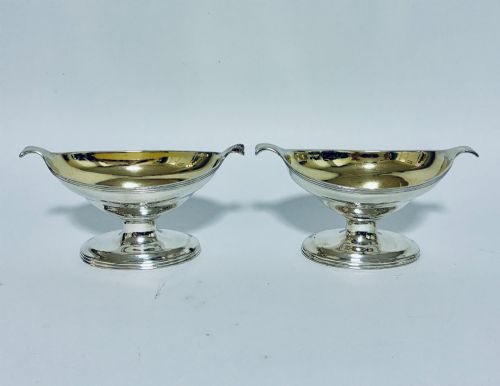
A pedestal salt cellar is a raised tableware vessel designed to hold salt on the dining table, appearing across periods from the eighteenth century to the twentieth century. These objects include pairs of sterling silver salt boats, condiment tubs, and pedestal dishes with gilt interiors, as well as turned wood pieces.
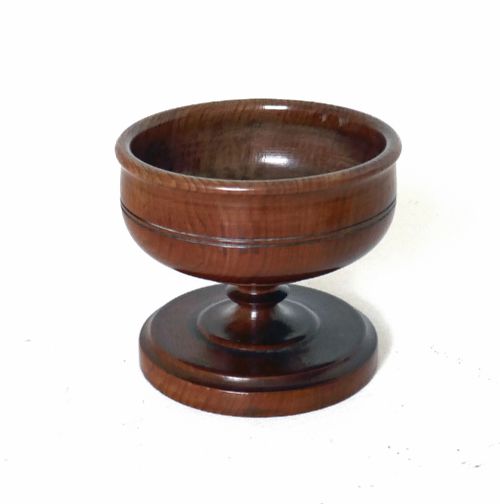
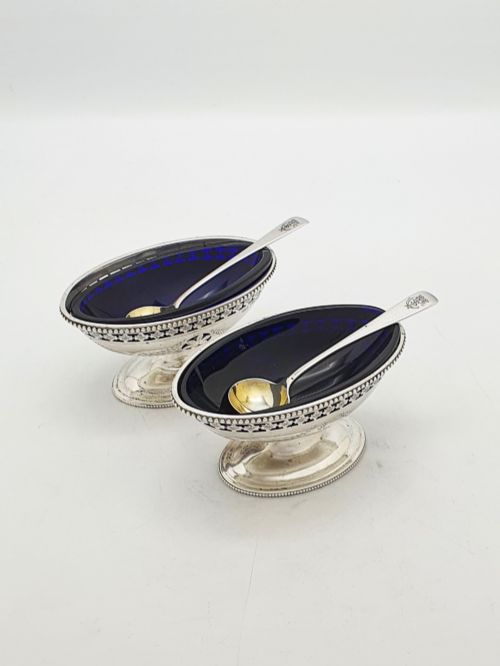
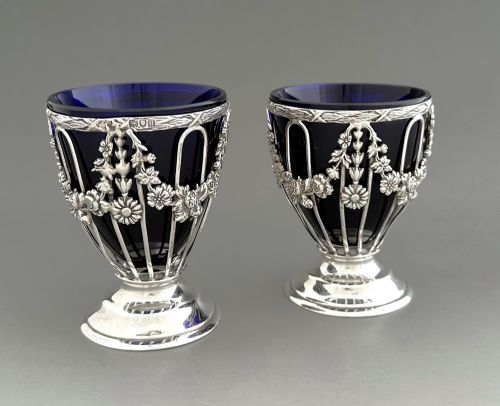
The most common examples on this page are metal mounts fitted with coloured glass liners or open wirework frames. Glass versions also appear as cut glass bowls and table salts, while treen examples utilise yew wood and fruitwood on raised bases.
Materials and construction methods
Metal pieces rely on sterling silver and silver wirework, frequently finished with a gilt interior or vermeil coating. Silversmiths shape these through casting and fabrication, occasionally incorporating removable cobalt glass liners.
Glass vessels utilise lead crystal and cut glass, shaped by blowing and cutting techniques. Wooden examples are produced on a lathe from yew wood and fruitwood, forming turned salts on raised bases.
Pedestal Salt Cellar Retail Price Guide 2026
Typical asking prices for pedestal salt cellar among the pieces listed under this phrase on Sellingantiques today, from the lower quarter to the upper quarter. They describe what is for sale here now, not the wider market.
Early diners trusted blue glass liners to keep their salt dry and their silver from turning green.
Assessing quality and craftsmanship
Quality in a pedestal salt cellar rests on the crispness of the cutting in glass vessels and the precision of the turning in treen pieces. In silver examples, the weight of the metal and the delicacy of wirework separate standard production from superior work.
The presence of original fitted components, such as matching cobalt glass liners or intact gilt interiors, defines the integrity of the piece. Subtle details in form and timber grain contribute further distinction to individual items.
Daniel And John Wellby
The Pedestal Salt Cellar Glossary
- Cobalt glass
- A deep blue glass used for liners within silver salt cellars. It provides a striking visual contrast beneath openwork silver mounts.
- Treen
- Small handmade wooden objects produced before the mass era of plastics. These items are typically turned on a lathe from timbers such as yew wood and fruitwood.
- Vermeil
- Sterling silver coated with a thin layer of gold. This finish protects the silver from tarnishing when in contact with salt.
- Salt boat
- A table salt container shaped in the manner of a small boat, often elevated on a foot or pedestal base.
- Lead crystal
- A heavy, high-clarity glass containing lead oxide. It allows for deep, sharp facet cutting in table salts.
Pedestal Salt Cellar: Frequently Asked Questions
What is a pedestal salt cellar?
A pedestal salt cellar is a raised open container historically used to hold loose salt at the dining table before the invention of individual shakers. These vessels elevate the condiment above the tablecloth.
They appear in materials such as sterling silver, cut glass, and turned wood, frequently paired with liners or spoons.
How do I date a silver salt cellar?
Dating silver relies on hallmark stamps that indicate the assay office, date letter, and maker's mark. Stylistic clues such as Georgian boat shapes or Edwardian wirework also help narrow the period.
Comparison with documented examples from the eighteenth and nineteenth centuries confirms the production era.
Why do some salts have glass liners?
Silver reacts chemically with salt over extended periods, causing corrosion and dark tarnishing. Cobalt glass liners protect the metal body from direct contact with the condiment.
These removable inserts also made cleaning the tableware easier after dining.
How were wooden salt cellars made?
Wooden salt cellars were turned on a lathe using dense timbers like yew wood and fruitwood. Artisans shaped the raised base and bowl from a single piece of seasoned wood.
Natural grain patterns and deep patination are typical of these treen items.