



Clear Glass Salts
Clear glass salts are small open vessels or condiment holders designed for the dining table, offering both sparkle and practical utility.
Clear Glass Salts
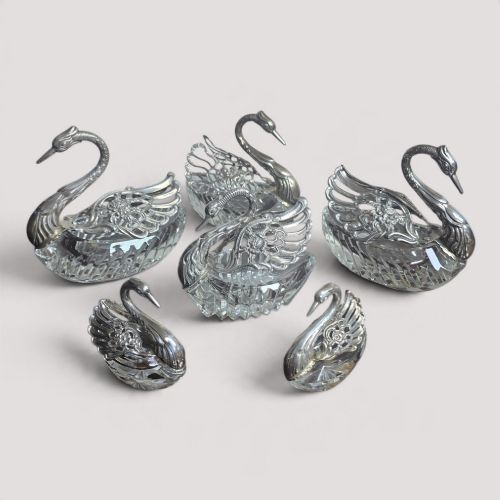
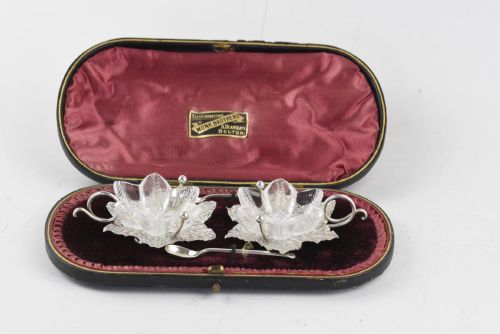
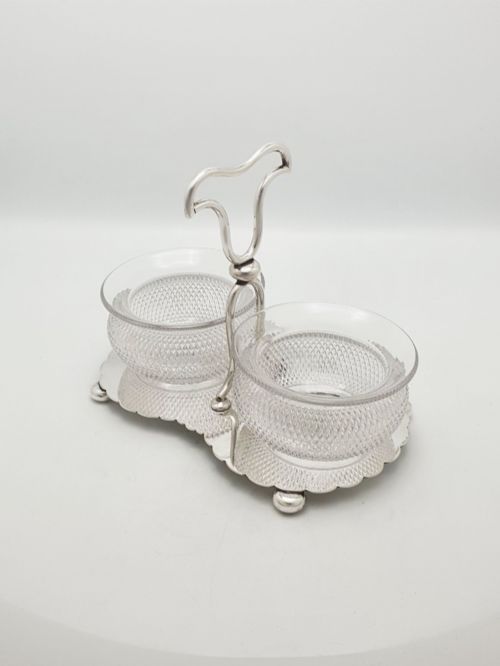
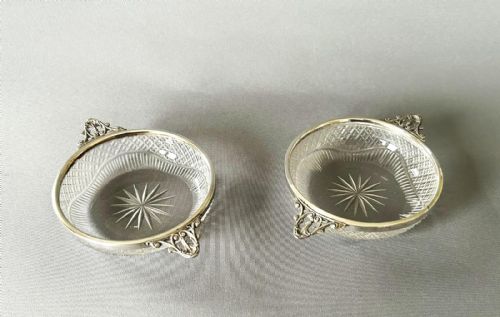
Clear glass salts represent a functional staple of the dining table from the Georgian, Victorian, and Edwardian periods, designed to hold loose salt before the advent of free-flowing table salt. The pieces seen here include individual salt cellars, pairs, and matched sets, frequently accompanied by silver mountings or fitted saucers.
Buyers encountering this selection will find examples ranging from plain double ogee bowls to heavily cut lead crystal vessels featuring draped swag designs. These objects reflect the changing tastes of dining across the nineteenth and early twentieth centuries, moving from Regency elegance to the heavier cuts of the late Victorian era and the geometric lines of Art Deco.
Materials and manufacture
The primary material across these listings is glass, utilised either as plain blown metal or heavier lead crystal that is subsequently cut and etched to catch the light. Manufacturing techniques relied on blowing the vessel into a mould or free-blowing, followed by wheel-cutting to create facets and decorative patterns.
Metal components such as sterling silver, silver plate, and silver mountings frequently accompany the glass bodies. These mountings were cast, pierced, or engraved separately before being fitted to the glass vessels or paired with matching spoons.
Clear Glass Salts Retail Price Guide 2026
Typical asking prices for clear glass salts among the pieces listed under this phrase on Sellingantiques today, from the lower quarter to the upper quarter. They describe what is for sale here now, not the wider market.
A tiny liquor bottle designed to resemble a miniature champagne container hides its true identity as a piece of nineteenth-century vanity glassware.
Quality and craftsmanship
Quality in clear glass salts is determined by the clarity of the metal and the crispness of the cutting. Superior pieces display deep, sharply defined facets with a high polish, whereas lesser examples show softness in the cut lines and minor bubbles within the glass.
The integration of secondary materials also dictates the standard of the piece. Finer items feature substantial sterling silver mounts with clear hallmarks, precise metalwork, and well-fitted components rather than thin silver plating showing wear.
Walker and Hall·S Morden and Co
The Clear Glass Salts Glossary
- Cut glass
- Glass decorated by grinding facets or patterns into the surface using rotating wheels. This technique enhances the refractive quality and weight of the material.
- Lead crystal
- A type of glass containing lead oxide, which increases the weight, brilliance, and workability for deep cutting. It is commonly found in finer tableware from the nineteenth century onward.
- Cruet set
- A collection of small bottles or containers for condiments, typically held in a silver or silver-plated stand. These sets often incorporate salt cellars alongside mustard pots and pepper shakers.
- Double ogee
- A profile featuring an 'S' shaped curve that flows from a concave upper section into a convex lower base. This traditional form appears frequently on Georgian bowls and salts.
- Hallmark
- An official stamp applied to precious metals, indicating the purity, maker, and assay office. On these pieces, silver mounts and spoons provide date and origin evidence through these marks.
Clear Glass Salts: Frequently Asked Questions
How were clear glass salts used at the table?
Clear glass salts served as individual or shared open containers for coarse table salt before the invention of moisture-resistant table salt. Diners used a small spoon or pinched the salt directly from the vessel to season their food.
These pieces sat directly on the dining table, often paired with cruet frames or matched with silver spoons. Their open design meant the salt was presented clearly to guests during formal meals.
How do I clean and care for antique glass salts?
Antique glass salts require gentle hand washing in warm water using a mild detergent. Avoid sudden temperature changes to prevent thermal shock and potential cracking of the older glass.
Silver mounts and spoons should be polished separately with a suitable silver cloth, taking care not to allow harsh chemical polishes to come into contact with the antique glass surfaces.
How do I tell a Georgian salt from a Victorian one?
Georgian salts generally exhibit simpler, elegant forms with Regency influences, such as plain bowls or lighter hand-cut decoration. The glass can sometimes display a slight greyish or bluish tint characteristic of the period's metal.
Victorian pieces tend to be heavier and more robust, often featuring deeper, more complex geometric cutting or aesthetic movement designs. Silver mounts on Victorian pieces frequently display nineteenth-century British hallmarks that confirm the exact decade of manufacture.
Can these antique salts still be used today?
These glass salts remain fully functional for serving dry condiments, small appetisers, or spices at the modern dining table. Their durable construction makes them practical for everyday use as well as display.
Care should be taken to empty and clean the vessels after use, as prolonged contact with damp salt can occasionally affect older metal rims or silver plating.