


Cut Glass Salts
Cut glass salts are small table vessels that hold seasoning, bringing weight and sparkle to a dining table.
Cut Glass Salts
When searching for cut glass salts, buyers encounter pieces intended for dining tables, where they hold portions of salt for individual diners.
The versions met most frequently on this page date from the Victorian and Edwardian eras, alongside Georgian and Art Deco examples.
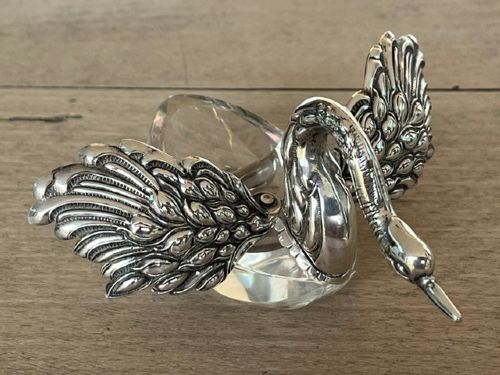
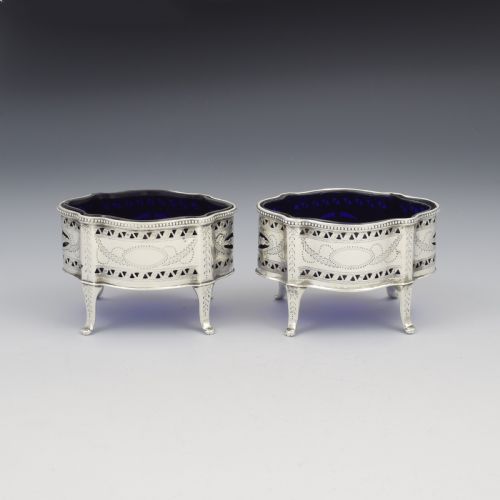
These items often appear as matched pairs or small sets, sometimes accompanied by fitted saucers, sterling silver mounts, or silver plated frames.
Materials and construction
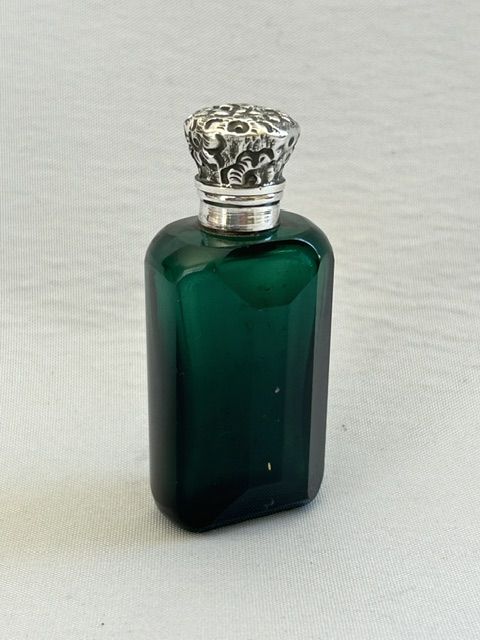
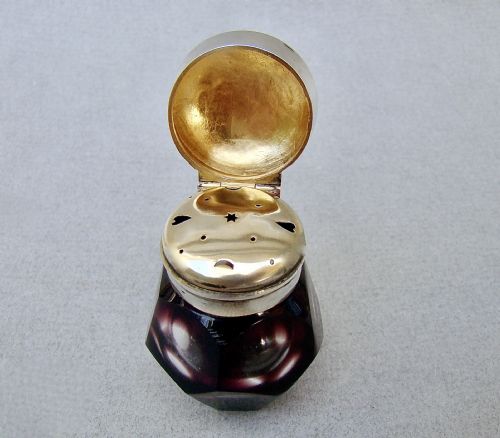
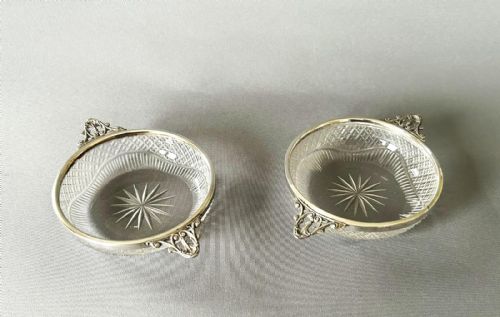
Makers shaped the glass vessels using heavy lead crystal and clear or coloured glass, including cranberry, amber, and amethyst varieties, shaped by cutting and faceting.
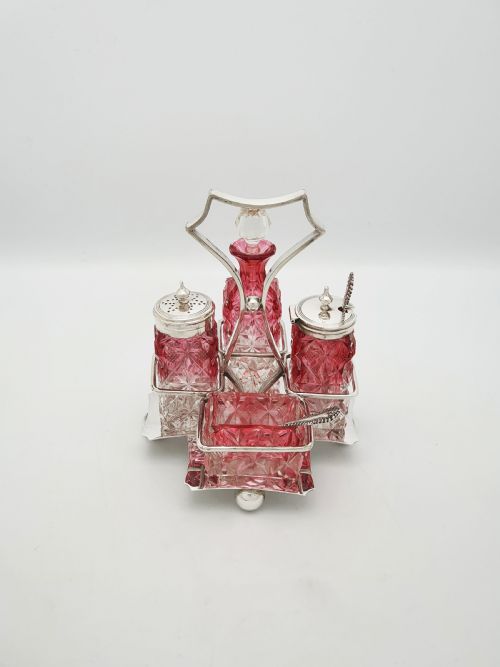
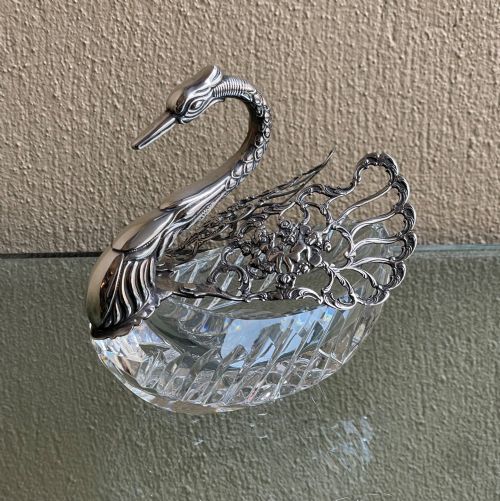
Metal components incorporate sterling silver, silver plate, and silver-gilt, providing rims, spoons, and stands that secure the glass bodies.
The listings span the Victorian, Edwardian, and Georgian periods, incorporating clear lead crystal, coloured glass, and sterling silver mounts.
Factors determining quality
The crispness of the wheel cutting on the glass surface dictates the visual depth, where sharper facets catch the light more cleanly than softer impressions.
The weight of the lead crystal and the thickness of the silver mounts or frames establish the durability and substance of the piece on the table.
Walker & Hall·William Hutton & Sons·S. Morden & Co·Henry Williamson
The Cut Glass Salts Glossary
- Open salt
- A small open vessel designed to hold loose salt on the dining table before shaker bottles became common. Diners used a small spoon or fingers to take the seasoning.
- Pedestal salt
- A table salt raised on a short stem or foot above the level of the table. This form lifts the glass vessel into the light.
- Hobnail cut
- A raised, pointed pattern cut into the surface of glassware resembling the head of a hobnail. This technique creates a textured grip and intense refraction.
- Cruet set
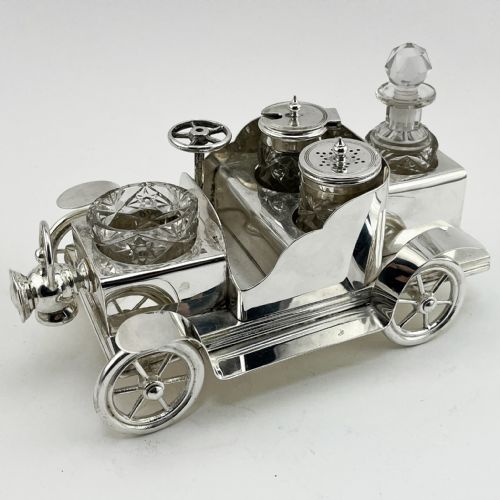
- A matched collection of bottles and jars for condiments, often held in a metal stand. These sets frequently include salt cellars alongside pepper and oil vessels.
- Silver-gilt
- Silver that has been coated with a thin layer of gold on its surface. This treatment adds a warm tone and protects the underlying metal.
Cut Glass Salts: Frequently Asked Questions
How were cut glass salts used on the dining table?
Diners used these small open vessels to hold individual portions of salt during meals. A tiny salt spoon or the tip of a knife served to transfer the seasoning to the plate.
Before free-flowing table shakers became standard, these pieces sat beside each place setting or were shared between guests.
How do I distinguish Georgian salts from Victorian ones?
Georgian examples often display heavier lead crystal with simpler, broader hand-cut facets and sometimes feature square or boat-shaped bodies with matching saucers.
Victorian and Edwardian versions introduce coloured glass varieties, such as cranberry and amber, alongside more intricate silver rims and fitted presentation cases.
Can I use antique salt cellars for dining today?
These vessels function well on modern dining tables for salts, spices, or even small portions of condiments. Glass surfaces wash easily in warm water without harsh detergents.
Care should be taken with pieces featuring silver-plated frames or delicate metal mounts to keep moisture away from hinges and joints.
Why do some sets include silver spoons?
Original silver or silver-plated spoons were matched to the salts to prevent direct contact between fingers and the salt, which could tarnish unprotected metal over time.
Finding a set complete with its original spoons adds significantly to the integrity of the collection.