




Regency Glass Bowl
A regency glass bowl brings sparkling light and architectural weight to a table, merging crisp geometric cutting with the deep resonance of lead crystal.
Regency Glass Bowl
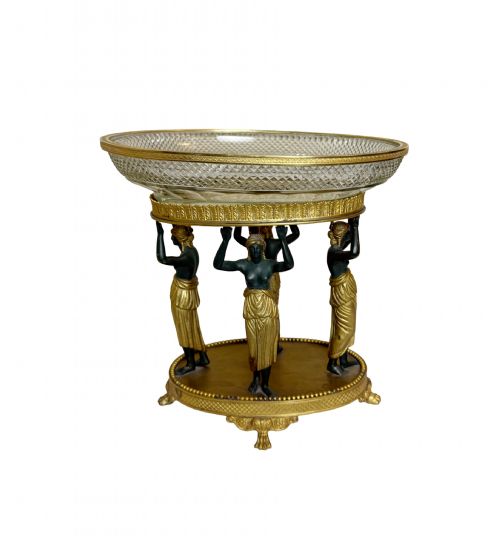
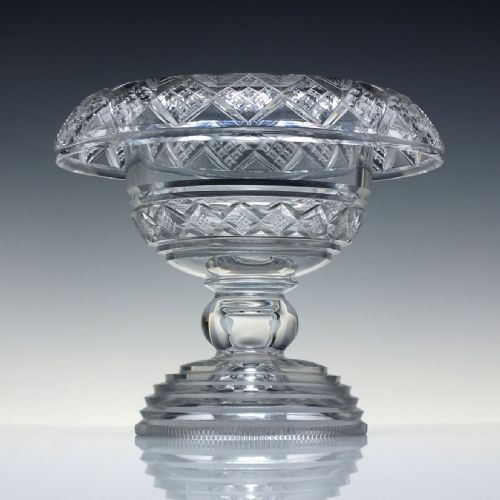
A regency glass bowl stands as a heavy, light-catching vessel originating from the late Georgian and early nineteenth centuries. These pieces appear both as standalone pedestal comports and as internal mixing liners housed within wooden tea caddies.
The form shifts from shallow fruit bowls and finger rinsers to deep standing vessels designed for the centre of a table. Many examples display the robust proportions characteristic of Irish manufacture and early nineteenth-century English glasshouses.
Buyers seeking this phrase encounter items shaped by Neoclassical restraint alongside bolder, light-refracting cuts. The inventory bridges grand dining accessories and smaller domestic containers preserved inside fitted wooden boxes.
Assessing quality in early glass
The standard of a piece rests on the clarity of the metal and the precision of the wheel-cut facets. Crisp, deep cutting that catches the light cleanly distinguishes superior vessels from softer, shallower work.
The presence of original components, such as matching mixing sticks or fitted wooden caddy housings, elevates the integrity of the piece. Foot rims show varying degrees of polish and wear, which indicate the extent of early handling.
Current listings span the Georgian, Regency, and Victorian periods, incorporating cut glass, lead crystal, mahogany, satinwood, and brass.
The Regency Glass Bowl Glossary
- Lead crystal
- A dense glass containing lead oxide that increases refractive index and weight. This formulation allows cutters to achieve sharper edges and deeper brilliance.
- Hobnail cut
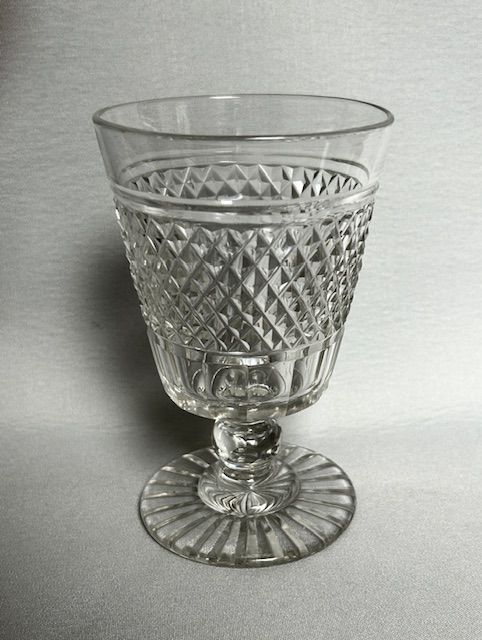
- A raised, faceted surface pattern resembling the head of a heavy boot nail. It creates intense light refraction across the body of the bowl.
- Pedestal bowl
- A vessel raised on a distinct stem and foot. This form lifts the glass to catch ambient light on a dining table or sideboard.
- Finger rinser
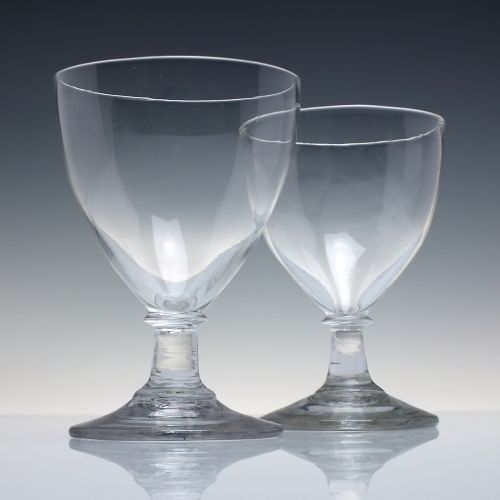
- A small bowl used at the table for cleansing fingers between courses. These items frequently match the larger cutting styles of contemporary rummers and sweetmeat glasses.
- Tea caddy bowl
- A small glass vessel fitted inside a wooden box to hold dry tea leaves or serve as a mixing bowl. They are often found intact within sarcophagus-form mahogany or satinwood caddies.
Regency Glass Bowl: Frequently Asked Questions
How do I use a glass bowl daily?
These bowls serve well on sideboards for holding small items or on dining tables for fruit and floating flowers.
Hand washing in lukewarm water keeps the lead crystal clear without risking thermal shock or abrasion to the historic surface.
Were these bowls made for tea?
Many smaller examples served as mixing bowls inside mahogany or satinwood tea caddies to blend different grades of loose leaf tea.
Larger pedestal versions functioned as table centrepieces for fruit, punch, or sweetmeats during formal Georgian dinners.
How do I date a glass bowl?
Dating relies on observing the weight of the metal, the style of the cutting, and the presence of a polished pontil mark on the base.
Early nineteenth-century pieces tend to feature thick lead crystal, heavy proportions, and specific geometric motifs like deep hobnails or fine fluting.
What is Irish glass?
Irish glass refers to heavy lead crystal produced in centres such as Waterford and Cork during the late eighteenth and early nineteenth centuries.
This glass is often noticeably heavier and displays a slightly darker, more resonant metal than contemporary English equivalents.