
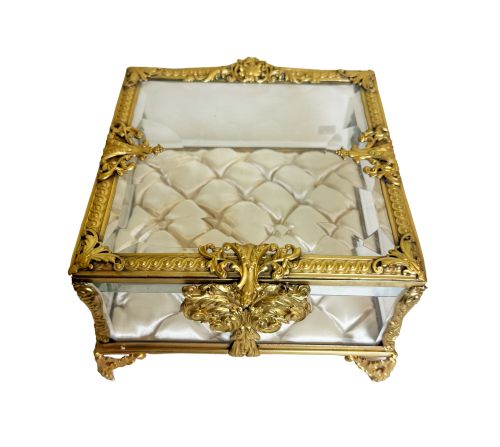


French Ormolu Glass Box
A French ormolu glass box brings together heavy gilt bronze and clear crystal to hold small treasures on a dressing table.
French Ormolu Glass Box
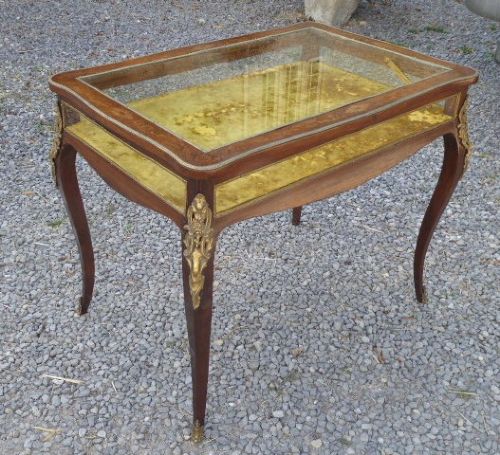
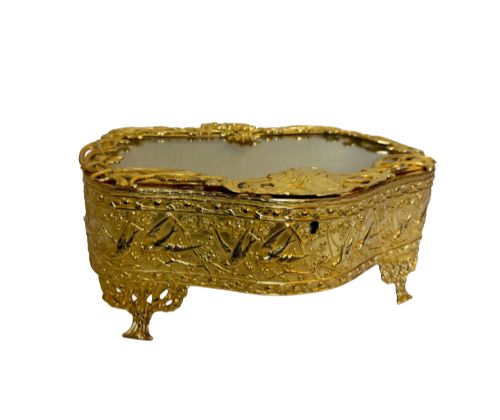
A French ormolu glass box is a decorative container designed for trinkets, jewellery, or perfume bottles, created predominantly during the nineteenth century. These pieces range from small tabletop caskets to larger bijouterie tables featuring glazed display panels and hinged lids.
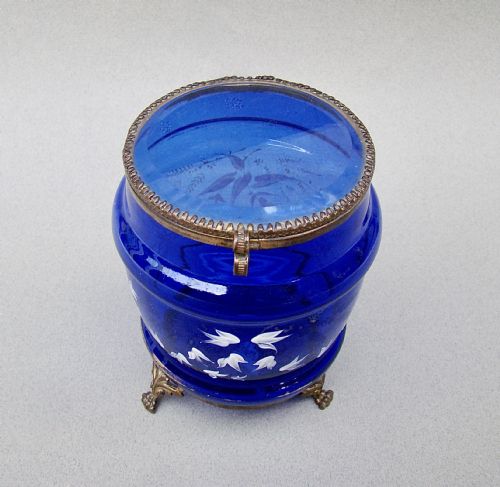
The objects appearing in this collection span the 1860s through to 1900, incorporating specific historical revivals such as Napoleon III, Louis XV, and Art Nouveau. Buyers encounter everything from delicate Bristol blue glass caskets to heavy cut crystal liqueur sets encased in gilded bronze.
Smaller trinket boxes and jewellery caskets sit alongside larger display tables framed in rosewood, mahogany, or kingwood with marquetry details. Each piece relies on the contrast between transparent or coloured glass and cast metal mounts to create its decorative effect.
Materials and construction
The structural framework of these pieces relies on cast ormolu, which is gilded bronze or brass, shaped into decorative mounts, feet, and hinges. Glass elements include heavy cut crystal, Baccarat crystal, and coloured opaline or Bristol blue glass, often shaped by blowing or moulding.
Makers joined the metal mounts to the glass panels using precise mechanical fittings, sometimes lining the interior with silk or velvet to cushion delicate items. Wooden elements in related bijouterie tables incorporate fine timbers like rosewood, mahogany, and kingwood, frequently enhanced with marquetry.
One exceptional egg-shaped casket is designed specifically to cradle small treasures inside tinted opaline glass.
Distinctions in craftsmanship
Quality in these pieces rests on the crispness of the ormolu casting and the weight of the glass. Finer examples display deeply chased bronze mounts with sharp detail and thick crystal panels that have been hand-cut and polished.
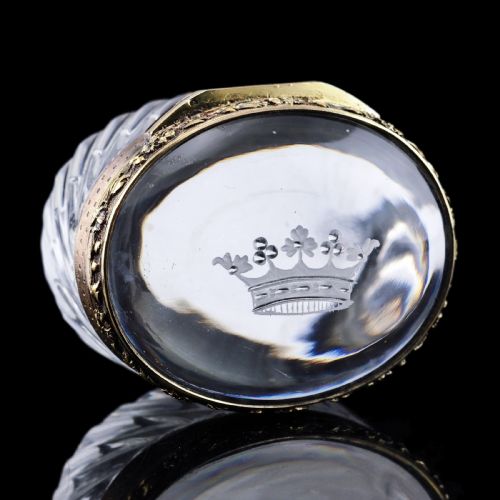
Heavier framing and sturdy hinges separate superior caskets from lighter utilitarian versions. The integration of named glass houses, such as Baccarat, or specific decorative motifs like coronets and gilded eagles, elevates the standing of an individual piece.
The French Ormolu Glass Box Glossary
- Ormolu
- Gilded bronze or brass created through a mercury gilding process or electrogilding during the nineteenth century. This technique produces a rich golden surface that frames the glass panels.
- Bijouterie table
- A glass-topped display table designed to exhibit small valuable items and trinkets. These tables often feature hinged lids and velvet-lined interiors.
- Cave a liqueur
- A fitted box or portable cabinet containing decanters and glasses, frequently mounted in ormolu and paired with crystal. These sets are designed for serving liqueurs in a drawing room.
- Opaline glass
- An opaque or semi-translucent glass popular in nineteenth-century France, often produced in shades of blue or green. It provides a dense, colourful body for small caskets.
- Marquetry
- Inlaid wood work used to form decorative patterns on the wooden carcasses of related display tables. Cabinet makers utilised contrasting veneers to enhance the exterior surfaces.
French Ormolu Glass Box: Frequently Asked Questions
What were glass caskets used for?
These boxes served as ornamental containers for personal treasures such as jewellery, loose trinkets, and small perfume bottles. Wealthy owners placed them on dressing tables or in drawing rooms to display prized possessions.
Over time, their function shifted from purely utilitarian storage to decorative display, particularly in the form of glass-topped bijouterie tables designed to showcase collections.
How do I identify a nineteenth century box?
Dating relies on examining the casting style of the ormolu mounts, the thickness and cut of the glass, and the construction methods of the frame. Pieces from the 1860s often display robust Napoleon III proportions, while later examples incorporate Art Nouveau curves.
The materials themselves offer clues, as specific glass types and timber carcases align with prevailing French decorative tastes across the decades.
Are the interiors usually original?
Many surviving pieces retain their original velvet or silk linings, which were designed to protect delicate jewellery and glass surfaces from damage. Over the lifespan of these objects, fragile fabrics frequently required replacement.
A replacement lining does not diminish the integrity of the bronze and glass structure if the exterior mounts and panels remain undisturbed.
How do I clean ormolu mounts?
Ormolu requires gentle dusting with a soft, dry cloth to prevent the accumulation of dirt in the chased recesses of the metal. Strong chemical cleaners or abrasive polishes strip the historic gilt surface and must be avoided.
Glass panels benefit from standard glass cleaner applied to a cloth rather than sprayed directly, ensuring the liquid does not seep into the surrounding metal frame or fabric lining.