

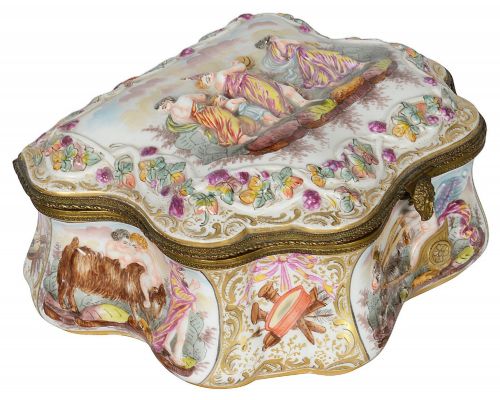


Antique Porcelain Casket
An antique porcelain casket is a small, ornate container designed for keeping jewellery, trinkets or letters, combining delicate ceramic plaques with metal mounts.
Antique Porcelain Casket
When you search for an antique porcelain casket, you encounter decorative boxes spanning the nineteenth century, including Victorian, Edwardian and Napoleon III pieces. These containers serve as jewellery boxes, trinket boxes and stationery caskets intended for dressing tables and desks.
The most common examples you meet on this page are French pieces mounted in ormolu or gilt brass, often bearing Sevres style decoration. You also encounter Italian Capodimonte works alongside English walnut and amboyna boxes inset with porcelain plaques.
Forms range from simple round powder boxes to large table caskets and correspondence boxes. They reflect periods of revivalism, notably French Rococo and Neoclassical styles.
Materials and Construction
These pieces are built using porcelain bodies, frequently hand-painted in cobalt blue or white, combined with wooden carcases of kingwood, burr walnut or amboyna where specified. Ceramic plaques are integrated into timber or cast metal frames.
Metalwork plays a structural role, utilising ormolu, gilt bronze, gilt brass, pierced brass, or champleve enamel mounts that secure the porcelain panels and form hinges and feet. Gold leaf accents highlight the ceramic surfaces.
Antique Porcelain Casket Retail Price Guide 2026
Typical asking prices for porcelain casket among the pieces listed under this phrase on Sellingantiques today, from the lower quarter to the upper quarter. They describe what is for sale here now, not the wider market.
Some nineteenth-century writing caskets included secret compartments designed for stashing love letters away from prying eyes.
Assessing Quality
Quality reveals itself in the crispness of the metal casting and the artistry of the hand-painted porcelain. Finer examples feature deeply chased ormolu mounts and detailed figural or floral painting on the ceramic.
The integration of materials distinguishes the upper tier, where porcelain plaques align flush with timber or metal frames. Heavier gauge brass and bronze provide stability and a more substantial feel in the hand.
Sevres·Capodimonte·Minton·Palais Royal
The Antique Porcelain Casket Glossary
- Ormolu
- Gilded bronze or brass mounts used extensively in nineteenth-century decorative boxes. This technique gives the metal a rich golden finish that frames the porcelain panels.
- Capodimonte
- Italian porcelain characterised by relief modelling and sculptural detail. Pieces from this tradition often form the entire body of a table casket rather than serving merely as inset plaques.
- Champleve
- An enamelling technique where troughs are dug into a metal surface and filled with vitreous enamel. It appears frequently in the decorative borders of French boxes.
- Sevres
- A type of French porcelain associated with royal manufactories and distinguished by rich cobalt blue grounds and gilt detailing. It forms the ceramic element in many nineteenth-century caskets.
- Quatrefoil
- A four-lobed shape used for the footprint of certain caskets. This outline draws on Gothic and Rococo design traditions.
Antique Porcelain Casket: Frequently Asked Questions
What were antique porcelain caskets used for?
These boxes held precious items such as rings, necklaces and small personal trinkets on dressing tables. Larger versions functioned as stationery boxes or correspondence caskets for keeping letters and writing materials on desks.
Their presence in a room signalled refinement, offering a secure and decorative receptacle for valuables.
How do I date an antique porcelain casket?
Dating relies on stylistic clues like Rococo Revival curves or Edwardian proportions, combined with material evidence such as ormolu mounts and wood types. Nineteenth-century pieces often display specific manufacturing marks on the porcelain base.
Comparing the hinge construction and the style of hand-painted decoration against dated examples helps narrow the period of origin.
Are these caskets entirely made of porcelain?
Most caskets combine a porcelain body or inset plaques with a structural frame of brass, ormolu or woods like burr walnut and kingwood. Only certain table caskets and round boxes consist predominantly of moulded porcelain.
Metal mounts provide the necessary hinges, feet and structural integrity that porcelain alone cannot supply.
How should I care for an antique casket?
Keep the piece away from direct sunlight and moisture to protect the gilding and any wooden carcase. Dust the metal mounts and porcelain surfaces gently with a dry, soft cloth.
Avoid using liquid cleaners or polish on the porcelain or enamel, as harsh chemicals can damage the hand-painted details.