









Victorian Porcelain Box
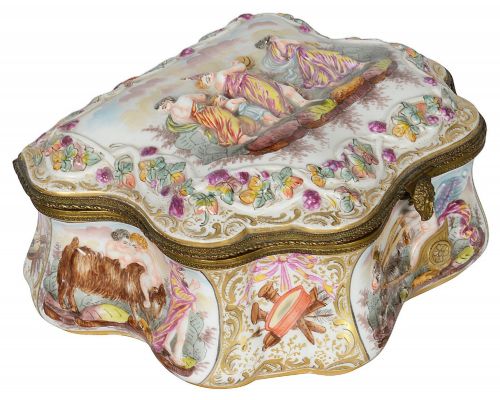
These Victorian porcelain box pieces are decorative containers for trinkets and jewellery, prized for their painted ceramic plaques and gilt mounts.
Victorian Porcelain Box
A victorian porcelain box combines ceramic bodies with metal mounts, serving as a decorative container for trinkets, jewellery, or stationery. These items emerge from nineteenth-century European workshops, spanning English and continental designs.
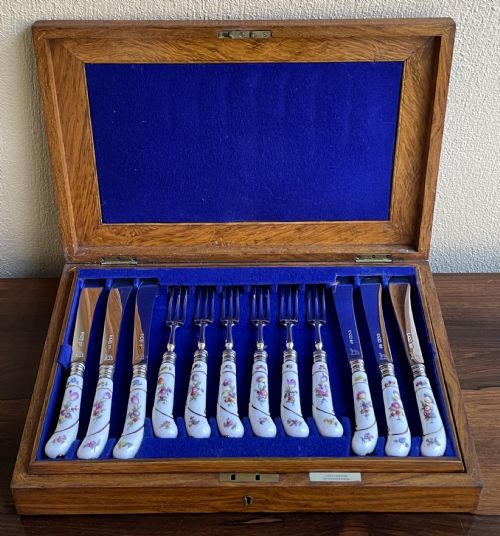
The versions most commonly met on this page include French ormolu-mounted jewellery caskets and Italian table boxes. Collectors also encounter biscuit barrels, stationery boxes, and small round trinket containers featuring hand-painted details.
Makers utilised porcelain alongside materials like brass, ormolu, and burr walnut to create pieces influenced by Rococo Revival and Neoclassical styles. Their forms range from simple desk accessories to grand decorative caskets.
How they were made
Craftsmen shaped the ceramic bodies of each victorian porcelain box before applying hand-painted designs and enamel work. Artisans often incorporated gilt detailing and gold leaf to highlight the surface patterns.
Metalworkers constructed mounts from brass, ormolu, and gilt brass to frame the porcelain panels securely. These metal mounts were cast and chased with decorative motifs before being fitted to the ceramic containers.
Victorian Porcelain Box Retail Price Guide 2026
Typical asking prices for victorian porcelain box among the pieces listed under this phrase on Sellingantiques today, from the lower quarter to the upper quarter. They describe what is for sale here now, not the wider market.
What varies in quality
The quality of a victorian porcelain box depends upon the precision of the hand-painted decoration and the weight of the metal mounts. Finer examples display meticulous brushwork on the ceramic panels alongside heavier, more heavily chased ormolu or gilt brass frames.
The integrity of the structural materials also dictates overall standard, particularly in pieces combining porcelain with burr walnut or leather. Superior construction ensures the ceramic inserts and metal hinges remain flush and secure over time.
Edme Samson Of Paris·Carrington
The Victorian Porcelain Box Glossary
- Ormolu
- Gilded bronze or brass used for mounts and decorative frames on nineteenth-century boxes. This technique gives metalwork a rich golden appearance.
- Capodimonte
- Italian porcelain originating from the historic factory known for relief figures and decorative caskets. Pieces from this tradition often feature intricate sculptural details.
- Sevres
- French hard-paste porcelain associated with royal patronage and fine hand-painted panels. Such porcelain is frequently mounted in gilt bronze or ormolu.
- Bonbonniere
- A small decorative container originally designed for sweets or bonbons. These delicate boxes often double as trinket holders.
Victorian Porcelain Box: Frequently Asked Questions
What were porcelain boxes used for?
These boxes served as desktop containers for holding letters, stationery, or small personal valuables like rings and brooches. Many were kept on dressing tables or displayed in drawing rooms as decorative objects.
Wealthy households utilised them to showcase refined tastes, employing precious materials and painted ceramic panels to catch the eye of visitors.
How do I clean my box?
Dust the porcelain and metal mounts gently with a soft, dry cloth to prevent the accumulation of dirt. Avoid harsh chemical cleaners or abrasive agents that might damage the hand-painted surfaces or the gilt finish.
Keep moisture away from any wooden components or leather interiors. Professional conservation advice should be sought for deep cleaning or damaged mounts.
Are these boxes fragile?
The ceramic bodies and painted surfaces require careful handling to prevent chipping or scratching. Metal hinges and mounts are generally robust, but the porcelain panels demand a stable environment free from sudden impacts.
Placement away from busy table edges or direct sunlight helps preserve both the ceramic glaze and the underlying materials.
How do I date a piece?
Dating relies upon examining the style of the mounts, the ceramic body, and any maker marks present on the underside. Nineteenth-century pieces frequently display specific revivalist characteristics, such as Rococo Revival or Neoclassical motifs.
Comparing construction techniques with documented examples from periods like the Victorian era provides further clarity on the age of the box.