





Italian Pietra Dura
Italian pietra dura brings together hardstones and marbles, forming intricate floral and avian inlays that catch the eye instantly.
Italian Pietra Dura
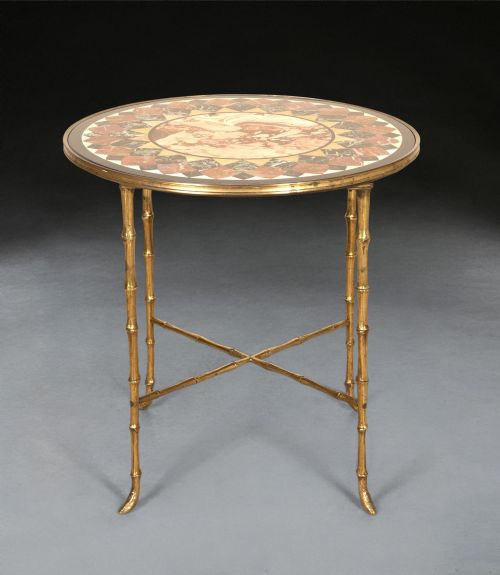
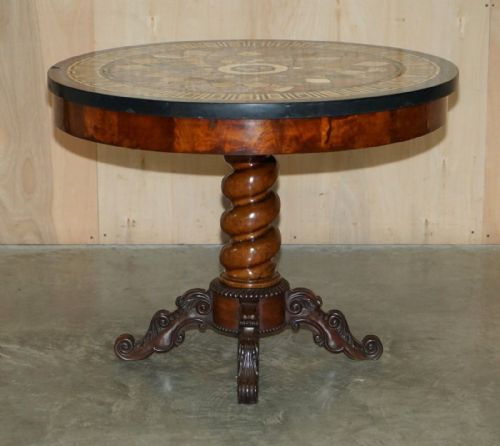
Italian pietra dura comprises meticulous stone-in-inlay works, taking the form of wall art, plaques, boxes, and occasional tables. Buyers searching for Italian pietra dura frequently encounter nineteenth-century pieces alongside Grand Tour souvenirs and Victorian decorative objects.
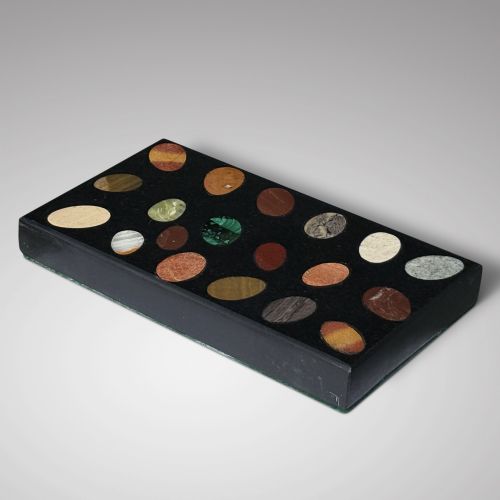
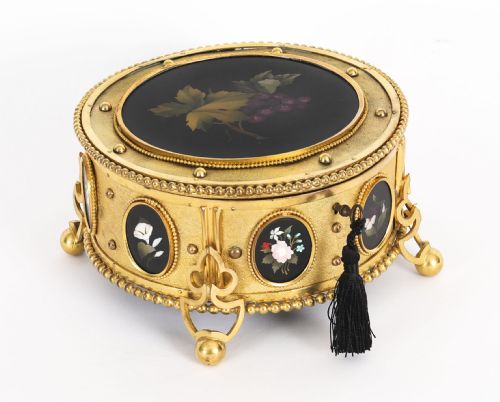
The selections span small paperweights and jewellery caskets to large centre tables and monumental cabinets. Works emerge in mahogany, ebonised wood, and slate, though marble remains the principal canvas for the stone inlays.
Objects range from architectural tables produced during the William IV and Regency eras to delicate Art Deco items from nineteen-twenty. Florentine Renaissance Revival influences appear across panels, while jewellery includes Victorian pendants and earrings set with micro-mosaic and gold.
Assessing Quality and Execution
The standard of a piece rests entirely upon the precision of the stone-cutting and the tightness of the joints between individual hardstone elements. Superior examples display seamless transitions where disparate minerals meet, creating pictorial depth in bird motifs and floral sprays.
Certain nineteenth-century paperweights immortalise stone birds with plumage rendered entirely in jasper and agate.
The Italian Pietra Dura Glossary
- Pietra dura
- Hardstone inlay technique using finely cut and fitted coloured stones to create pictorial designs. It translates literally from Italian as hard stone.
- Specimen marble
- Multi-coloured decorative marble collected during the Grand Tour and incorporated into tabletops and plaques. Each section represents a different geological quarry.
- Grand Tour
- Eighteenth and nineteenth-century cultural excursion across Europe undertaken by wealthy elites. Travellers frequently returned with pietra dura plaques and micro-mosaics.
- Ormolu
- Gilded bronze mounts applied to furniture, boxes, and caskets. The technique involves coating metal in a mercury-gold amalgam.
- Scagliola
- Composite material made from selenite, glue, and pigments, mimicking true marble and pietra dura inlay. Artisans polish the surface to achieve a stone-like sheen.
Italian Pietra Dura: Frequently Asked Questions
How do I clean an Italian pietra dura table?
Dust the stone surface regularly with a soft, dry cloth to prevent grit accumulation in the hairline joints. Avoid liquid cleaners and harsh chemicals, which can damage the polished marble and adhesive beneath.
Consult a professional restorer if the stone requires deeper maintenance or if the surrounding wood and ormolu mounts need attention. Keeping the piece away from direct sunlight protects the natural pigments in the inlaid hardstones.
Where were these pieces made?
Most items originate from Italian workshops, particularly in Florence, which served as the primary historic centre for hardstone inlay production. Many pieces were acquired by travellers journeying through Italy during the nineteenth century.
Export demand drove local craftsmen to produce portable items like paperweights, plaques, and jewellery caskets alongside larger furniture for stately homes. These objects often found their way into British drawing rooms via the Grand Tour trade.
What is the difference between mosaic and pietra dura?
Pietra dura uses precision-cut slices of hardstone shaped to fit flush together within a solid stone base. The resulting image relies on the natural grain and colour variations of minerals like jasper, chalcedony, and agate.
Micro-mosaic, by contrast, employs tiny fused glass tesserae assembled to form pictorial scenes, often mounted within jewellery or small paperweights. While both achieve high pictorial detail, their material composition and assembly methods remain distinct.
How can I tell a nineteenth-century piece from a later one?
Examine the rear of panels and the construction methods used on tables and boxes to understand the manufacturing period. Nineteenth-century examples frequently exhibit hand-cut backing stones, traditional joinery, and patinated brass or ormolu mounts.
Later reproductions and twentieth-century interpretations often feature standardised backing materials and machine-cut elements. Comparing the mineral selection and the sharpness of the inlay joints helps clarify the age of the work.