



Black Marble Paperweight
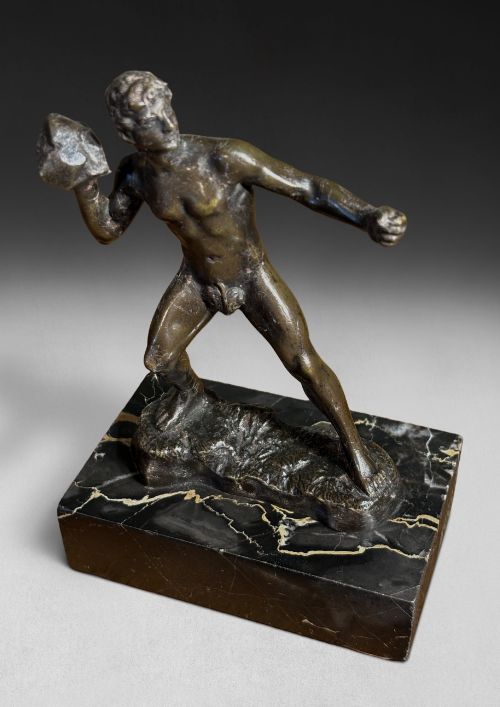
These black marble paperweight examples bring heavy Victorian and Grand Tour desk sculpture into your study.
Black Marble Paperweight
A black marble paperweight anchors a desk with dense stone and polished form, emerging primarily from nineteenth century workshops and Grand Tour itineraries. Buyers seeking a black marble paperweight examine heavy stone bases frequently paired with inlaid semi-precious stones, bronze mounts, or micro-mosaic panels.
Derbyshire Ashford production and Italian micro-mosaic traditions dominate the forms seen here, often taking the shape of obelisks, cartouches, or specimen panels. These pieces served as souvenirs for travellers and practical desk accessories for writers and officials.
Materials and construction
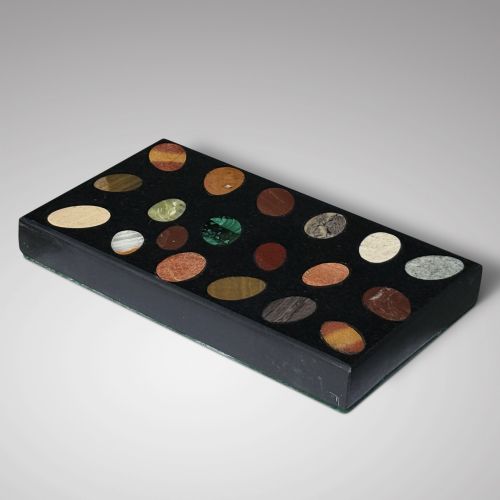
Craftsmen utilised dense black marble as the foundation stone, sawing and polishing blocks to precise geometric or sculptural profiles. Surface decoration relied on pietra dura inlay, where slices of malachite, agate, and various coloured marbles fit snugly into hand-cut recesses.
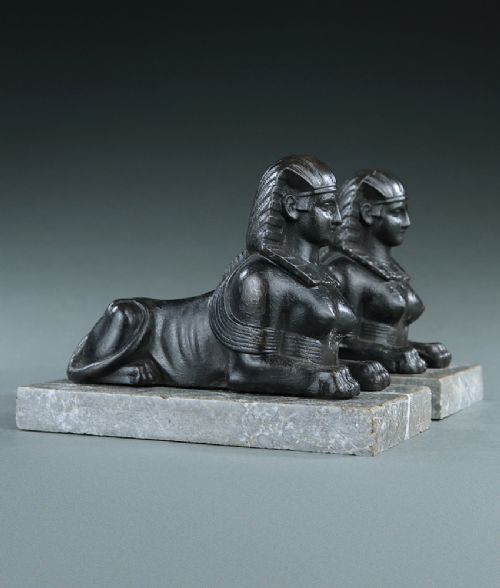
Bronze components, including sphinxes and animal figures, were cast separately using traditional foundry methods before mounting onto the stone bases with pins or adhesives. Micro-mosaic elements required thousands of tiny glass tesserae fused together to form pictorial tablets set flush into the marble.
Black Marble Paperweight Retail Price Guide 2026
Typical asking prices for black marble paperweight among the pieces listed under this phrase on Sellingantiques today, from the lower quarter to the upper quarter. They describe what is for sale here now, not the wider market.
Desk accessories occasionally abandoned utility entirely to let a small bronze mouse sit atop a heavy slab of polished stone.
Evaluating the craftsmanship
Quality rests in the precision of the stone inlay and the sharpness of the bronze chasing. Superior specimens display tight joints between the inlaid semi-precious stones and the black marble body, with no visible gaps or excess adhesive.
The sophistication of the mounted sculpture also dictates the tier of the piece, distinguishing mass-produced souvenirs from finely articulated bronze figures and detailed micro-mosaic panels.
Louis Lejeune
The Black Marble Paperweight Glossary
- Pietra dura
- A stone-inlay technique using cut and fitted polished coloured stones to create pictorial or geometric designs. This method requires extreme precision from the lapidary artisan.
- Grand Tour
- A cultural journey of Europe undertaken by wealthy young men in the eighteenth and nineteenth centuries. Souvenirs from this trip frequently included stone desk pieces.
- Micro-mosaic
- An Italian decorative technique utilising minute pieces of coloured glass to form detailed miniature pictures. These tablets were often inset directly into marble paperweights.
- Ashford marble
- A dark limestone from Derbyshire that takes a high black polish and serves as the base for pietra dura work. It formed the centre of a distinct British manufacturing tradition.
- Tesserae
- Small blocks of stone, glass, or ceramic used in the creation of mosaics. In micro-mosaic work, these are microscopic in scale.
Black Marble Paperweight: Frequently Asked Questions
What is a black marble paperweight?
A black marble paperweight is a heavy desk accessory made from polished dark limestone, often decorated with inlaid stones, bronze figures, or micro-mosaic panels.
Originating largely in nineteenth-century workshops and Italian tourist centres, these objects combined practical utility with classical design.
How were they used historically?
These heavy stone objects anchored loose papers on nineteenth-century writing desks and study tables.
They also functioned as status symbols and souvenirs brought back by travellers returning from European tours.
How do I clean a black marble paperweight?
Dust the stone and any mounted bronze elements gently with a soft, dry cloth to prevent scratching the polished surface.
Avoid chemical cleaners, moisture, and polishes, which can damage inlaid stones and porous marble.
How can I tell the period?
Dating relies on material combination, such as Victorian pietra dura work or Art Deco bronze mounts, alongside the manufacturing style of the stone.
Eighty-year-old and nineteenth-century pieces typically exhibit hand-polished finishes and specific regional inlay techniques distinct from modern reproductions.