
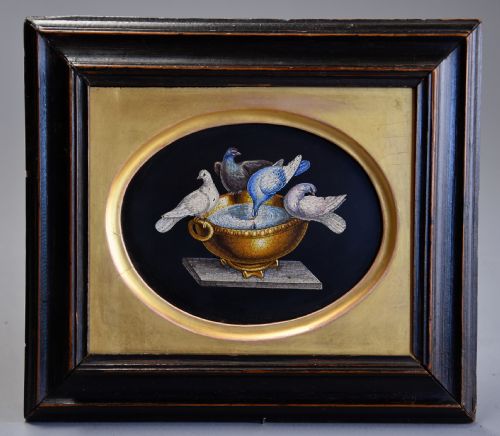


Grand Tour Souvenir Plaque
These grand tour souvenir plaque pieces are classical fragments and micromosaics brought back from Italy, prized for capturing ancient Rome on your desk.
Grand Tour Souvenir Plaque
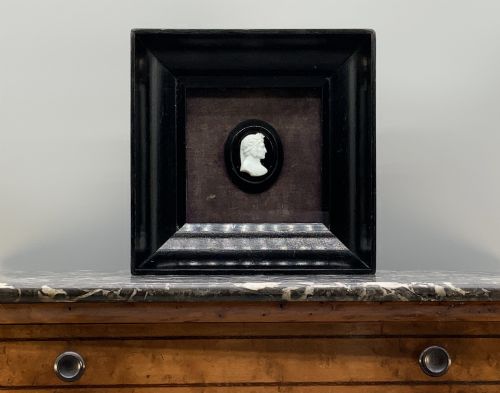
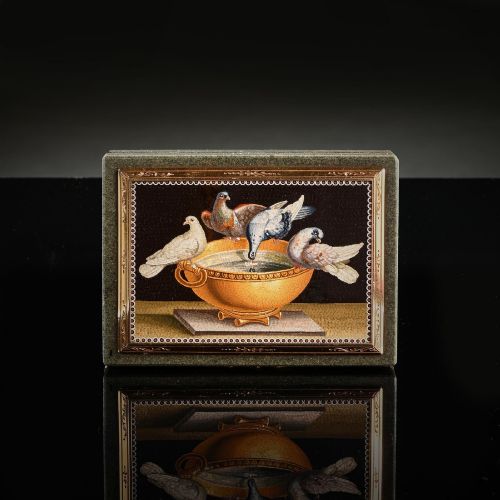
A grand tour souvenir plaque represents the artistic mementos collected by travellers during their educational journeys across Europe and Italy, spanning the eighteenth and nineteenth centuries. You encounter carved marble profiles of Roman emperors, detailed micromosaics of classical doves, and pietra dura landscape studies designed to commemorate ancient sights. These objects take the form of wall panels, paperweights, framed art, and decorative boxes created by Italian artisans for foreign visitors.
The materials reflect the mineral wealth of Italy, utilising white and coloured marbles, slate, jasper, and delicate glass tesserae assembled into lasting pictures. Pieces range from small inset tablets on desk accessories to larger carved wall art depicting architectural icons like the Lion of St Mark. Each item serves as a tangible link to neoclassical taste and the enduring fascination with classical antiquity.
How they were made
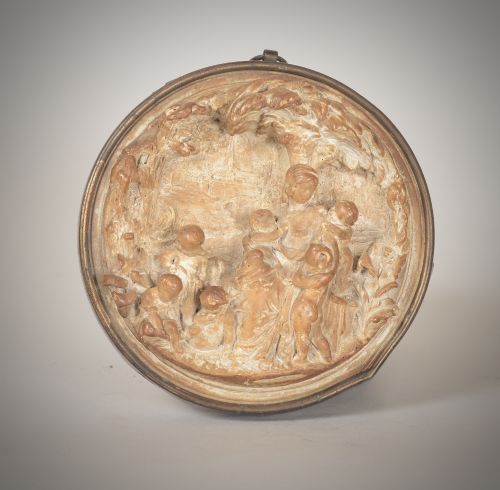
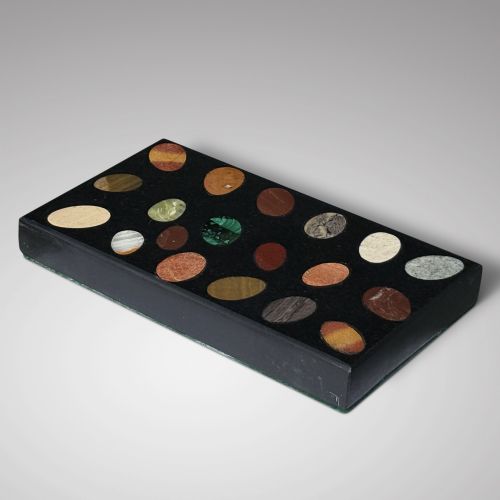
Craftsmen shaped these grand tour souvenir plaque items using traditional lapidary methods, carving ivory and marble into low relief bas-relief portraits. Hardstones and coloured marbles were sawn and fitted together flush to form pietra dura pictures of figures and geometric specimens.
Glass tesserae were pulled into fine threads and fused to create miniature mosaic tablets depicting famous Italian scenes and motifs. Metal mounts in brass and gold then framed these mineral compositions, securing them into paperweights, boxes, and wall plaques.
Listings feature items from the eighteenth and nineteenth centuries, incorporating materials such as marble, glass tesserae, ivory, and brass.
What varies in quality
The finesse of the carving or mosaic work determines the distinction between standard souvenir pieces and exceptional works of art. Finer examples display meticulous attention to facial expression in marble portraits and extreme density in glass tesserae.
The selection and variety of marbles utilised in pietra dura and specimen pieces dictate the visual richness of the composition. Superior mountings in gold or silver further elevate the status of these portable antiquities.
Gioacchino Barberi
The Grand Tour Souvenir Plaque Glossary
- Micromosaic
- A technique using microscopic glass threads, known as tesserae, fused together to create highly detailed pictorial scenes. This method reached its height in Rome during the nineteenth century for tourist souvenirs.
- Pietra dura
- An Italian term for the artistic technique of inlaying cut and fitted polished coloured stones to create pictures. Artisans used jaspers, marbles, and pietres dure to depict flora, fauna, and figurative subjects.
- Grand tour
- The traditional trip of Europe undertaken by upper-class European young men of sufficient means in the eighteenth and nineteenth centuries. The journey focused on the classics, art, and architecture of Italy.
- Bas-relief
- A sculptural technique where the figures project only slightly from the background plane. This shallow relief is common in marble and ivory portrait plaques from the period.
- Tesserae
- Small blocks of stone, glass, or tile used in the construction of a mosaic. In micromosaics, these pieces are exceptionally tiny to achieve painted levels of detail.
Grand Tour Souvenir Plaque: Frequently Asked Questions
What is a grand tour plaque?
A grand tour plaque is a decorative art object purchased by travellers visiting cultural centres like Rome and Florence during the eighteenth and nineteenth centuries. These items celebrated classical history through carved marble, mosaic, and stone inlay.
Travellers displayed these souvenirs in their homes to signal their education, refined taste, and firsthand experience of European heritage.
How were souvenir plaques used?
Owners mounted these plaques on walls, set them into desk paperweights, or inlaid them into the lids of snuff boxes and small containers. They functioned as both decorative art for the study and conversation pieces for guests.
By incorporating classical motifs, these objects brought the aesthetic of ancient ruins and Renaissance Italy into domestic Victorian interiors.
What materials are most common?
Marble, slate, and glass tesserae dominate the construction of these decorative objects, often paired with brass or gold mountings. Craftsmen also utilised ivory and native Italian stones to achieve varied colour palettes.
The use of genuine mineral specimens underscored the connection to the geological and archaeological sites visited on the journey.
How do I date a piece?
Stylistic cues such as neoclassical proportions, ebonised frames, and specific revival motifs help place these items within the nineteenth century. Inscriptions, backing materials, and the specific type of marble framing provide additional chronological clues.
Comparing the subject matter to known Italian mosaic workshops and dated paperweights offers further precision in establishing an era.