
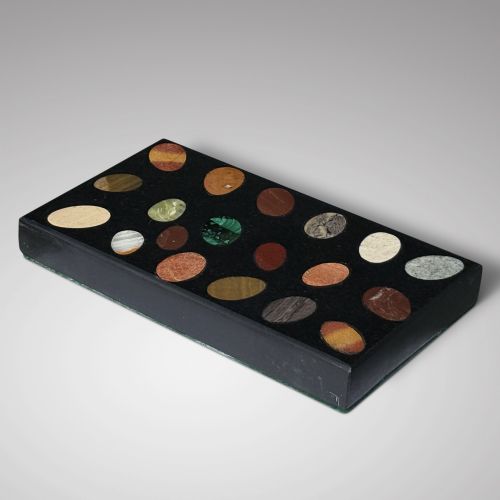



Black Marble Plaque
A black marble plaque brings classical stone and intricate inlay into a room, offering a tactile piece of historic craftsmanship that anchors a desk or wall.
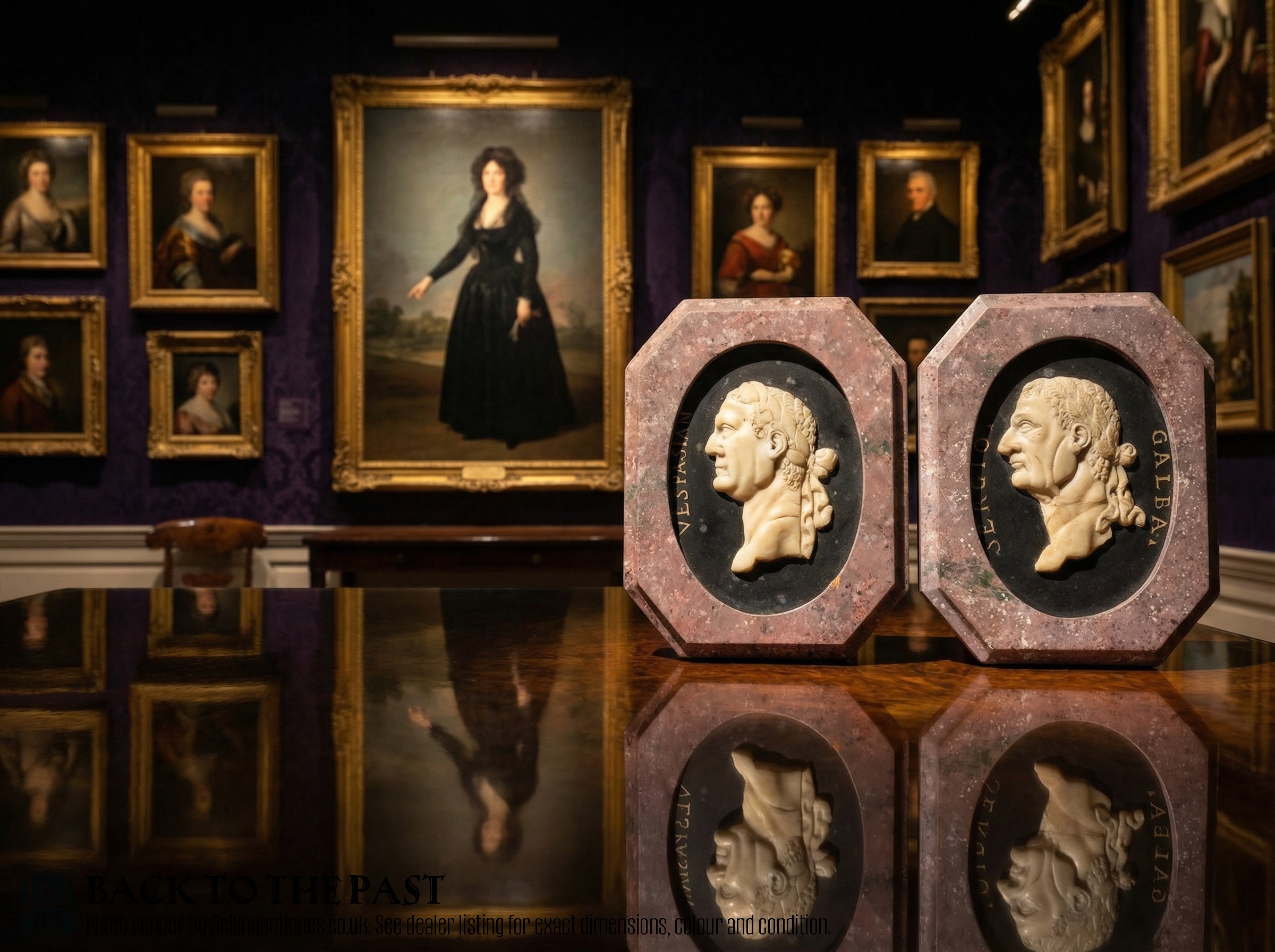
Black Marble Plaque
A black marble plaque represents a tradition of decorative stonework, taking the form of wall art, relief plaques, and desk pieces designed to display mineral specimens or intricate pietra dura designs. These objects emerge from various periods including the eighteenth and nineteenth centuries, as well as the art deco era, reflecting changing aesthetic tastes across Europe.
The versions most commonly met on this page include nineteenth-century Italian grand tour souvenirs and English desk pieces. Such pieces often incorporate inlaid semi-precious stones, micro-mosaic panels, or carved stone profiles mounted upon dark bases.
Makers and artisans across these periods utilised local stones and imported minerals to create portable mementoes for travellers or decorative items for domestic interiors. The resulting objects blur the line between functional desk accessories and pure decorative art.
Materials and construction methods
Craftsmen utilised dense stones such as black marble, slate, and onyx as the primary foundational support for these plaques and paperweights. These heavy materials provided a stable, dark background designed to contrast with brighter decorative elements.
Surface decoration frequently involved pietra dura and micro-mosaic techniques, where tiny pieces of malachite, agate, glass tesserae, and coloured marbles were shaped and fitted tightly together. Artisans also employed direct carving into stone to produce bas-relief portraits and architectural scenes.
Metal components occasionally appear alongside the stone, such as spelter figures mounted upon onyx plinths. The combination of metal casting and stone polishing demonstrates specialised workshop division of labour during the nineteenth century.
Listings feature periods from the eighteenth century through to the 1920s, utilising marble, slate, malachite, glass tesserae, agate, and spelter.
Distinctions in craftsmanship and design
Quality rests upon the precision of the stone inlay and the tightness of the joints between individual tesserae or specimens. Superior examples display seamless transitions where different coloured marbles meet, whereas simpler work reveals visible gaps or plain painted details.
Depth and clarity of carving distinguish better relief plaques and cameos from standard production pieces. Fine execution in facial profiles or architectural subjects requires considerable skill in working brittle stone without fracture.
The choice of applied materials also shifts the character of a piece, as genuine semi-precious stones and detailed micro-mosaic work demand greater labour time than basic incised slate or simple marble panels.
The Black Marble Plaque Glossary
- Pietra dura
- An Italian term for the artistic technique of using cut and fitted, highly polished coloured stones to create images. This method produces durable pictures with smooth, stone surfaces.
- Micro-mosaic
- A decorative method utilising tiny, fused glass rods known as tesserae to form detailed pictorial scenes. These miniature works required immense patience and steady hands.
- Grand tour
- A cultural journey undertaken by wealthy young Europeans through France and Italy during the eighteenth and nineteenth centuries. Souvenirs from this travel included marble plaques and specimen paperweights.
- Spelter
- An alloy of zinc and other metals often cast into figures and patinated to resemble bronze. It appears on stone plinths in later nineteenth and early twentieth-century decorative pieces.
- Ashford marble
- A Derbyshire limestone that takes a deep black polish and serves as a base for inlay work. Craftsmen embedded floral and geometric patterns into this dark stone.
Black Marble Plaque: Frequently Asked Questions
What is a black marble plaque?
A black marble plaque is a decorative stone object featuring polished dark marble or slate, frequently decorated with inlaid stones, micro-mosaics, or carved reliefs. These items served as desk accessories, paperweights, or wall art during the eighteenth and nineteenth centuries.
They reflect European decorative traditions, particularly the grand tour souvenir trade where travellers collected portable pieces of stonework. The dark background highlights the bright colours of the inserted minerals.
How were these plaques used?
Many of these objects functioned as paperweights on nineteenth-century writing desks, holding loose papers while providing a decorative surface. Others were designed as wall art, plaques, or specimen top displays meant to showcase geological varieties.
Their dual role as functional desk equipment and miniature art collections made them popular items in Victorian and continental interiors. They allowed owners to display refined taste and memories of foreign travel.
How do I care for stone plaques?
Stone plaques require gentle dusting with a soft, dry cloth to prevent scratching the polished surface. Moisture and chemical cleaners should be avoided, particularly on pieces containing micro-mosaics or delicate stone inlays.
Placing them away from direct sunlight and temperature extremes protects the historic adhesives and minor components. Handling them with clean hands preserves the natural oils and finish of the marble and slate.
How do I distinguish periods?
Periods are often identified through stylistic cues, subject matter, and the specific combination of materials used in the construction. Eighteenth and nineteenth-century grand tour pieces typically feature classical motifs, Roman emperors, or Italian landscape scenes.
Later Victorian and folk art examples incorporate regional materials like Welsh slate or Derbyshire Ashford marble with local architectural subjects. Art deco items introduce contrasting metals like spelter alongside onyx plinths.