
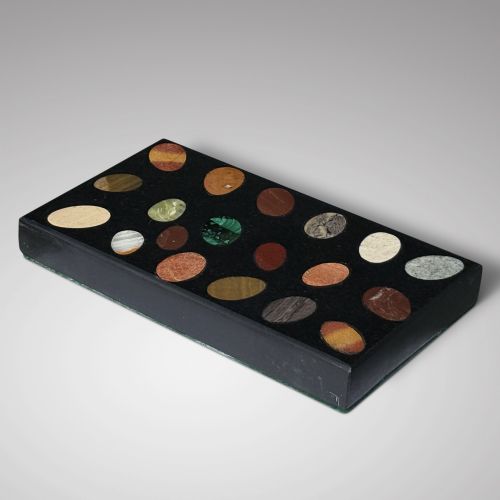


Italian Marble Plaques
These Italian marble plaques are carved and inlaid works brought home as Grand Tour souvenirs, offering classical subjects and enduring stone craftsmanship.
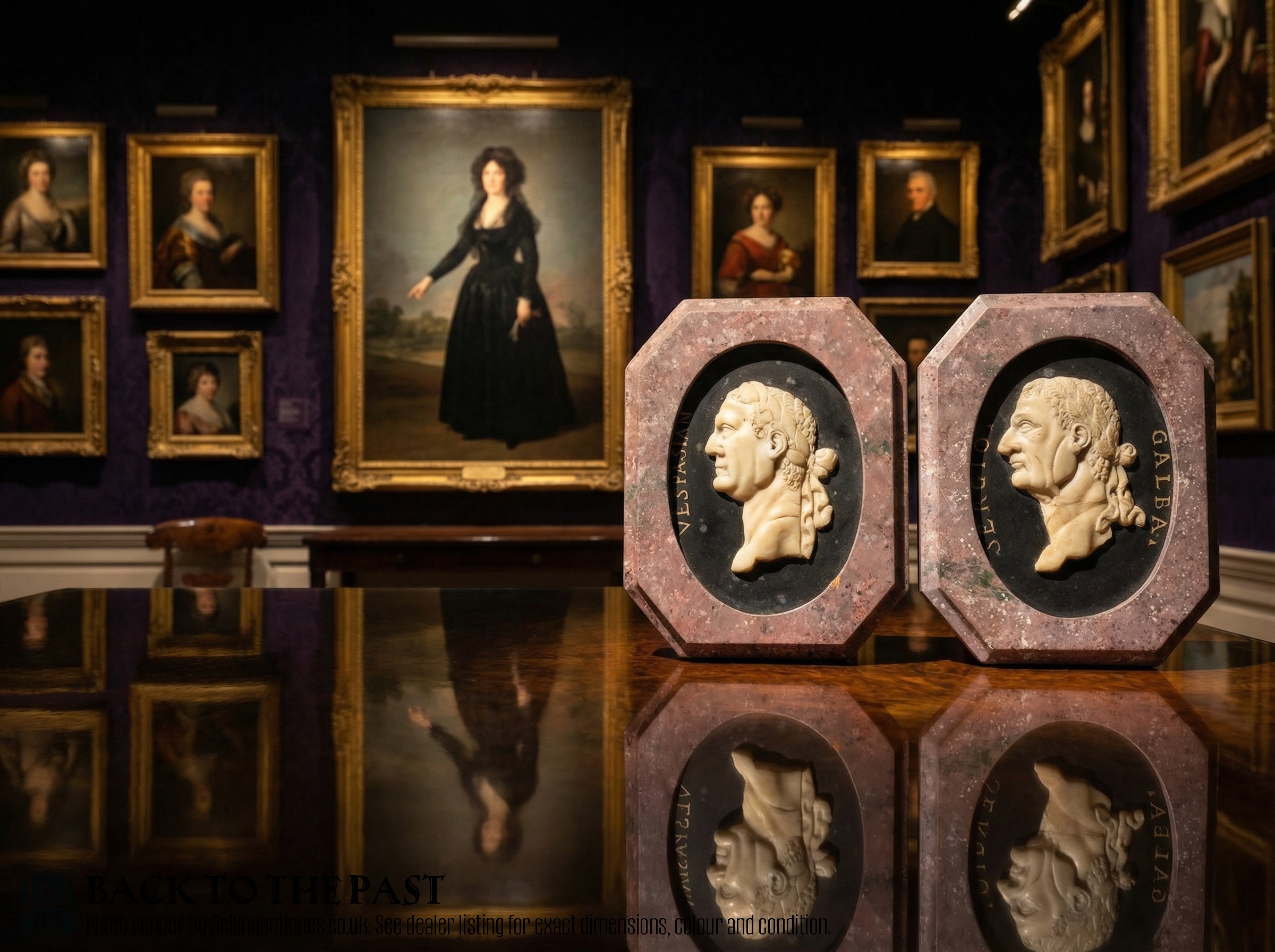
Italian Marble Plaques
When you examine Italian marble plaques, you encounter works spanning from the seventeenth century through to the nineteenth century. These objects include carved wall art, profile plaques of literary figures and Roman emperors, alongside relief sculptures and architectural crests.
The nineteenth century yields the highest concentration of souvenir pieces, particularly cartouche-shaped paperweights and framed panels. Makers utilised hardstones and micro-mosaic central panels to create detailed scenic pictures and botanical specimen tops.
Grand Tour taste dominates the selection, expressing Neoclassical and Italian Baroque influences. Buyers frequently find profile portraits of classical subjects such as Virgil and Dante, as well as heraldic symbols like the St Mark's lion.
How they were made
Artisans carved white and coloured stones directly into marble, producing bas-relief profile portraits and dimensional relief sculptures. Workshops also shaped dense Sienna marble and black marble to form structural panels, cartouches, and heavy paperweights.
The technique of pietra dura involved inlaying semi-precious stones into marble bases to construct pictorial compositions such as shepherd boys and floral specimen tops. Other pieces incorporated glass tesserae to form intricate micro-mosaic panels inset into stone mounts, occasionally framed in giltwood.
Listings span from the seventeenth century to the late nineteenth century, predominantly featuring Grand Tour souvenirs in marble and stone.
What varies in quality
Pietra dura and micro-mosaic sections rely on the tightness of the stone joints and the variety of inlaid semi-precious stones utilised. Tightly fitted tesserae and well-chosen mineral colours produce a more coherent pictorial surface than loose or rudimentary assembly.
The Italian Marble Plaques Glossary
- Pietra dura
- An Italian term for the technique of inlaying cut and fitted semi-precious stones into a marble matrix to create pictorial designs. Artisans selected jaspers, agates, and marbles to render naturalistic details.
- Grand Tour
- A cultural journey undertaken by wealthy young Europeans through France and Italy to study classical art and architecture. Souvenirs purchased along the route included carved plaques and inlaid paperweights.
- Micro-mosaic
- A decorative technique using tiny coloured glass tesserae fused together to form minute pictorial scenes. These panels were frequently set directly into marble bases for travellers.
- Bas-relief
- A sculptural technique where the figures project only slightly from the flat background plane. This method was widely used for marble profile portraits of Roman emperors and literary figures.
- Sienna marble
- A distinctive yellow and ochre-veined marble quarried in Tuscany and utilised extensively for decorative panels and architectural fragments. Its rich natural colouring made it popular during the nineteenth century.
Italian Marble Plaques: Frequently Asked Questions
What are Italian marble plaques?
These pieces are carved stone reliefs, inlaid pietra dura panels, and micro-mosaic souvenirs made in Italy. Travellers collected them during the Grand Tour.
They record classical subjects, literary figures, and architectural motifs using materials such as black marble, Sienna marble, and semi-precious stones.
How were they used historically?
Owners displayed wall plaques and carved crests within domestic interiors as evidence of classical education and European travel. Smaller items functioned as decorative paperweights on writing desks.
Framed panels and cartouches served as visual reminders of Italian artistic heritage brought back to British homes.
How do I identify Grand Tour pieces?
Grand Tour items typically feature classical subjects, such as Roman emperors, Dante, and Virgil, executed in carved marble or relief sculpture. The inclusion of micro-mosaic work or pietra dura inlay points to Italian souvenir workshops of the nineteenth century.
Materials range from standard white marble to black marble and inlaid semi-precious stones.
How should I care for marble plaques?
Keep stone and marble surfaces dusted with a soft, dry cloth to prevent particulate accumulation. Avoid chemical cleaners and moisture, which can damage inlaid semi-precious stones and micro-mosaic tesserae.
Ensure wall-mounted pieces are secured safely to support the weight of the stone.
What is the difference between relief and flat panels?
Relief plaques feature carved sculptural elements that project outwards from the stone background, capturing three-dimensional portraits of figures and animals. Flat panels rely on surface decoration rather than carving.
Flat examples typically utilise pietra dura inlay or micro-mosaic glass work to depict scenes across a smooth marble surface.