
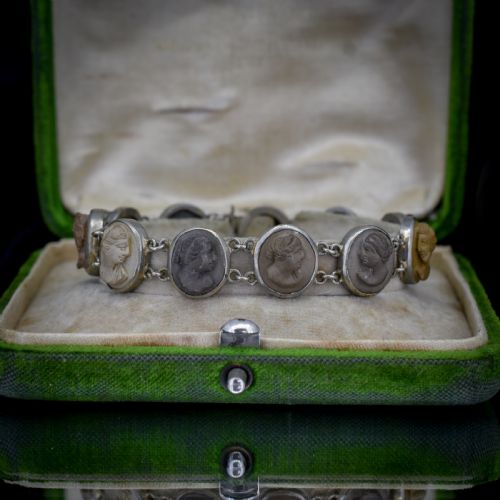


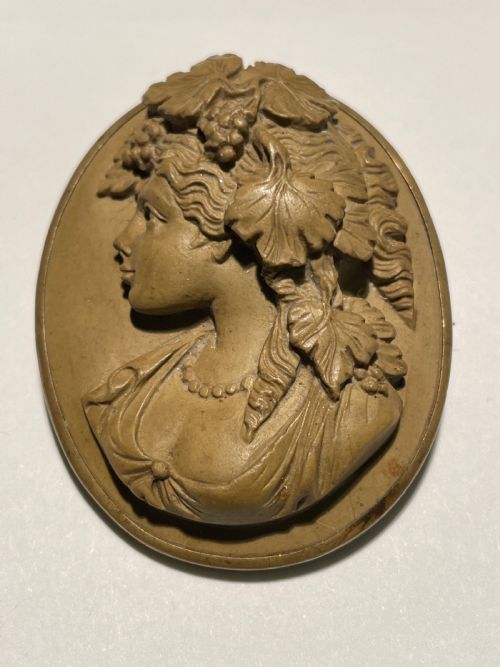


Carved Stone Profile
These carved stone profile pieces are classical relief portraits and intaglios in marble, lava and hardstone, prized for their miniature antiquity and sculptural detail.
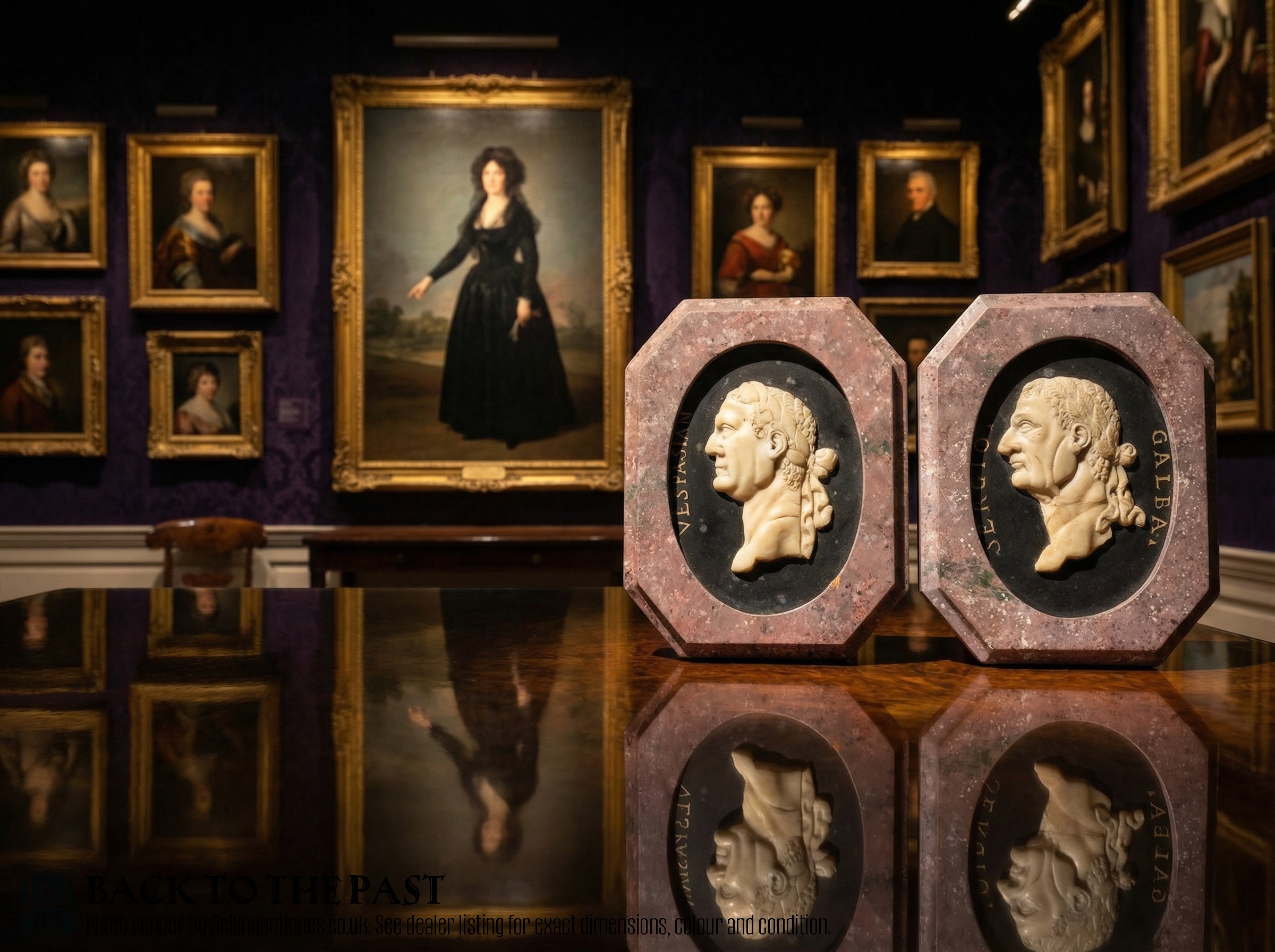
Carved Stone Profile
When you search for carved stone profile, you are looking at relief portraits and intaglios depicting classical figures, Roman emperors and mythological subjects. These items range from small wearable jewellery such as rings, brooches and bracelets to decorative wall plaques and sculptural fragments.
You are most likely to meet Victorian and 18th century examples on this page, reflecting the popularity of the Grand Tour and classical revival styles. These pieces capture profile likenesses carved by hand into durable natural materials.
The forms span finger rings set in gold, lava cameo brooches mounted in silver, and marble bas-relief plaques. Each piece translates classical sculpture into a portable or domestic scale.
How they were made
Carvers shaped these profiles using hardstone, lava stone and marble, working the stubborn material to raise a head in relief or cut an intaglio design beneath the surface. These stones demanded patience and specialised abrasive tools to achieve clean contours.
Mounts in yellow gold, rose gold, silver and iron provide structural settings for the smaller wearable items like rings and brooches. The metals are worked to frame the stone securely while complementing the tone of the carving.
Materials recorded on this page include marble, lava stone, hardstone, silver, gold, gemstone, 18ct gold, and iron.
What varies in quality
The choice of material and the harmony of the metal mount also influence the piece, where high grade gold or silver frames support well selected stones with natural depth and colour variation.
The Carved Stone Profile Glossary
- Intaglio
- A gem or stone carved with a design depressed below the surface, designed to be pressed into wax for sealing. These pieces function as rings or signets.
- Cameo
- A method of carving where the subject is raised in relief against a contrasting background. This technique highlights the profile portrait.
- Grand Tour
- A cultural journey of Europe undertaken by wealthy young men in the 18th and 19th centuries, bringing home souvenir plaques and jewellery. These items reflect classical tastes.
- Bas-relief
- A sculptural technique where the figures project only slightly from the background plane. It is commonly seen on marble plaques and portrait panels.
Carved Stone Profile: Frequently Asked Questions
What are carved stone profiles?
Carved stone profiles are sculptural portraits cut into hardstone, lava or marble, depicting classical figures and emperors.
They appear as jewellery items like rings and brooches, as well as decorative wall plaques.
How were they used historically?
Wearable pieces functioned as personal ornaments and signets, while marble plaques served as souvenirs of European travel.
Collectors displayed them in cabinets or mounted them on walls to signal an appreciation of classical antiquity.
How do I date a profile?
Dating relies on the mounting style, the metal used, and the carving conventions associated with periods like the Georgian and Victorian eras.
Evidence from the Grand Tour era points towards specific Italian workshops producing souvenir plaques.
How should I care for them?
Keep stone carvings away from harsh chemical cleaners and protect mounted jewellery from knocks that could damage the stone or metal.
Soft dusting cloths and gentle handling preserve the delicate relief details over time.