
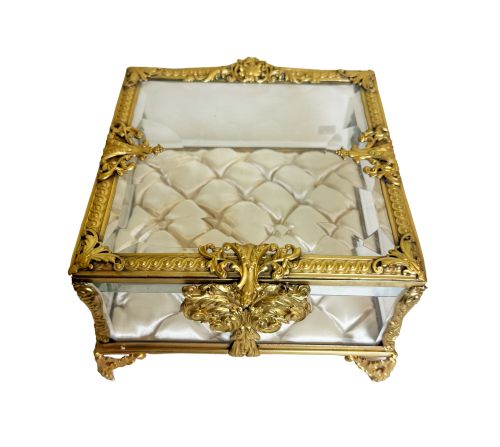
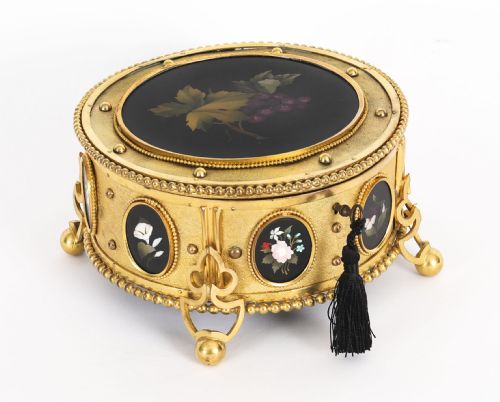
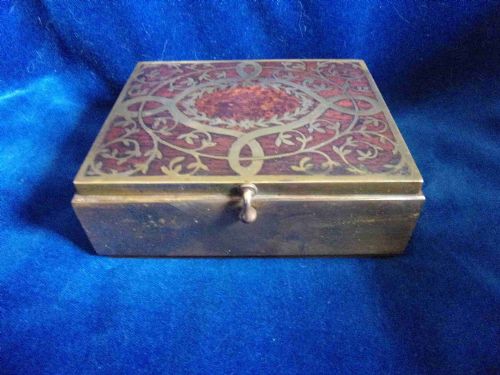


Gold Jewellery Casket
A gold jewellery casket is a small container for precious trinkets, combining metalwork and glass to grace a dressing table.
Gold Jewellery Casket
A gold jewellery casket is a repository designed for personal ornaments, most often found in forms that date from the nineteenth century. Buyers searching for a gold jewellery casket encounter items described as jewellery boxes, trinket boxes, and keepsake boxes.
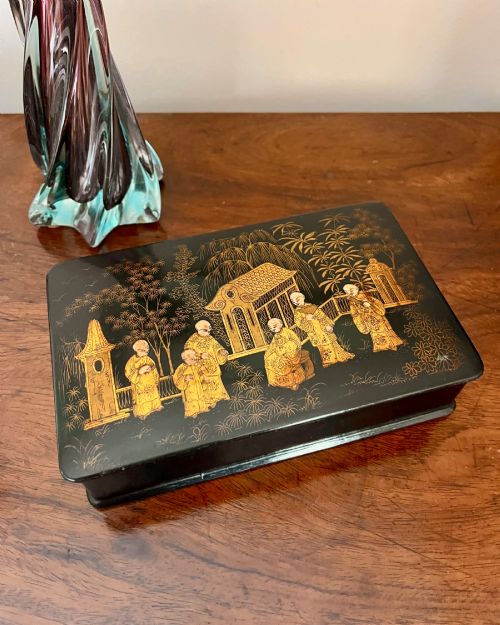
The pieces appearing on this page span several decades of the nineteenth century, alongside examples from the Georgian and Regency eras. French Rococo revival and Art Nouveau styles dominate the selection, often incorporating gilt bronze or ormolu mounts.
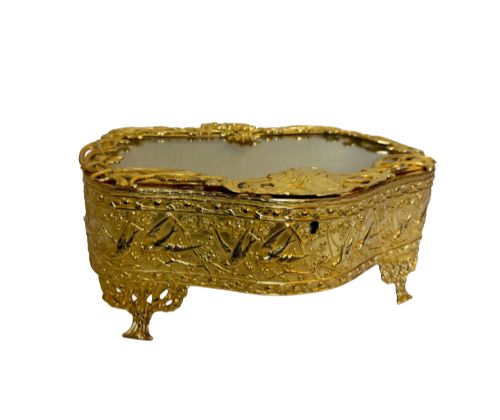
Objects range from small trinket boxes to substantial caskets featuring dog finials or Limoges miniatures. Many items combine gilded metal frames with glass panels or porcelain inserts to display their contents.
Materials and construction
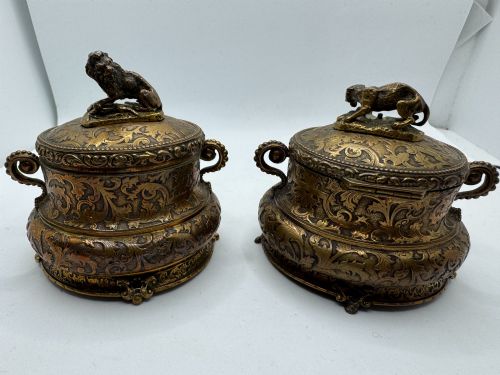
The construction of these caskets relies heavily on metals such as brass, gilt bronze, ormolu, and gilded copper, which form structural frames and decorative mounts. Artisans cast these metals and applied gold leaf or electro-forming techniques to achieve a bright metallic finish.
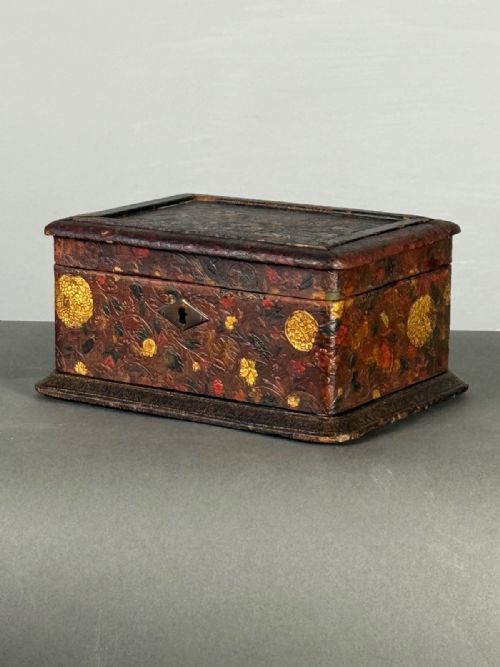
Glass and cut crystal panels frequently form the walls of nineteenth-century caskets, held together by metal armatures. Other examples incorporate lacquer, wood, leather, papier-mâché, and porcelain elements such as Sevres ceramic plaques.
Specialised decorative techniques appear throughout the inventory, including pietra dura inlays, penwork, hand-painted details, and polychrome leather coverings. Makers combined these diverse materials to create ornate containers suited for fashionable interiors.
Materials include cut crystal, Sevres porcelain, papier-mâché, and lacquered wood alongside traditional gilt bronze.
Quality variations
Quality in these caskets rests upon the crispness of the metal casting and the precision of the mounts. Finer examples display deeply chased ormolu and detailed bronze work rather than simple pressed sheet metal.
The integration of secondary materials dictates the standard of the piece, such as the clarity of cut crystal glass or the artistic merit of painted porcelain panels and miniatures. Better pieces maintain secure joins between delicate glass walls and heavy metal frames.
Named makers or established firms elevate the standing of a casket, as seen in pieces bearing marks from Parisian workshops or specialty makers. The sophistication of surface decoration, whether inlaid lacquer or pietra dura work, further distinguishes superior examples.
SUSSE FRERES PARIS·ERHARD AND SOHNE
The Gold Jewellery Casket Glossary
- Ormolu
- Gilt bronze mounted on decorative objects, created by applying an amalgam of gold and mercury to bronze. This technique produced a rich, golden surface popular in French furnishings.
- Pietra dura
- An artistic technique using cut and fitted polished coloured stones to create pictorial designs. It frequently appears on Italian decorative caskets.
- Jugendstil
- The German variant of Art Nouveau, characterised by organic lines and flowing plant motifs. Pieces from this movement often feature stylised metal inlay.
- Chinoiserie
- European decorative style reflecting Chinese artistic traditions, often seen in lacquered boxes. It was popular across the Georgian and nineteenth-century periods.
- Sevres
- Porcelain produced by the French national manufactory, known for fine painted decoration. Sevres plaques frequently inset the lids of luxury trinket boxes.
- Electro-form
- A manufacturing method using electroplating to deposit metal onto a mould. This process allowed makers to create detailed hollow copper or bronze forms.
Gold Jewellery Casket: Frequently Asked Questions
What is a gold jewellery casket used for?
These caskets were designed to hold rings, brooches, and other small personal valuables on a dressing table or desk. They kept precious items secure while offering an ornate decorative object for the room.
Today, they serve the same practical function for storing modern jewellery while adding nineteenth-century character to an interior.
How do I date a jewellery casket?
Dating relies on identifying stylistic markers such as Art Nouveau curves, French Rococo revival scrolls, or Regency penwork. Materials and construction methods also point to specific decades, such as nineteenth-century electro-forming or cast ormolu.
Makers' marks or stamps on the metal frame can provide further clues to the workshop and production period.
What is the difference between an ormolu and a brass box?
Ormolu refers to cast bronze that has been gilded, usually through a mercury-gilding process that produced a deep, warm golden lustre. Brass is an alloy of copper and zinc that has a brighter, yellower metallic tone when unplated.
Caskets described as ormolu typically feature heavier cast mounts and finer chased details than standard stamped brass boxes.
How do I care for an antique jewellery casket?
Antique caskets require gentle handling to protect delicate glass panels, enamel appliques, and fragile gilt surfaces. Dusting with a soft, dry cloth is usually sufficient for regular maintenance.
Harsh chemical polishes should be avoided on gilded surfaces and leather or lacquer elements to prevent permanent damage.