



Rosewood Stationery Box
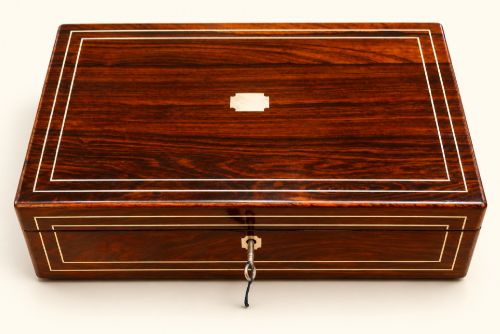
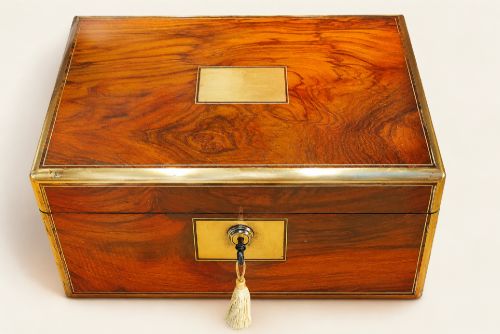
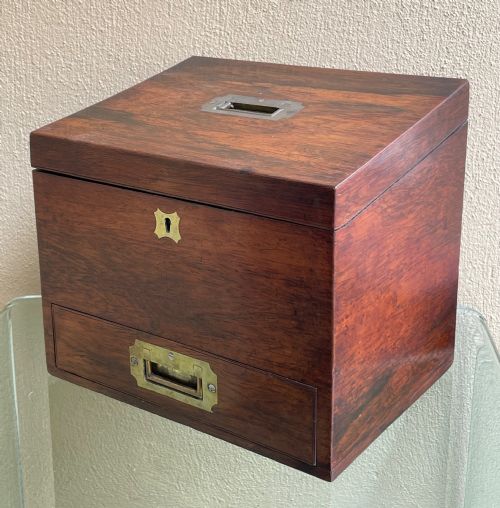
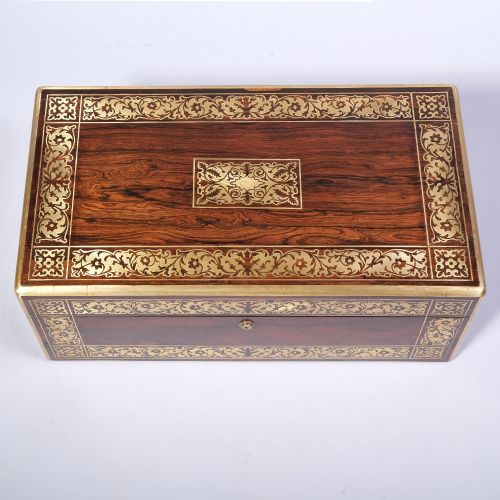
A rosewood stationery box holds letters and papers securely on a desk, combining rich timber grain with metal or shell decoration.

Rosewood Stationery Box
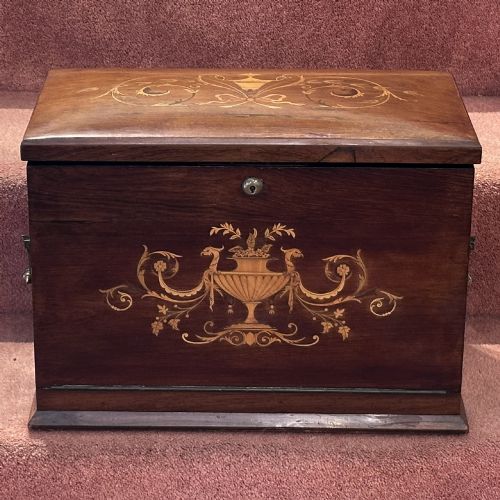
Most examples encountered here combine document storage with fitted interiors containing compartments, inkwells, and secret drawers. Forms range from simple brass-bound document cases to elaborate sloping cabinets inlaid with satinwood, mother-of-pearl, or boxwood.
How they were made
Cabinet makers constructed these pieces using dense rosewood timbers, often cut to highlight deep grain patterns and finished with French polish. Workshops integrated secondary woods like maple and satinwood for interior partitions and drawer linings.
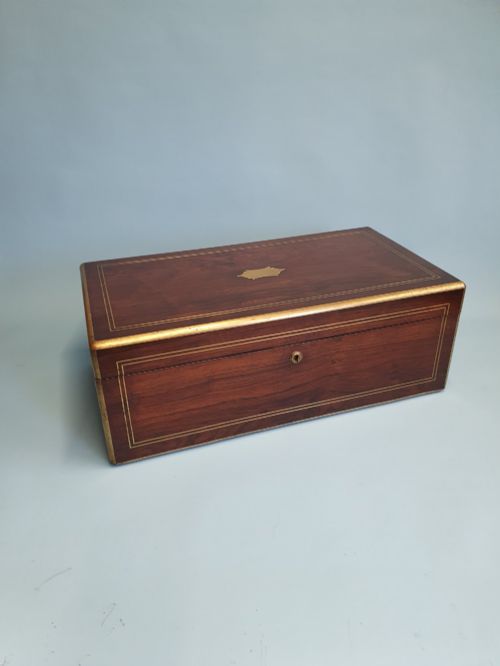
Decoration relied on precision metalwork and inlay techniques, embedding brass banding, stringing, or corner braces directly into the wood surface. Artisans also utilised mother-of-pearl and abalone shell plaques, securing them flush into recessed channels.
Rosewood Stationery Box Retail Price Guide 2026
Typical asking prices for rosewood stationery box among the pieces listed under this phrase on Sellingantiques today, from the lower quarter to the upper quarter. They describe what is for sale here now, not the wider market.
Some nineteenth-century writing boxes included secret drawers triggered by hidden wooden spring latches known only to the original owner.
What varies in quality
The standard of a rosewood stationery box rests on the precision of its joinery and the complexity of its fitted interior. Superior examples feature seamless brass inlay, perfectly mitred corners, and fully integrated secret compartments that operate smoothly.
Material selection and decorative restraint also separate standard pieces from exceptional ones. Finer items employ highly figured timbers combined with intricate marquetry or extensive satinwood stringing rather than plain surfaces.
Gillows of Lancaster·F Waller
The Rosewood Stationery Box Glossary
- Writing slope
- A hinged box that opens to reveal an angled surface designed for writing letters. These units frequently contain inkwell recesses and hidden compartments beneath the writing bed.
- Campaign box
- A portable desk or storage case featuring brass corners and flush-fitting handles for travel. These items were built sturdy to withstand transport during military or colonial service.
- Marquetry
- Decorative veneer patterns formed by fitting together pieces of wood, shell, or metal onto a core structure. This technique creates pictorial or geometric designs across the lid and sides.
- Tunbridge ware
- Small wooden objects decorated with mosaic patterns built from tiny blocks of various coloured woods. This technique originated in Kent and appears on select nineteenth-century desk accessories.
Rosewood Stationery Box: Frequently Asked Questions
What is a rosewood stationery box?
A rosewood stationery box is a desk accessory designed to hold letters, envelopes, and writing paper. These containers reflect the domestic and administrative habits of the nineteenth century.
They utilise dense tropical hardwoods and feature fitted internal compartments for organised storage. Many examples double as portable writing slopes or document cases.
How do I date a rosewood box?
Dating relies on stylistic clues, construction methods, and hardware designs found across the piece. Georgian and Regency examples often display clean lines with heavy brass banding.
Victorian pieces frequently incorporate mother-of-pearl inlay, marquetry, or more complex internal mechanisms. Maker labels or stamps, when present, provide a precise point of origin.
How were these boxes used?
Owners stored daily correspondence, incoming mail, and writing implements inside the compartments. The hinged lids kept documents private and protected paper from dust and moisture.
Travellers utilised portable campaign versions to maintain correspondence while away from permanent desks. Secret drawers provided secure spaces for valuables or stamps.
How do I care for rosewood?
Rosewood requires stable humidity levels and protection from direct sunlight to prevent timber cracking and fading. Gentle dusting with a dry, soft cloth maintains the polished finish.
Avoid applying modern silicone polishes or commercial sprays that can damage the historical surface. Occasional waxing preserves the natural lustre of the wood.