




Inlaid Rosewood Desk Box
An inlaid rosewood desk box brings dense, figured timber and precise metalwork together for portable correspondence.
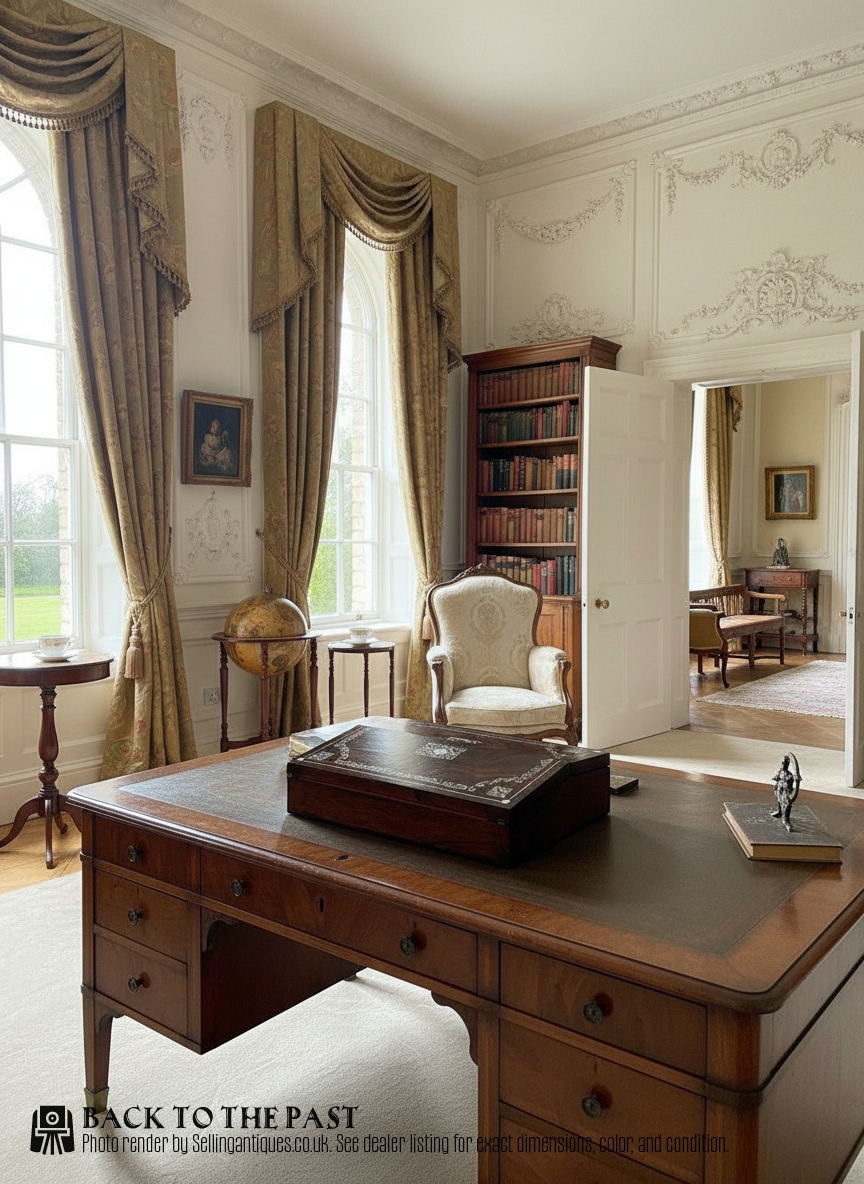
Inlaid Rosewood Desk Box
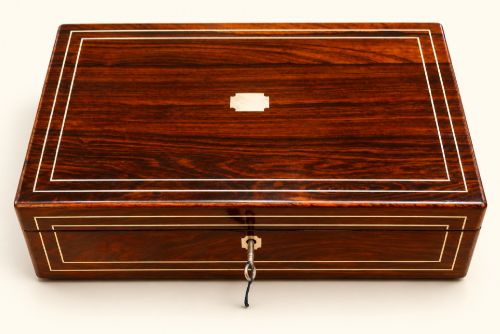
An inlaid rosewood desk box serves as a portable writing surface, document store or stationery tidy, designed to keep papers and ink organised in the home or during travel. When searching for an inlaid rosewood desk box, buyers encounter folding writing slopes, document chests and stationary caskets from the Georgian, Regency and Victorian eras.
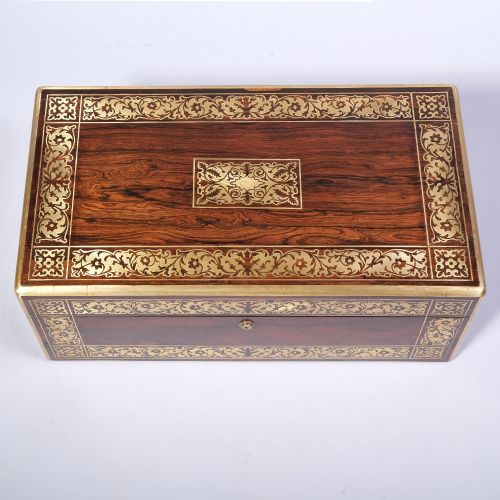
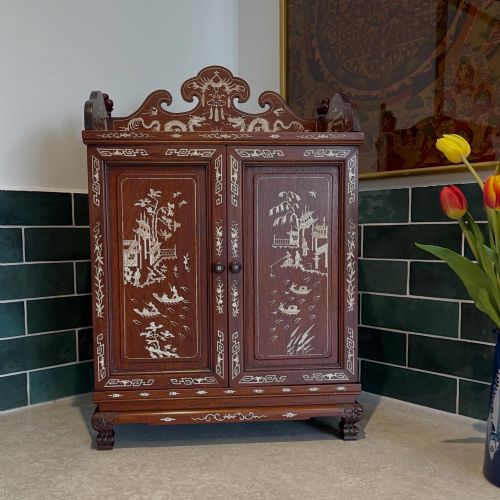
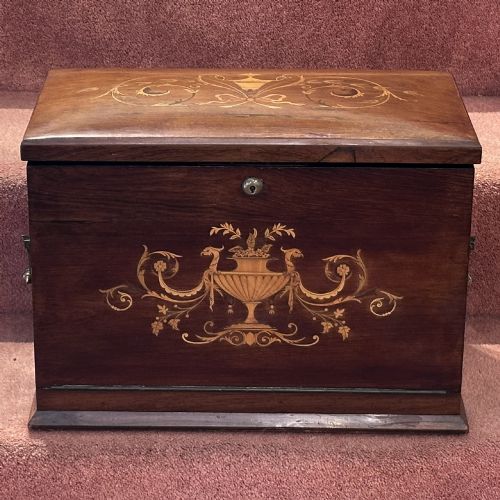
The most common formats on this page are hinged writing slopes and campaign boxes featuring fitted interiors with secret drawers, pen trays and inkwell compartments. These pieces rely on rich dark timber veneers lifted by contrasting metal or shell decoration embedded directly into the lid and fascia.
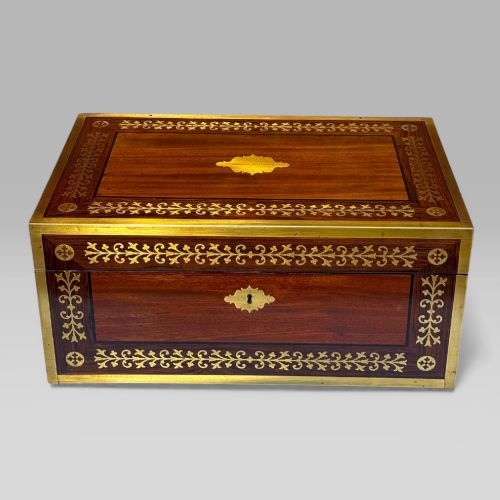
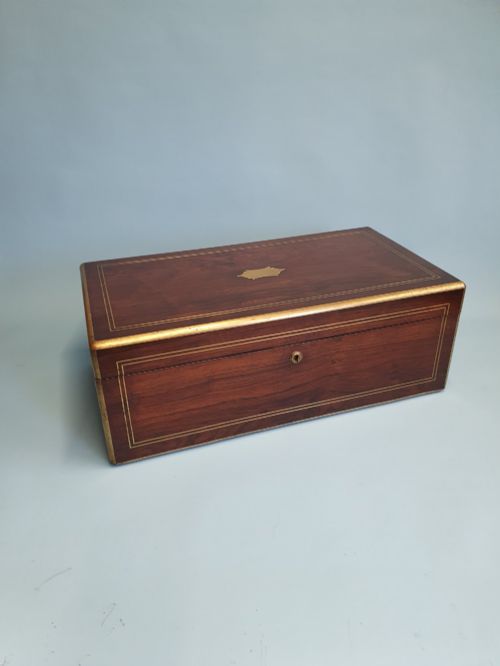
Examples span several decades of nineteenth-century cabinet making, ranging from linear Regency brass-bound units to later Victorian items enriched with mother-of-pearl or boxwood. Each box reflects the domestic habits of a period that valued private correspondence and portable luxury.
How they were made
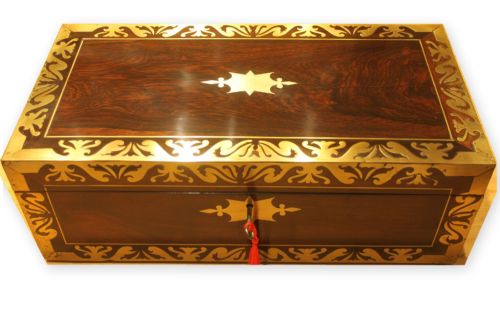
Cabinet makers built these boxes using dense rosewood veneers laid over a secondary timber carcass, applying contrasting lines of boxwood or brass channelled directly into the surface. Cut brass inlay, often forming foliate or geometric motifs, required precise hand-sawing and placement before polishing.
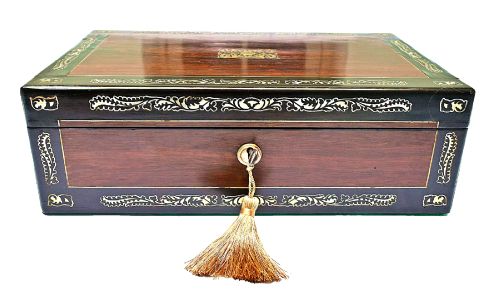
Details such as mother-of-pearl, abalone and pewter were similarly flush-fitted into sockets carved into the wood, then secured with glue and filed flat. Brass mounts, escutcheons and campaign corners were pinned into place to protect the edges during travel and reinforce the structural joints.
Interiors were lined with velvet, leather or silk and fitted with turned wooden knobs, secret compartments and glass inkwells with metal collars. The hinged lids required sturdy brass quadrant arms and inset locks to support the downward pressure of the folding writing surface.
Inlaid Rosewood Desk Box Retail Price Guide 2026
Typical asking prices for inlaid rosewood desk box among the pieces listed under this phrase on Sellingantiques today, from the lower quarter to the upper quarter. They describe what is for sale here now, not the wider market.
Several boxes contain secret compartments requiring hidden wooden latches to be nudged before a hidden drawer slides open.
What varies in quality
Quality rests primarily on the crispness of the cabinet work, the complexity of the brass or shell inlay and the integrity of the rosewood grain. Superior examples display tightly aligned joinery, hand-engraved brass details and balanced figuring across the lid rather than repetitive stamped patterns.
The sophistication of the internal fittings defines the upper tier of pieces, particularly those retaining original secret drawers, matching inkwells and undamaged leather writing surfaces. Minor variations in the thickness of the rosewood veneer and the precision of the flush inlay separate standard utility boxes from exhibition-grade commissions.
George Austin Dublin
The Inlaid Rosewood Desk Box Glossary
- Rosewood
- A dense, heavily figured tropical timber prized for its dark purple-brown heartwood and contrasting black grain lines. It takes a high polish and serves as the primary substrate for nineteenth-century luxury boxes.
- Writing Slope
- A hinged box that opens to reveal an angled writing surface lined with leather or velvet. Inside, compartments hold pens, ink and stationery.
- Campaign Box
- A portable box reinforced with brass corners, straps and recessed drop handles designed for military officers or travel. These pieces prioritise structural durability and secure storage.
- Escutcheon
- A protective metal plate surrounding a keyhole, often fashioned from brass or mother-of-pearl. It prevents the wood around the lock from splitting during use.
- Secret Drawers
- Concealed compartments hidden behind removable panels or triggered by secret release pins. They offered secure storage for valuables and sensitive documents.
Inlaid Rosewood Desk Box: Frequently Asked Questions
What is inside an inlaid rosewood desk box?
These boxes typically open to reveal a sloping writing surface lined with leather or velvet, alongside compartments for nibs, stamps and sealing wax. Many include removable trays, glass inkwells with brass lids and concealed secret drawers.
Lower tiers often provide deep wells for folded paper, ledgers or correspondence. The internal fittings remain tailored to the specific administrative tasks of the nineteenth century.
How do I date a Regency rosewood box?
Regency pieces generally feature bold brass banding, recessed campaign handles and cut brass inlay executed with geometric or foliate precision. The timber tends to show deep reddish-brown tones with strong figuring.
Construction details such as hand-cut dovetails, brass mortise locks and turned mahogany interior components further anchor these boxes in the early nineteenth century.
Were these boxes used for travel?
Many examples on this page are designated as campaign boxes, equipped with flush brass mounts and robust locks built to withstand transit. Officers and travellers relied on them to keep writing materials secure on journeys.
Other lighter stationery boxes and table cabinets remained stationary on library desks or drawing-room tables rather than accompanying owners on the road.
How do mother-of-pearl and brass inlays differ?
Brass inlay typically involves thin ribbons or cut sheets of metal channelled into the rosewood to form geometric lines or delicate floral scrolls. Mother-of-pearl and abalone are used to create iridescent focal points, often shaped into flowers or cartouches.
Victorian boxes frequently combined mother-of-pearl with etched lines to produce brighter, more decorative contrasts against the dark wood.