



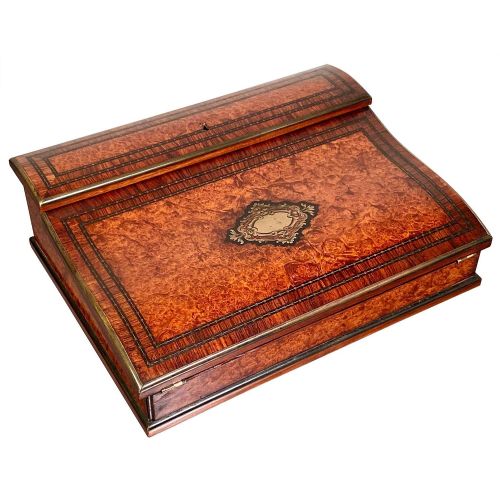

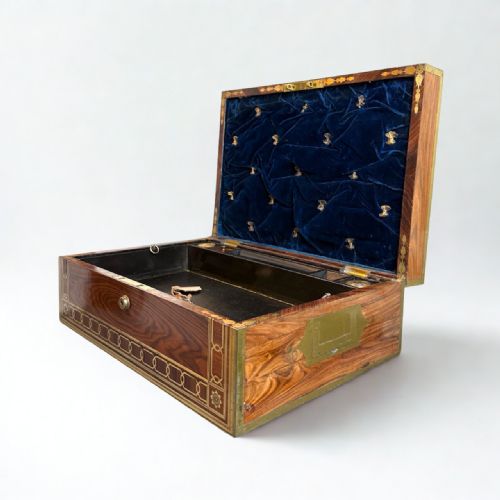


Inlaid Wooden Writing Slope
An inlaid wooden writing slope provides a portable desk surface, bringing period craftsmanship and practical letter-writing compartments into a modern home.
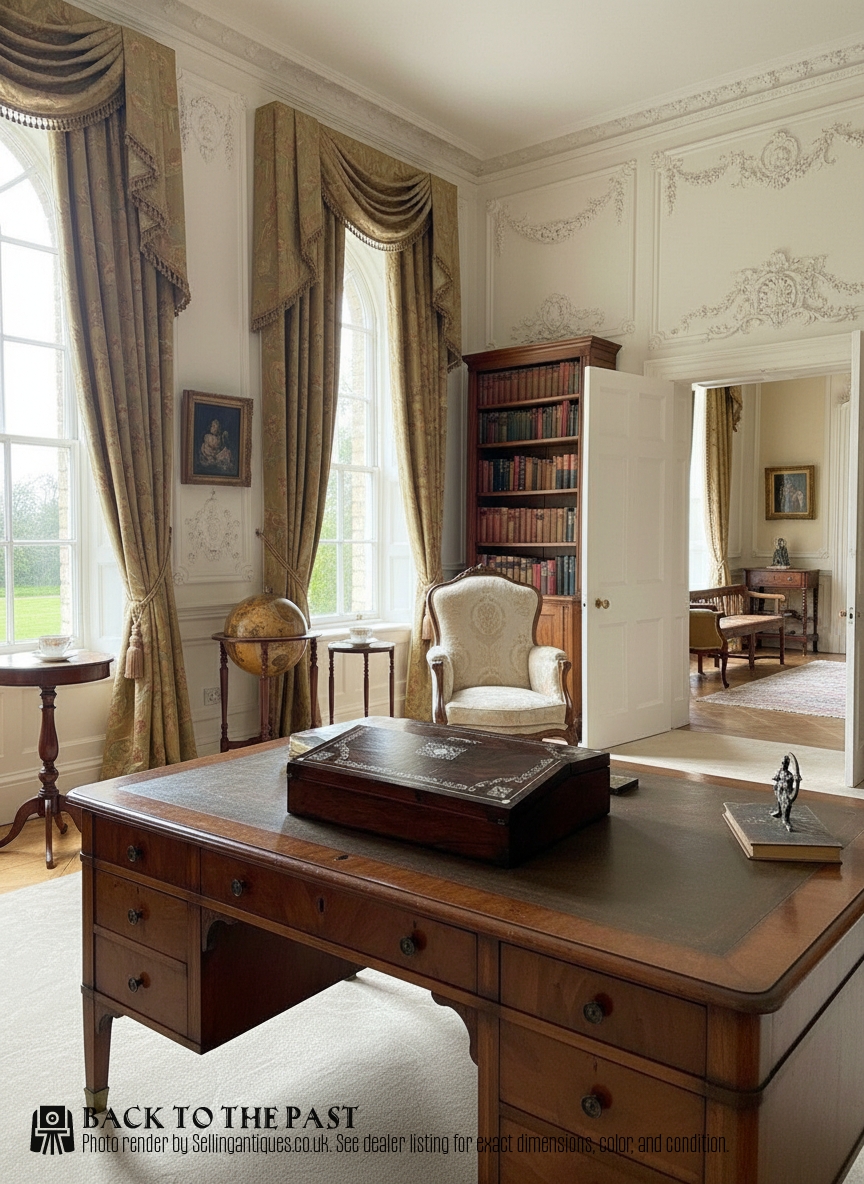
Inlaid Wooden Writing Slope
When you search for an inlaid wooden writing slope, you encounter portable writing boxes designed to fold open into a slanted writing surface. These pieces span Georgian, Regency, and Victorian periods, reflecting shifting domestic habits and travel requirements across the nineteenth century.
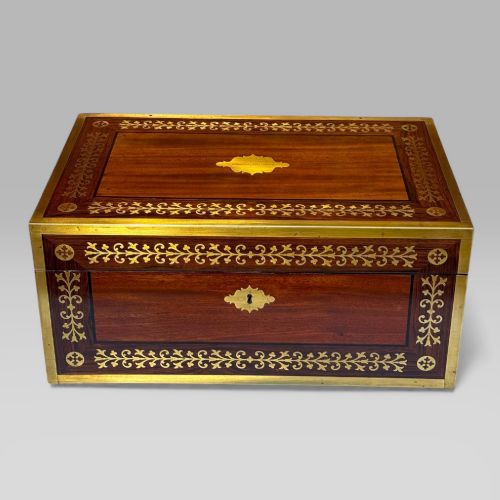
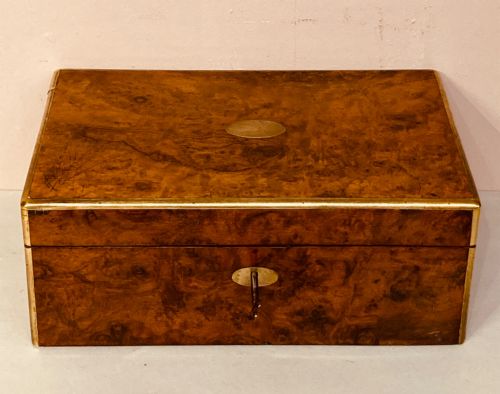
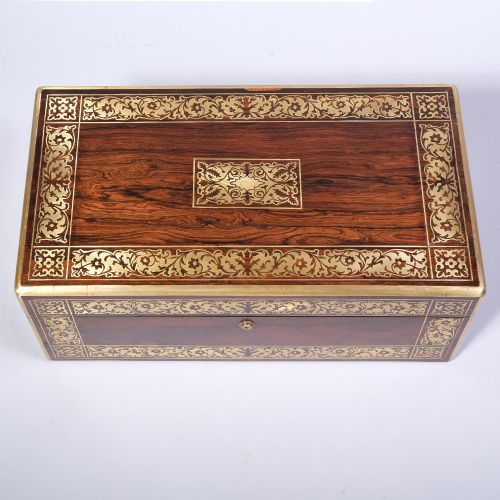
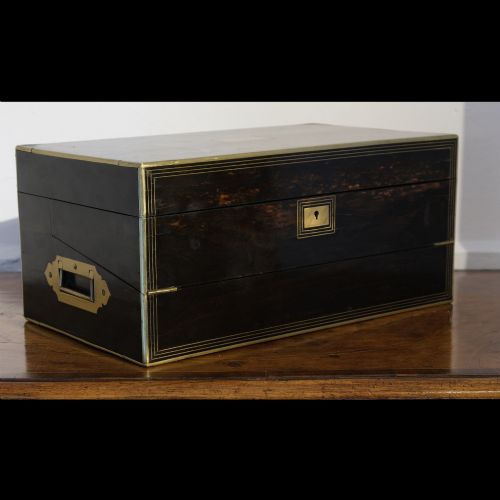
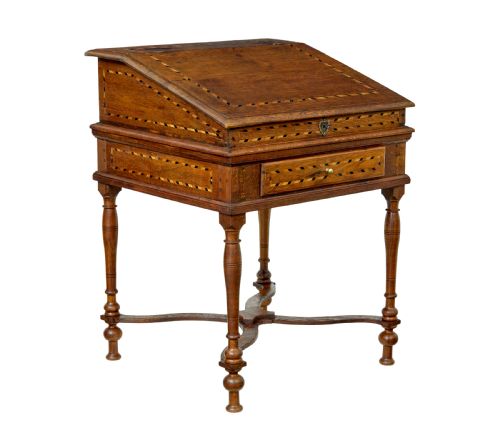
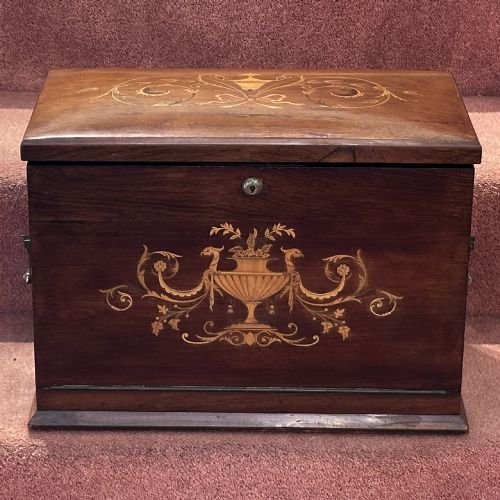
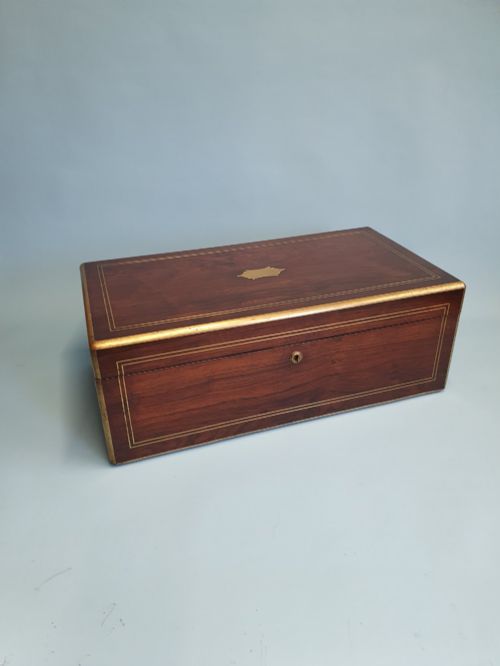
The most common examples on this page are rosewood, walnut, and mahogany boxes, often reinforced with brass banding or intricate mother of pearl and satinwood inlay. Makers also produced specialised variants such as stationery boxes, campaign desks, and Davenport desks.
Originating from British workshops as well as continental and colonial centres like Dutch, French, and Anglo-Indian makers, these objects served travellers, writers, and households requiring secure storage for correspondence and documents.
Materials and Construction
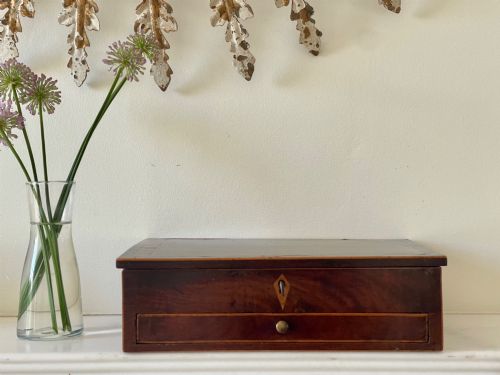
Cabinetmakers constructed the carcase from dense timbers such as mahogany, rosewood, burr walnut, and oak, often applying decorative veneers to the exterior surfaces. Marquetry and stringing utilised contrasting woods like satinwood, alongside inlaid brass corners and escutcheons to protect edges during travel.
Interiors combined sloping writing pads covered in leather or velvet with fitted compartments for inkwells, pens, and stamps. Many boxes incorporated concealed secret drawers accessed by removing internal panels or manipulating hidden spring catches.
Current listings feature rosewood, burr walnut, and mahogany woods, alongside brass, mother of pearl, and bone materials across Georgian, Regency, and Victorian periods.
Standards of Execution
Quality rests in the precision of the cabinetwork, particularly the tightness of the mitred joints, the crispness of the brass inlay, and the figuring of the burr veneers. Superior pieces feature matched grain patterns across the lid and sides rather than random veneer cuts.
The sophistication of the internal mechanism dictates the grade of the box, distinguishing standard production from high-end commissions fitted with Bramah locks, concealed secret drawers, and complex pigeonhole arrangements.
The Inlaid Wooden Writing Slope Glossary
- Escutcheon
- A protective metal plate surrounding a keyhole, usually cast in brass and occasionally engraved.
- Bramah lock
- A high-security cylindrical lock patented in the eighteenth century, commonly found on better-quality nineteenth-century boxes.
- Campaign box
- A portable desk or chest constructed with recessed brass handles and corner brackets for military travel.
- Secret drawers
- Concealed compartments hidden behind false partitions or triggered by spring mechanisms within the writing slope.
- Tunbridge ware
- Small wooden decorative objects characterised by mosaic patterns built from tiny tinted wood blocks.
Inlaid Wooden Writing Slope: Frequently Asked Questions
What is an inlaid wooden writing slope?
An inlaid wooden writing slope is a portable box that opens on a hinge to form an inclined writing surface lined with leather or velvet. Inside, fitted compartments organise inkwells, pens, and paper.
Cabinetmakers constructed these boxes from dense timbers like mahogany, rosewood, and walnut, often decorating the exteriors with brass inlay, mother of pearl, or contrasting wood veneers.
How were writing slopes used in the past?
Before the widespread use of fitted study desks, people used writing slopes to store stationery, stamps, and important documents while maintaining a portable writing surface. Owners could place the closed box on a dining table or lap to write letters.
Travellers, military officers, and households without dedicated writing rooms relied on these boxes to keep writing materials organised and secure under lock and key.
How do I identify a Georgian writing slope?
Georgian writing slopes typically date from the late eighteenth to the early nineteenth century and lean toward simpler, robust forms constructed in mahogany or rosewood. They often feature restrained brass escutcheons and simpler internal layouts compared to later Victorian models.
As the style transitioned through the Regency period, makers incorporated more elaborate brass banding and refined internal compartments while maintaining the fundamental portable box format.
What are secret drawers in a writing slope?
Secret drawers are concealed compartments built into the interior of a writing slope to secure valuables and confidential letters. Cabinetmakers hid these spaces behind false bottoms, removable panels, or behind banks of stationery pigeonholes.
Accessing them often requires lifting a specific divider, removing the inkwell tray, or pressing a hidden wooden spring mechanism inside the box.
How do I care for a wooden writing slope?
Maintain a wooden writing slope by placing it away from direct sunlight, radiators, and rapid temperature changes that can dry out old timbers and crack veneers. Dust the exterior gently with a dry, soft cloth and occasionally apply a neutral furniture wax to nourish the grain.
Protect the interior leather or velvet writing surfaces from moisture and ink spills, and avoid forcing historical locks or keys if the mechanism resists.