


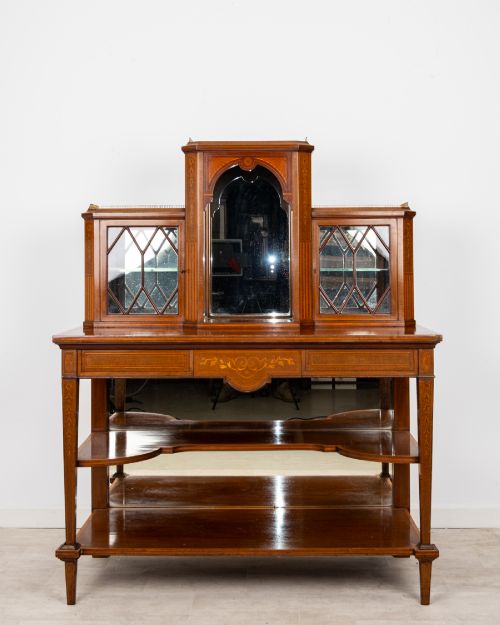
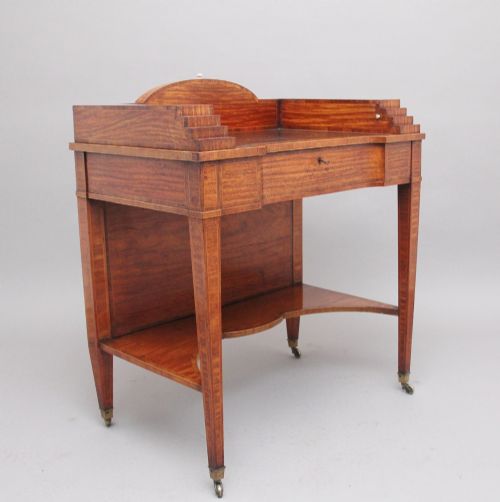
Inlaid Bonheur Du Jour
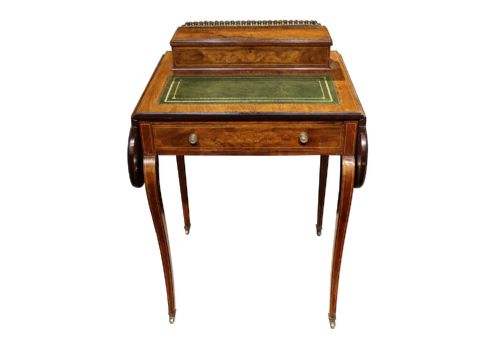
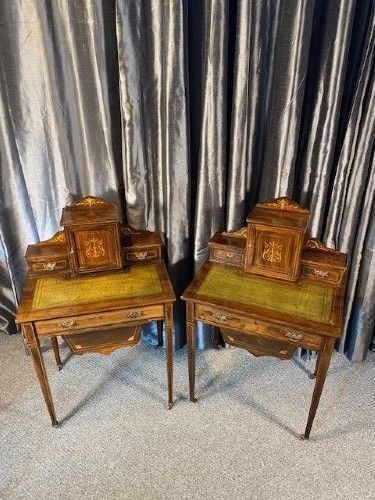
When choosing an inlaid bonheur du jour, you select a refined lady's writing cabinet designed for light correspondence.

Inlaid Bonheur Du Jour
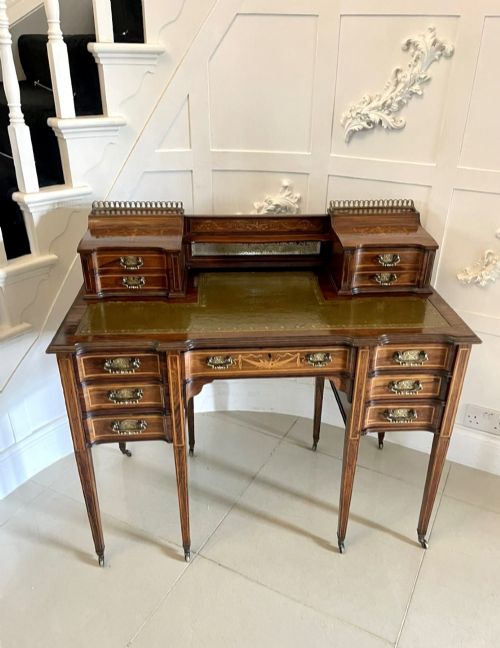
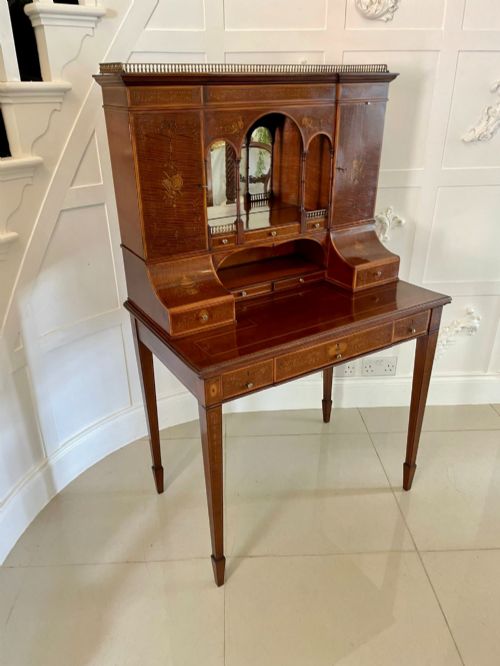
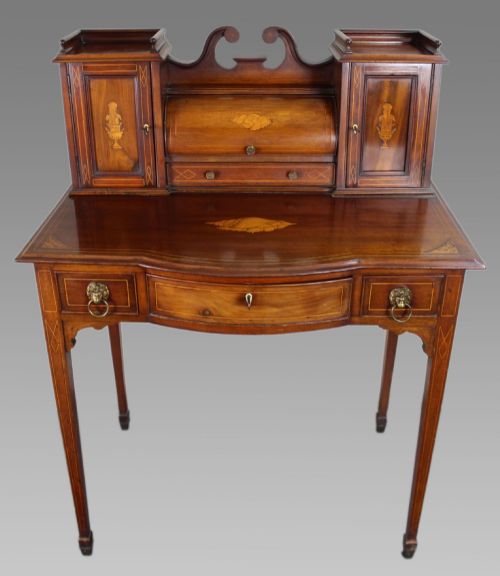
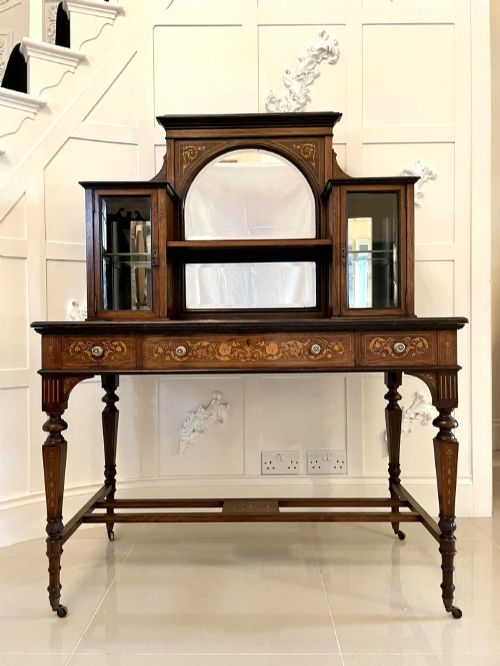
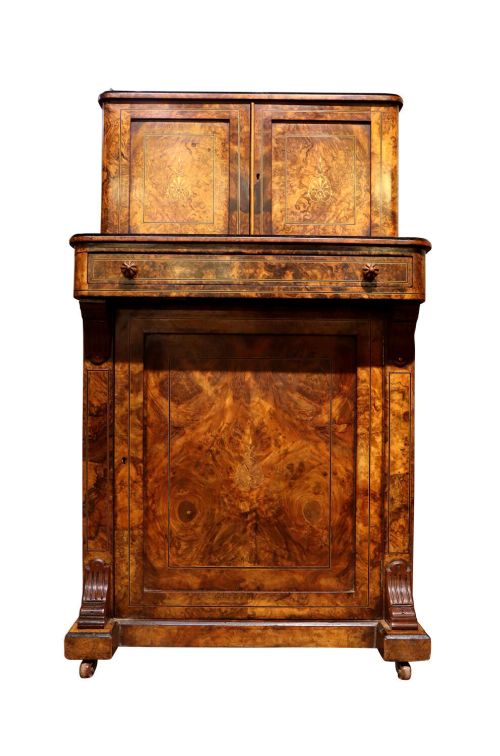
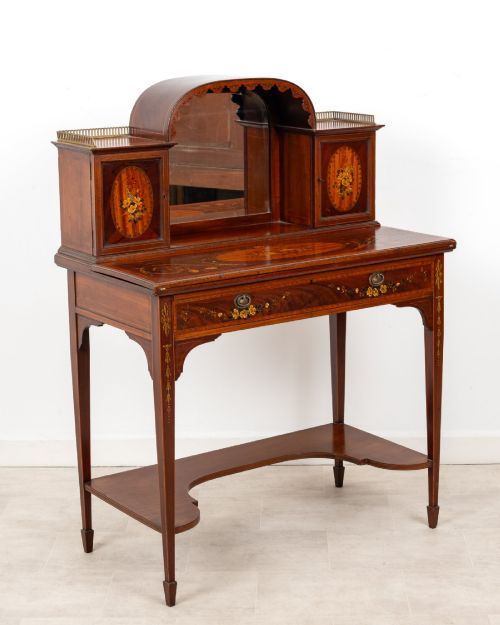
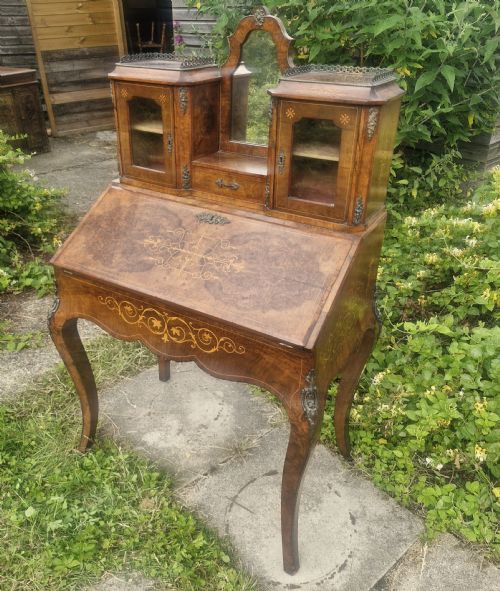
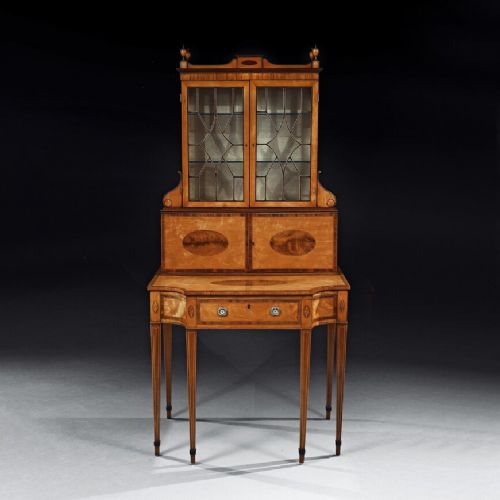
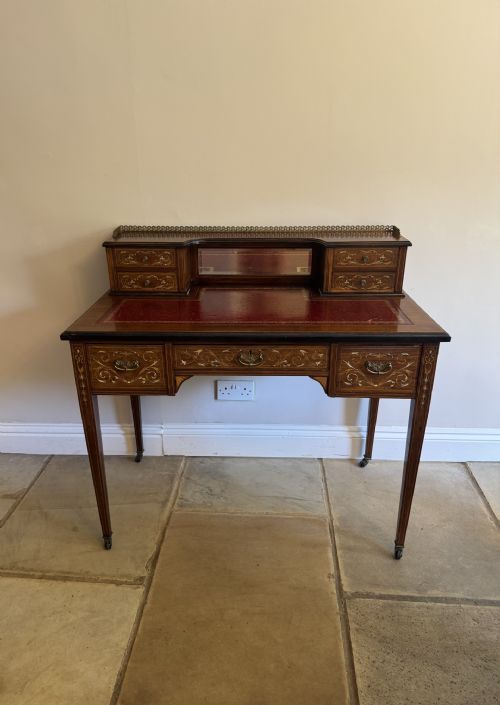
An inlaid bonheur du jour combines a small writing surface with an upper tier of shelving, drawers, or a small cupboard. Most examples encountered here date from the Victorian and Edwardian eras, alongside French pieces from the nineteenth century utilising revival styles.
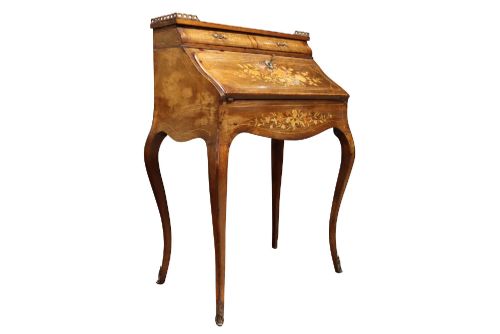
The form developed as a light, portable bureau for domestic apartments rather than heavy administrative work. Pieces often incorporate fitted interiors with small compartments beneath a writing flap or sliding surface.
Makers produced these desks in both English Sheraton Revival designs and continental interpretations. The structure typically stands on slender cabriole or tapered legs supporting the superstructure above.
Materials and Technique
Cabinetmakers utilised dense timbers such as mahogany, walnut, rosewood, and kingwood as foundations for intricate decorative schemes. Satinwood and burr walnut provided contrasting lighter grain patterns for outer panels and friezes.
Marquetry and stringing techniques defined the surface decoration, employing contrasting veneers of various woods inlaid into the primary ground. Brass mounts, gilt-bronze accents, and glass doors occasionally completed the composition of more elaborate French and English cabinets.
Secret compartments hidden behind miniature cabinet doors kept delicate love letters safe from prying family members.
Assessing Craftsmanship
Quality rests in the crispness of the veneer work and the precision of the timber matching across opposing panels. Finer pieces demonstrate meticulous hand-cut marquetry rather than stamped or printed substitutes, with tight joints securing the superstructure to the desk base.
Internal secondary timbers and drawer construction reveal the workshop standard behind the exterior polish. Well-made examples feature solid mahogany drawer linings and functioning original locks rather than later replacements.
Maple and Co·Edwards and Roberts·Jas Shoolbred and Co·Druce and Co·Gillows of Lancaster
The Inlaid Bonheur Du Jour Glossary
- Bonheur du jour
- A small ladies writing desk featuring a tiered cabinet superstructure on the desktop. The term translates from French as day's good fortune.
- Marquetry
- Decorative patterns formed by fitting together thin slices of various coloured woods and materials into a veneer. Craftsmen apply this directly onto the structural carcase of the furniture.
- Escritoire
- A writing cabinet containing a sloping flap or drop-front desk surface concealing small pigeonholes and drawers. These pieces often incorporate locks to secure private correspondence.
- Satinwood
- A lustrous, hard timber native to Ceylon and the West Indies exhibiting a characteristic golden-yellow sheen. Cabinetmakers valued it highly for contrasting stringing and banding.
- Kingwood
- A heavily figured, dense tropical wood showing dark violet-brown tones with lighter golden streaks. Workshops utilised this timber extensively for high-status French and English decorative furniture.
Inlaid Bonheur Du Jour: Frequently Asked Questions
What is a bonheur du jour used for?
These pieces served primarily as ladies writing desks for writing letters, storing stationery, and keeping personal accounts. The upper compartments provided a neat space to display small ornaments or organise daily correspondence.
In a modern home, they function effectively as compact writing desks or decorative statement pieces in sitting rooms and bedrooms.
How do I tell English and French pieces apart?
English examples often follow Sheraton Revival or Edwardian designs utilising mahogany, satinwood, or rosewood with restrained stringing. French pieces from the nineteenth century frequently display bolder Louis XV or Louis XVI revival curves, richer kingwood veneers, and cast gilt-bronze mounts.
Examining the secondary timbers inside the drawers also helps confirm the likely workshop origin of the piece.
Are these desks suitable for daily laptop use?
The compact writing surfaces accommodate modern laptops or tablets, though the internal stationary compartments restrict legroom and working space. Most antique writing flaps were built for parchment and inkwells rather than heavy modern equipment.
Protecting the delicate veneered writing surface with a blotter preserves the antique finish during regular use.
How do I care for inlaid wood surfaces?
Keep antique furniture away from direct sunlight and heat sources to prevent the delicate inlaid veneers from drying out and lifting. Regular dusting with a dry, soft cloth maintains the polish without damaging the timber.
Apply high-quality beeswax sparingly when the wood appears dry to nourish the grain and protect the historical finish.