2,842  PAGES BROWSED TODAY PAGES TODAY 0 ANTIQUES UPLOADED TODAYNEW ARRIVALS
LATEST STOCK
Sort Order
Items Per Page
Browse Categories
Sort order
Relevant Links
Items per page
ID #SA1221087
FOR SALE
£44,500
Email
Save
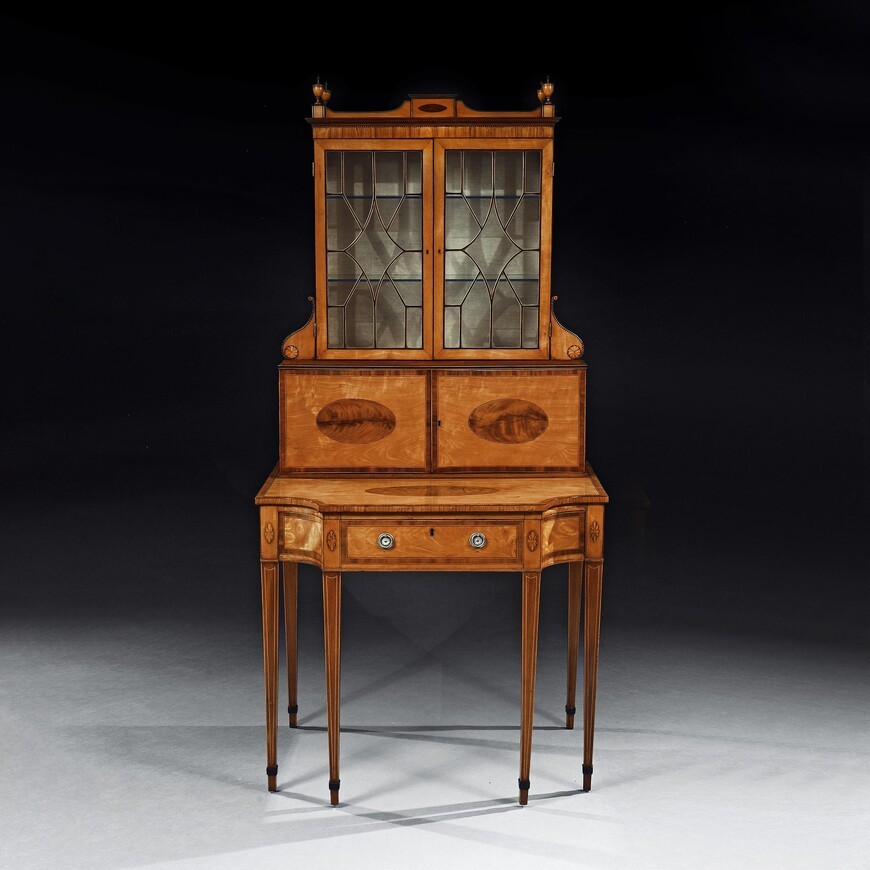
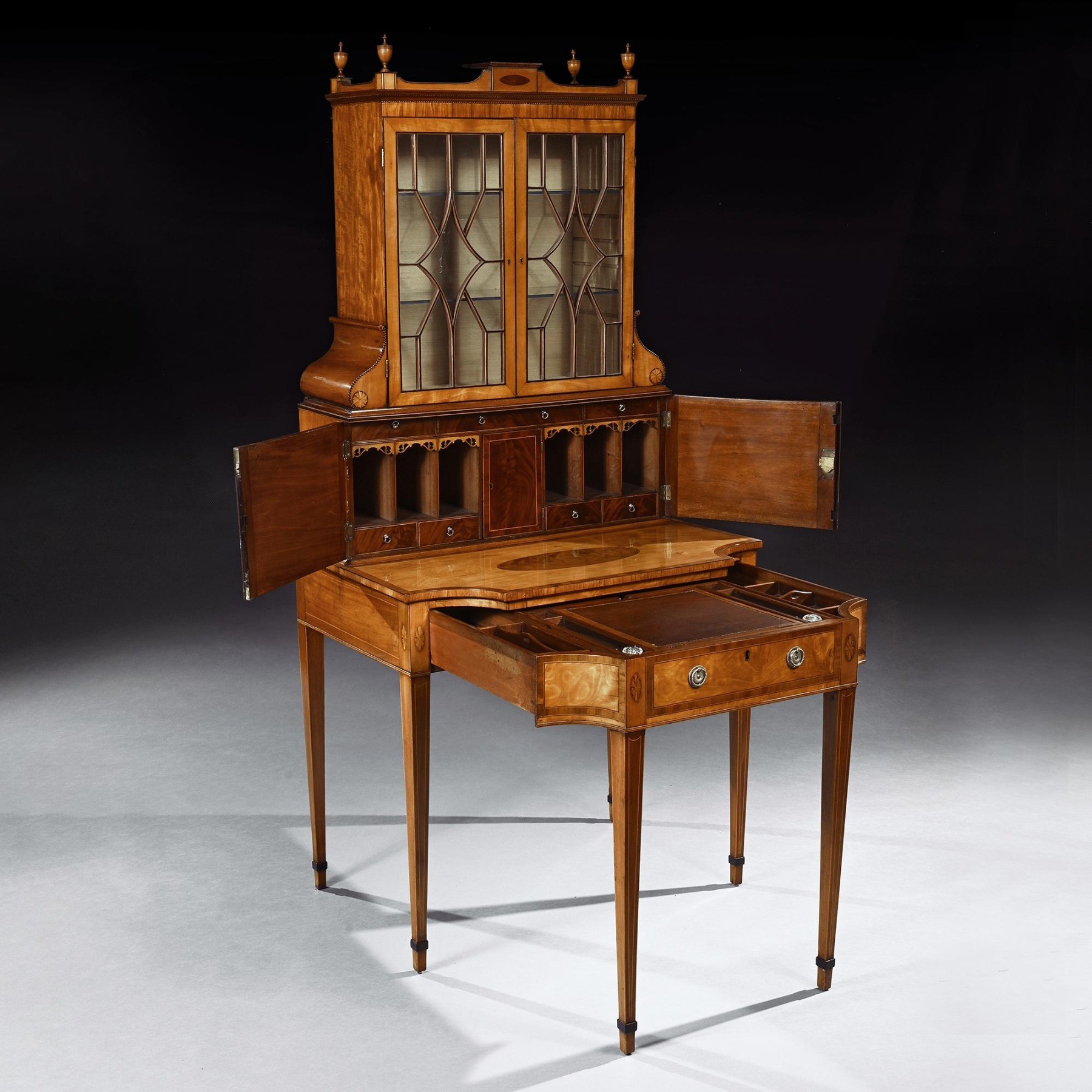
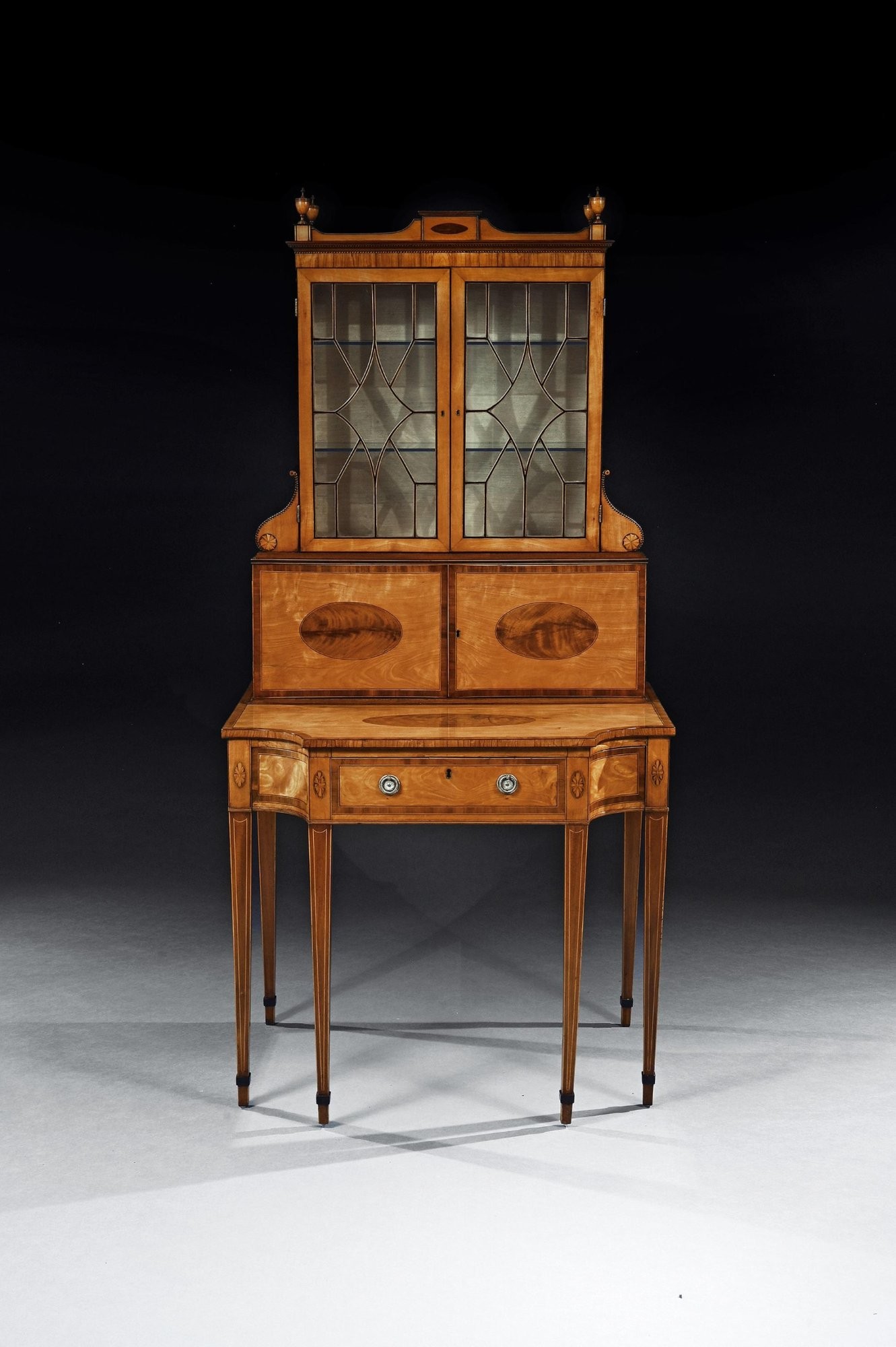
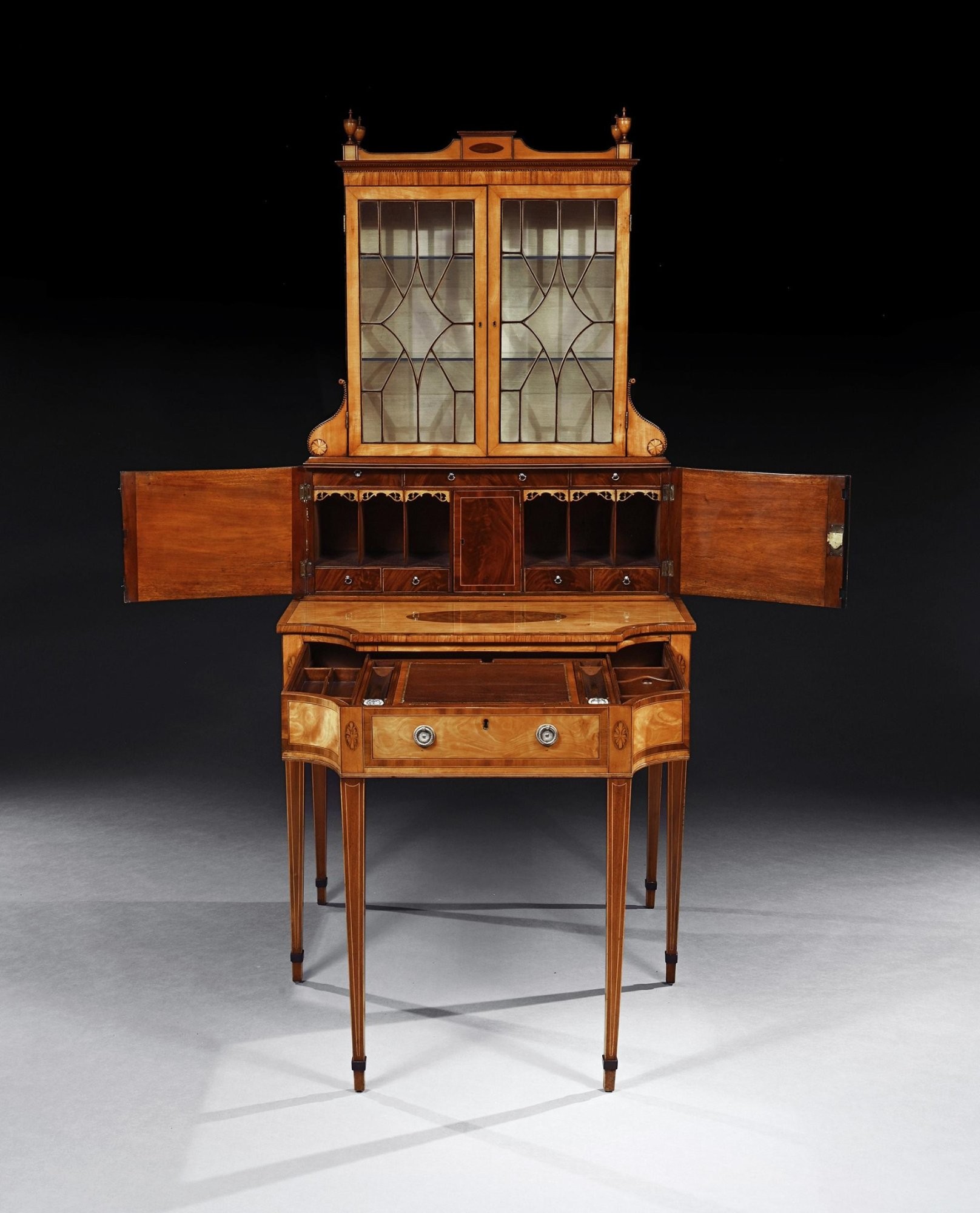
An Important 18th Century George III Satinwood and Sabicu Writing Cabinet
Loveday Antiques
for sale €52,065     $56,515
£44,500
Loveday Antiques

Loveday Antiques

Sellingantiques Verified Since Mar 2012
View Dealers Stock Page
  • About Us
    Specialist furniture dealers 18th-20th century
  • Trade Associations
    Loveday Antiques is a registered member of LAPADA  BADA  CINOA
Id #SA1221087
PDF SHARE
SAVE

An Important 18th Century George III Satinwood and Sabicu Writing Cabinet

18th century
For Sale by Loveday Antiques
Description

A fine late 18th Century George III Satinwood and sabicu ladies writing cabinet with important provenance. (Possibly by George Simpson)

English London made - Circa 1785

Provenance

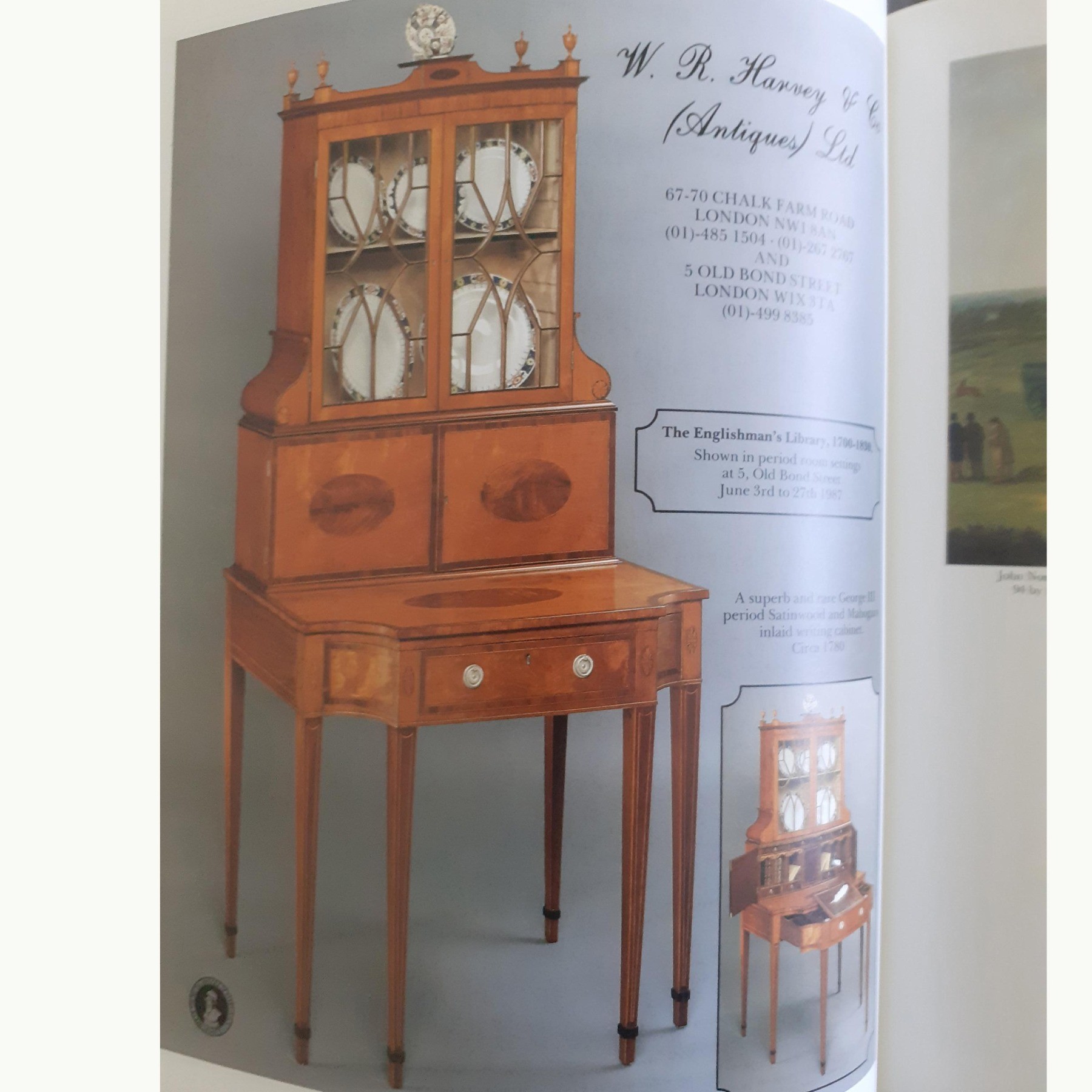
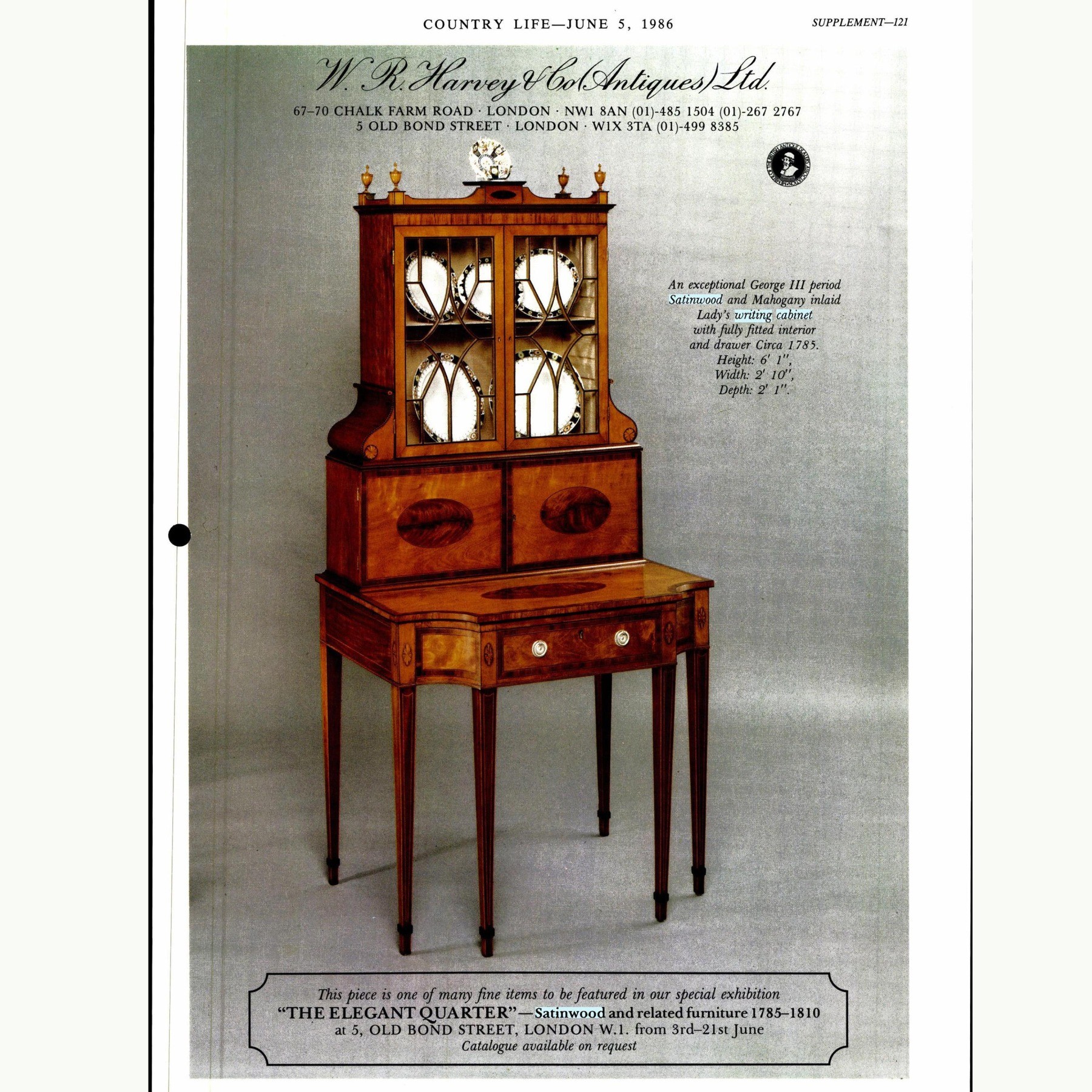
Exhibited by W. R. Harvey in their Old Bond Street showrooms in 1986 and 1987, the piece being chosen to be advertised in Country Life magazine in 1986 and in the Grosvenor House Antiques Fair catalogue in 1987.
A private European collection.

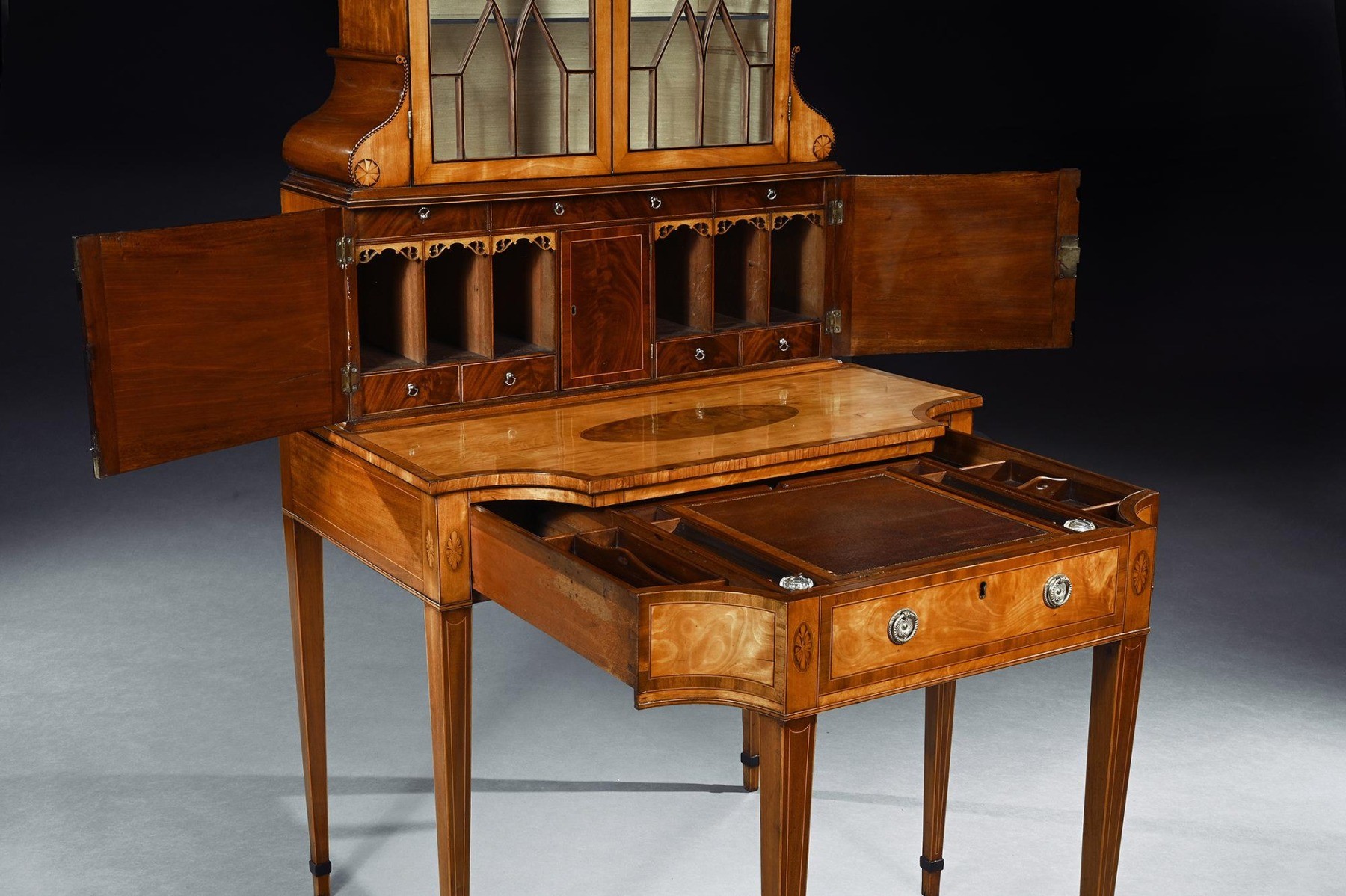
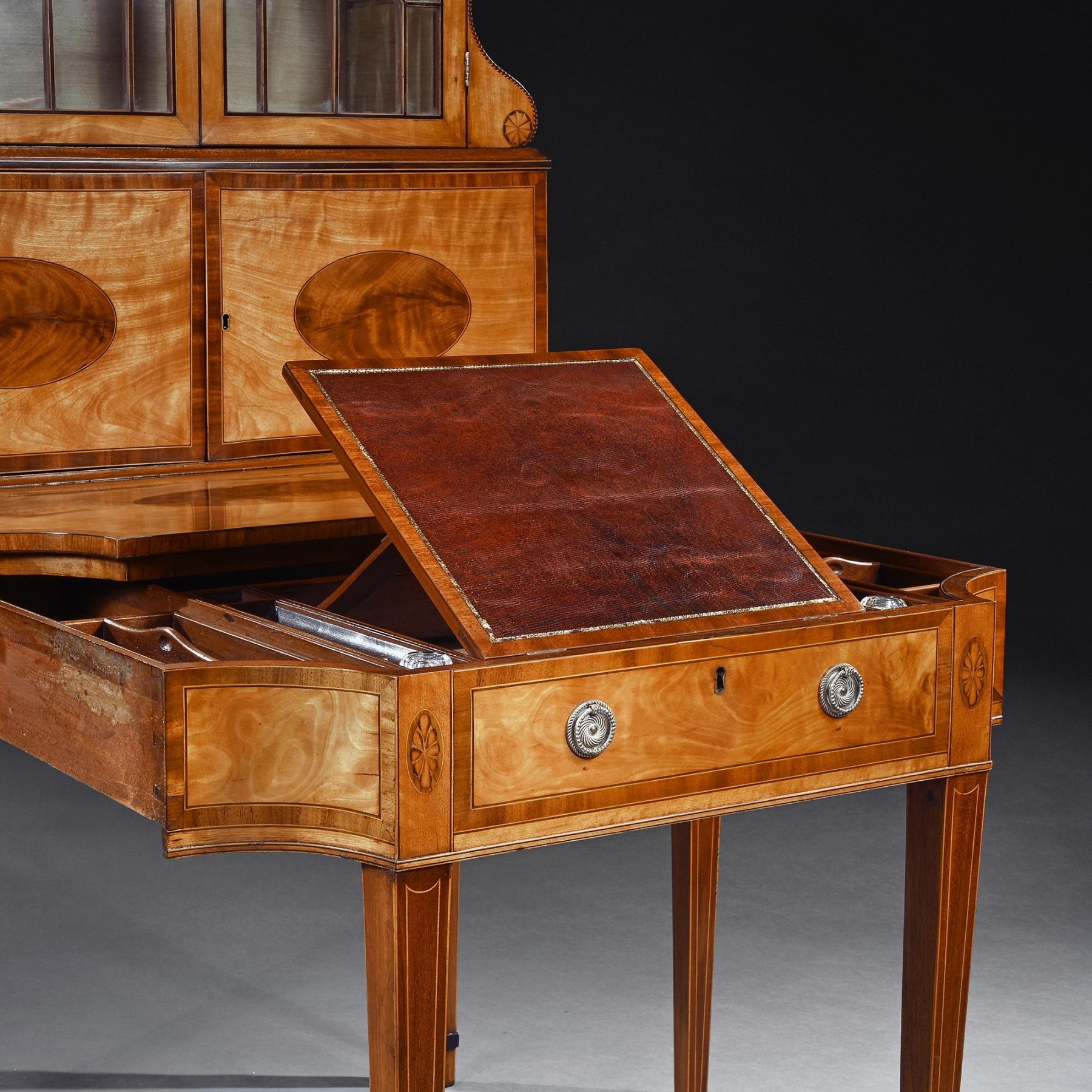
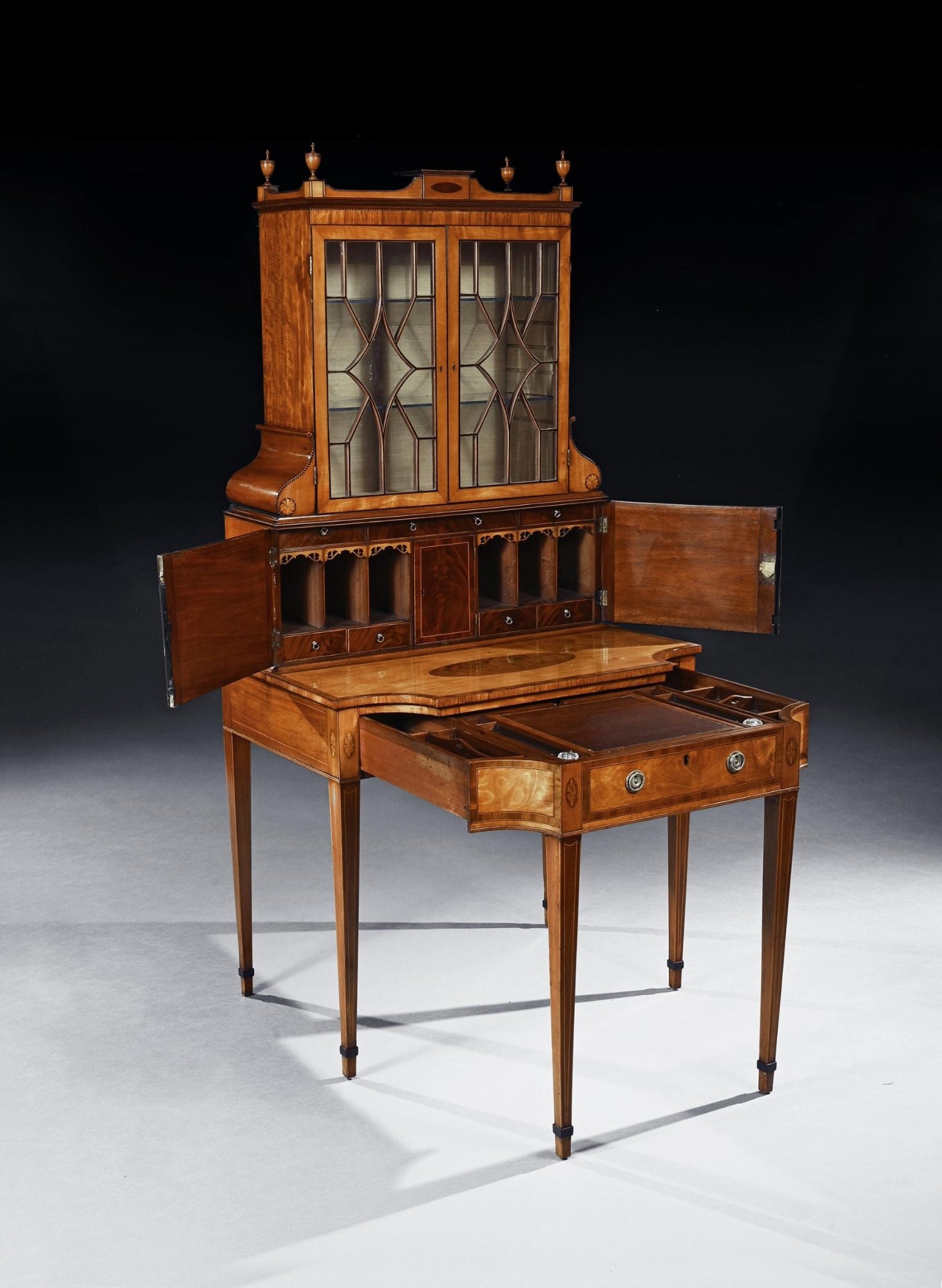
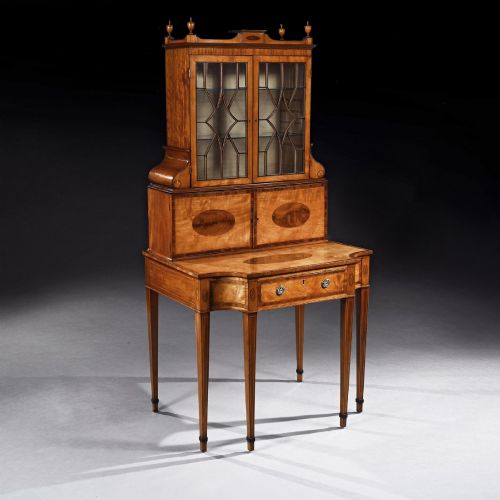
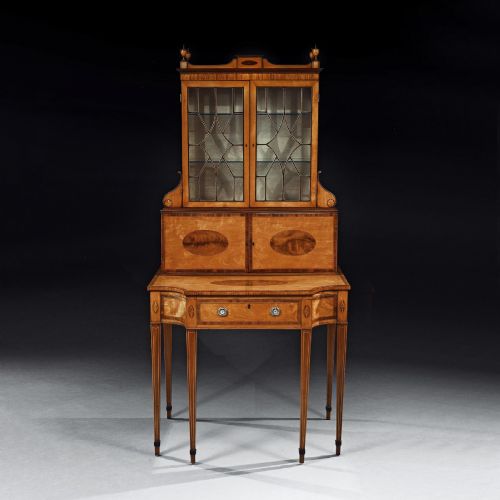
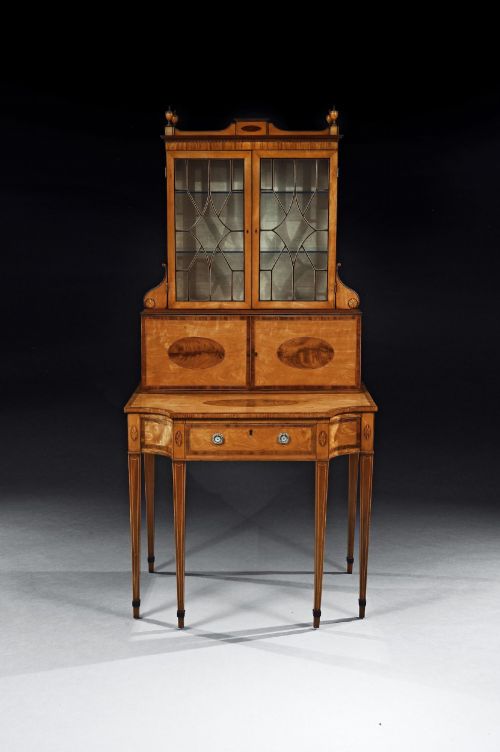
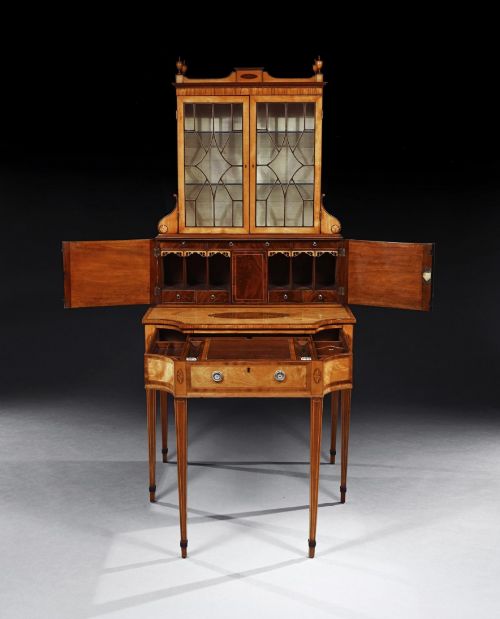
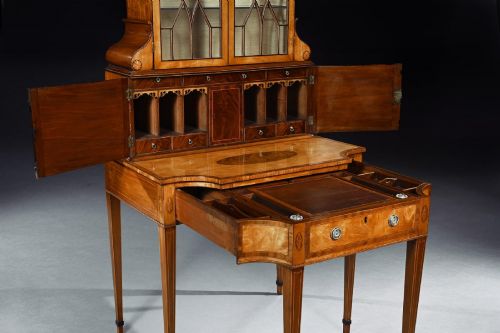
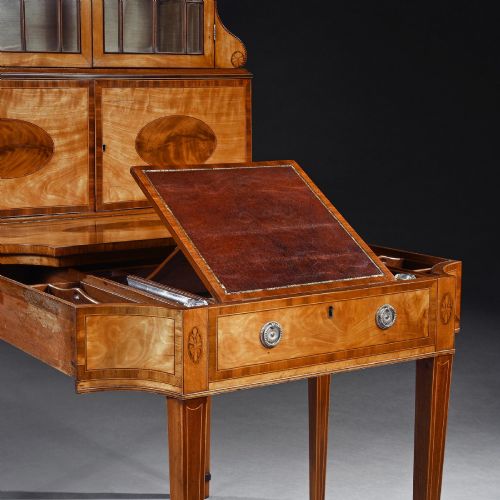
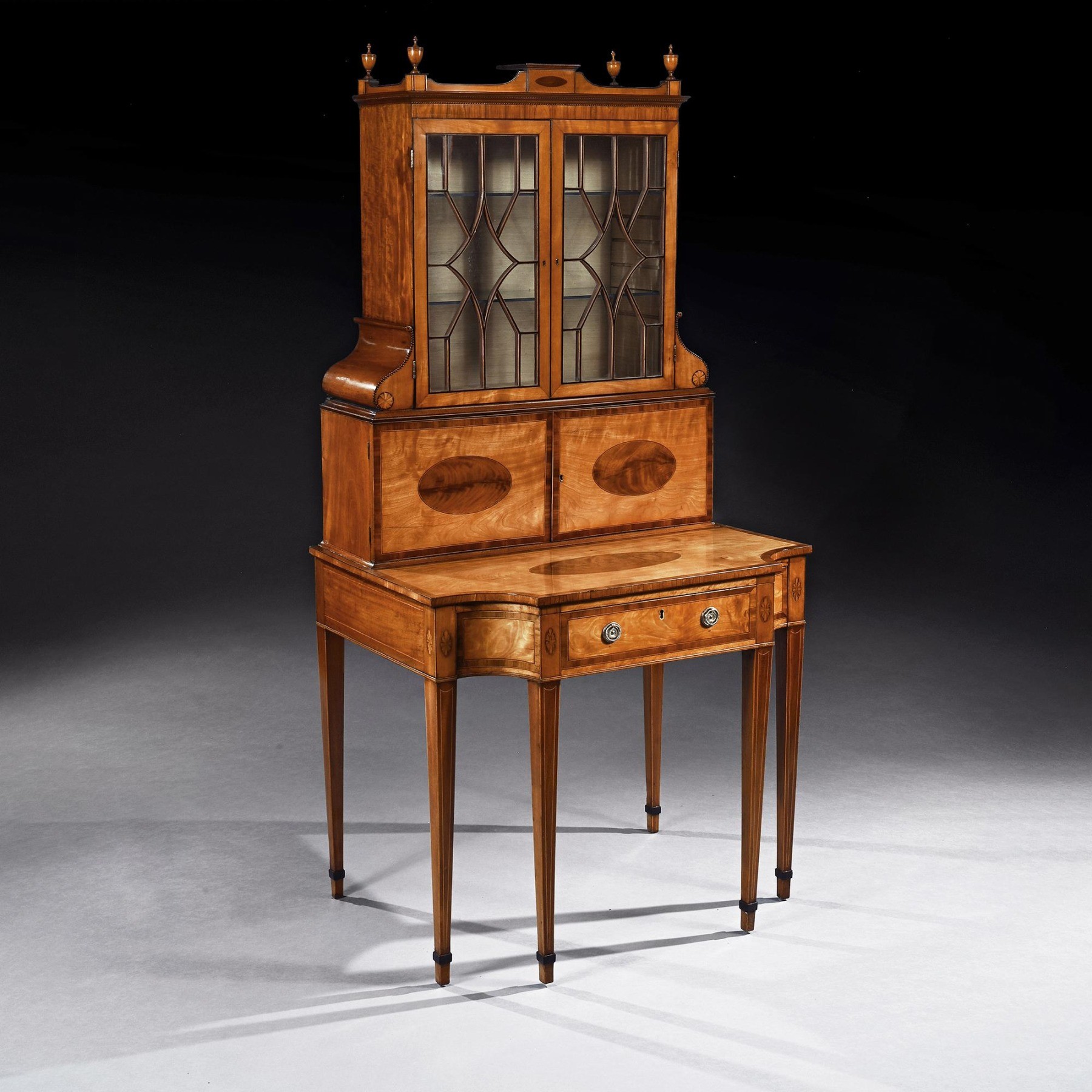
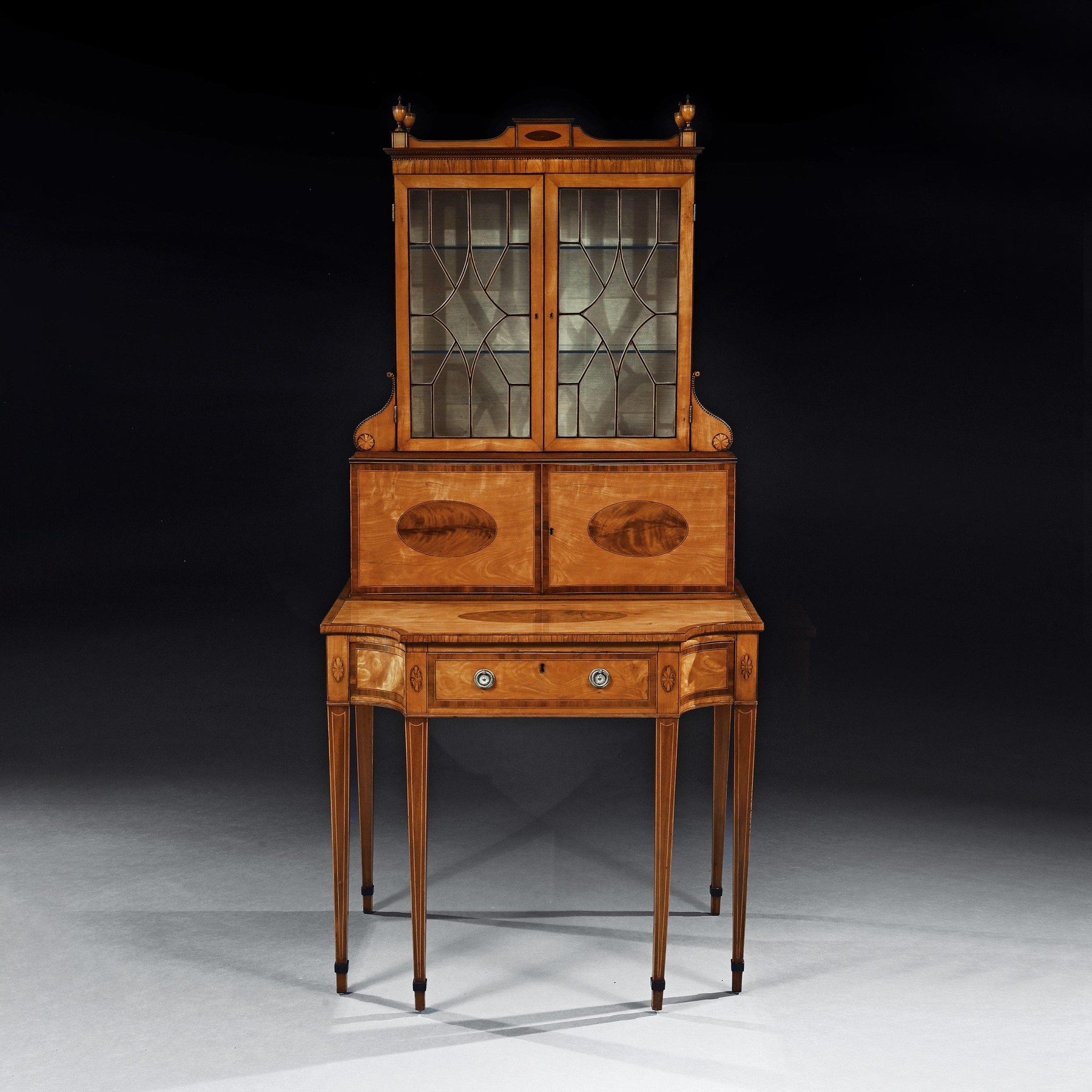
This very elegantly drawn writing cabinet is constructed with the finest cuts of satinwood, banded with sabicu and strung with boxwood. The shaped and inlaid pediment with vase finials above a pair of glazed doors with patera-inlaid scrolled lower supporting brackets, over a pair of doors inlaid with oval mahogany panels enclosing pigeonholes, drawers and central lockable door. The lower section writing desk with in-curved front corners, with pull out writing drawer fitted with ratcheted reading slide, pen and crystal ink wells. The whole raised on slender tapering legs, headed with inlaid oval patera and strung with boxwood having collared feet.
An exceptional quality piece in superb original condition and of wonderful colour.

Dimensions

Width 34 inches - 86cm

Height 73 inches - 185cm

Depth 25 inches - 63.5cm

More research on this design and possibly maker below.
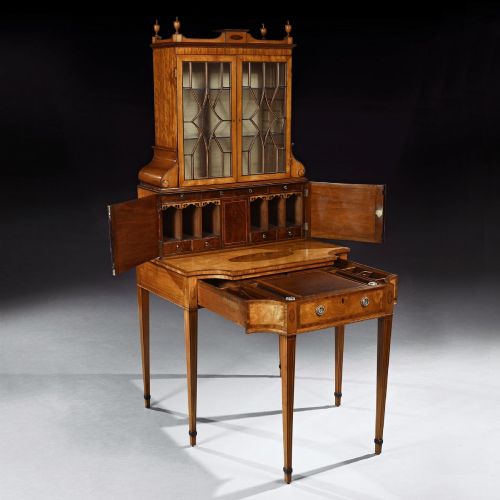
The secretaire section of this piece is based on a plate in Chippendale's Director depicting a “Lady's Writing Table and Bookcase”.

However the overall form has been softened in the Sheraton manner with slimmer tapering legs with collars rather than the block feet suggested by Chippendale. Additionally, the breakfront doors in Chippendale's design have been substituted for a simpler pair of doors but with a much more elaborate series of pigeon holes in the middle section.
The choice of the finest cuts of veneer and the beautifully-executed astragal glazing bars are further evidence of quality and the piece was clearly executed by one of the major workshops of the period. Although it is very difficult to make an attribution for such an unusual piece of furniture with no well-recorded comparatives in museum or stately home collections, it is possible that this piece might have been the work of George Simson, a cabinetmaker and upholder based in St Paul's Churchyard in London. Simson is best known today for a series of fine secretaire cabinets made for Thomas Weeks and his museum in Tichborne Street. These Weeks cabinets survive in several museum collections including Temple Newsam in Leeds.
In his Pictorial Dictionary of Marked London Furniture 1700-1840, Christopher Gilbert illustrated many pieces of furniture with Simson's trade label. Illustrated below are two of these pieces which all bear some stylistic similarities to our writing table although, as stressed above, this attribution
can only be tentative at this stage along with there being an unusual amount of labelled items by this George Simpson. So many top makers, such as Mayhew and Ince etc did not sign or label their work as the majority of furniture at this level were made for private commissions. Labelling tended to be restricted to items that were for sale in a shop.
Nevertheless this fine piece would have been supplied by a top London maker.

In particular, it is interesting to note the comparatively large number of writing cabinets that bear Simson's trade label and the lavish use of satinwood. Despite Percy MacQuoid's use of the term “The Age of Satinwood” to describe furniture produced in England in the late 18th century, the timber itself was still used on comparatively few pieces produced during this period-certainly as the primary veneer.

Our Piece in Print

As mentioned earlier, our piece was owned by the dealers W. R. Harvey in the late 1980s and it featured in two of their exhibitions-The Elegant Quarter-Satinwood

Physical Dimensions
Height
185cm (72.83")
Width
86cm (33.86")
Depth
63.5cm (25.00")
Declaration

Loveday Antiques has dated this Satinwood Writing Cabinet to the 18th Century.

Reference Numbers
Sellingantiques Reference
SA1221087
Dealers Internal Reference
2896
Dealers Notes

Loveday Antiques is a family run business originally established since 1969 in London.

Now in its second generation, Loveday Antiques specialises in an eclectic mix of 18th to 20th Century European furniture and works of art, with a strong emphasis on quality, uniqueness and colour.

As proud members of BADA & LAPADA, the largest association for professional art and antique dealers in the United Kingdom and members of CINOA, the worldwide association for antique dealers you can buy from us with 100% confidence and reassurance as we are committed to upholding and abiding by the strict standards of each association.

Our clients can rest assured that each item is as described and photographed.

All Items are sold with 100% satisfaction 14 day money back guarantee, return delivery will be charged for.

We deliver within the UK for usually between £60-£80 and ship worldwide with professional bespoke crating via air to almost all locations. Please contact us at Loveday Antiques with your full postal address for a very competitive quote.

Delivery within the mainland UK will usually be with 7 to 14 days but please allow up to 28 days. We also ship worldwide with a professional bespoke crating service and large International couriers via air and sea to almost all locations. Please contact us at Loveday Antiques with your full postal address for a very competitive quote.

GOODS

All items listed are in excellent condition having been restored using traditional methods by experienced cabinet makers and polishers keeping the original colour and patina wherever possible.

Please bear in mind you may find the usual markings with antique furniture that are commensurate with age which all add to beauty and uniqueness of the item.

VIEWINGS

We have a reputation for being long established antique dealers in London having had showrooms concurrently running in Islington, Chelsea and Ascot. We have relocated our new showroom, due to London overheads, easily reached between A1 or A10 to just outside of Hertford, Hertfordshire.

We will happily arrange for clients to be collected travelling via train. Local stations being Hertford North, Stevenage and Ware, all being a 10 minute drive from us.

Please contact us for location and appointments.

Telephone: 01438 869 819

Payments accepted are Bank Transfer, Cheque, Major Credit Cards or Cash.

Opening Times

Monday to Saturday 9.00am - 5.30pm Please email or call beforehand to make an appointment.

If outside of these times again please call to make an appointment

We have more than 40 years experience in supplying Antique furniture to the trade, public and interior designers from all parts of the world so please buy with confidence as we have passed the test of time.

Description
A fine late 18th Century George III Satinwood and sabicu ladies writing cabinet with important provenance. (Possibly by George Simpson)

English London made - Circa 1785

Provenance

Exhibited by W. R.

Harvey in their Old Bond Street showrooms in 1986 and 1987, the piece being chosen to be advertised in Country Life magazine in 1986 and in the Grosvenor House Antiques Fair catalogue in 1987.
Loveday Antiques
fig 1. An 18th-century George III satinwood writing cabinet with a glazed upper bookcase, oval inlaid cupboard doors, and slender tapered legs.
fig 1. An Important 18th Century George III Satinwood and Sabicu Writing Cabinet

A private European collection.

This very elegantly drawn writing cabinet is constructed with the finest cuts of satinwood, banded with sabicu and strung with boxwood. The shaped and inlaid pediment with vase finials above a pair of glazed doors with patera-inlaid scrolled lower supporting brackets, over a pair of doors inlaid with oval mahogany panels enclosing pigeonholes, drawers and central lockable door. The lower section writing desk with in-curved front corners, with pull out writing drawer fitted with ratcheted reading slide, pen and crystal ink wells. The whole raised on slender tapering legs, headed with inlaid oval patera and strung with boxwood having collared feet.

fig 2. An 18th-century George III satinwood writing cabinet with a glazed upper bookcase, oval inlaid cupboard doors, and slender tapered legs.
fig 2. An Important 18th Century George III Satinwood and Sabicu Writing Cabinet

An exceptional quality piece in superb original condition and of wonderful colour.

Dimensions

Width 34 inches - 86cm

Height 73 inches - 185cm

Depth 25 inches - 63.5cm

More research on this design and possibly maker below.

fig 3. An 18th-century George III satinwood writing cabinet with a glazed upper bookcase, oval inlaid cupboard doors, and slender tapered legs.
fig 3. An Important 18th Century George III Satinwood and Sabicu Writing Cabinet

The secretaire section of this piece is based on a plate in Chippendale's Director depicting a “Lady's Writing Table and Bookcase”.

However the overall form has been softened in the Sheraton manner with slimmer tapering legs with collars rather than the block feet suggested by Chippendale. Additionally, the breakfront doors in Chippendale's design have been substituted for a simpler pair of doors but with a much more elaborate series of pigeon holes in the middle section.

fig 4. An 18th-century George III satinwood writing cabinet with a glazed upper bookcase, oval inlaid cupboard doors, and slender tapered legs.
fig 4. An Important 18th Century George III Satinwood and Sabicu Writing Cabinet

The choice of the finest cuts of veneer and the beautifully-executed astragal glazing bars are further evidence of quality and the piece was clearly executed by one of the major workshops of the period. Although it is very difficult to make an attribution for such an unusual piece of furniture with no well-recorded comparatives in museum or stately home collections, it is possible that this piece might have been the work of George Simson, a cabinetmaker and upholder based in St Paul's Churchyard in London. Simson is best known today for a series of fine secretaire cabinets made for Thomas Weeks and his museum in Tichborne Street. These Weeks cabinets survive in several museum collections including Temple Newsam in Leeds.

fig 5. An 18th-century George III satinwood writing cabinet with a glazed upper bookcase, oval inlaid cupboard doors, and slender tapered legs.
fig 5. An Important 18th Century George III Satinwood and Sabicu Writing Cabinet

In his Pictorial Dictionary of Marked London Furniture 1700-1840, Christopher Gilbert illustrated many pieces of furniture with Simson's trade label. Illustrated below are two of these pieces which all bear some stylistic similarities to our writing table although, as stressed above, this attribution

fig 6. An 18th-century George III satinwood writing cabinet with a glazed upper bookcase, oval inlaid cupboard doors, and slender tapered legs.
fig 6. An Important 18th Century George III Satinwood and Sabicu Writing Cabinet

can only be tentative at this stage along with there being an unusual amount of labelled items by this George Simpson. So many top makers, such as Mayhew and Ince etc did not sign or label their work as the majority of furniture at this level were made for private commissions. Labelling tended to be restricted to items that were for sale in a shop.

fig 7. An 18th-century George III satinwood writing cabinet with a glazed upper bookcase, oval inlaid cupboard doors, and slender tapered legs.
fig 7. An Important 18th Century George III Satinwood and Sabicu Writing Cabinet

Nevertheless this fine piece would have been supplied by a top London maker.

In particular, it is interesting to note the comparatively large number of writing cabinets that bear Simson's trade label and the lavish use of satinwood. Despite Percy MacQuoid's use of the term “The Age of Satinwood” to describe furniture produced in England in the late 18th century, the timber itself was still used on comparatively few pieces produced during this period-certainly as the primary veneer.

Our Piece in Print

As mentioned earlier, our piece was owned by the dealers W. R. Harvey in the late 1980s and it featured in two of their exhibitions-The Elegant Quarter-Satinwood

Height
185cm (72.83")
Width
86cm (33.86")
Depth
63.5cm (25.00")
Date of Manufacture

Loveday Antiques has dated this Satinwood Writing Cabinet to the 18th Century.

Reference Numbers
Sellingantiques Ref
SA1221087
Dealers Internal Ref
2896
Loveday Antiques
Loveday Antiques
Sellingantiques verified Since Mar 2012

Specialist furniture dealers 18th-20th century

Dealer Profile

You can view the stock and full dealer information on the Loveday Antiques Profile Page

Trade Associations

Loveday Antiques is a registered member of LAPADA  BADA  CINOA
PDF SHARE
SAVE
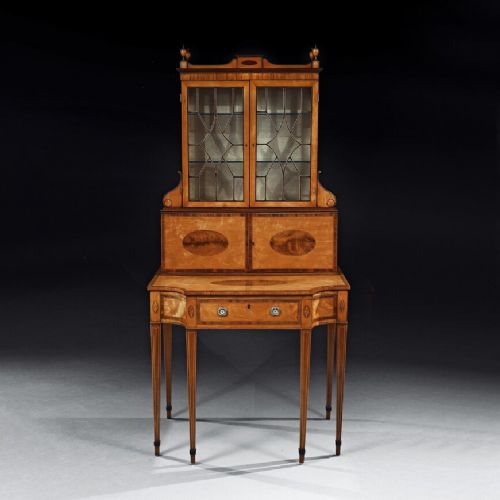
An 18th-century George III satinwood writing cabinet with a glazed upper bookcase, oval inlaid cupboard doors, and slender tapered legs.
1 / 11
Archive I An 18th-century George III satinwood writing cabinet with a glazed upper bookcase, oval inlaid cupboard doors, and slender tapered legs.

An Important 18th Century George III Satinwood and Sabicu Writing Cabinet
Archive II An 18th-century George III satinwood writing cabinet with a glazed upper bookcase, oval inlaid cupboard doors, and slender tapered legs. View II
Archive III An 18th-century George III satinwood writing cabinet with a glazed upper bookcase, oval inlaid cupboard doors, and slender tapered legs. View III
Archive IV An 18th-century George III satinwood writing cabinet with a glazed upper bookcase, oval inlaid cupboard doors, and slender tapered legs. View IV
Archive V An 18th-century George III satinwood writing cabinet with a glazed upper bookcase, oval inlaid cupboard doors, and slender tapered legs. View V
Archive VI An 18th-century George III satinwood writing cabinet with a glazed upper bookcase, oval inlaid cupboard doors, and slender tapered legs. View VI
Archive VII An 18th-century George III satinwood writing cabinet with a glazed upper bookcase, oval inlaid cupboard doors, and slender tapered legs. View VII
Archive VIII An 18th-century George III satinwood writing cabinet with a glazed upper bookcase, oval inlaid cupboard doors, and slender tapered legs. View VIII
Archive IX An 18th-century George III satinwood writing cabinet with a glazed upper bookcase, oval inlaid cupboard doors, and slender tapered legs. View IX
Archive X An 18th-century George III satinwood writing cabinet with a glazed upper bookcase, oval inlaid cupboard doors, and slender tapered legs. View X
Archive XI An 18th-century George III satinwood writing cabinet with a glazed upper bookcase, oval inlaid cupboard doors, and slender tapered legs. View XI
Enlarged Archival View
Telephone 01438 869819
Location
Benington
Hertfordshire
United Kingdom
Verified Since Mar 2012
Items For Sale 80
Items Sold 944
Loveday Antiques
Loveday Antiques
Verified Since Mar 2012
View Dealer Info
Location: Benington, Hertfordshire, United Kingdom
Verified
Mar 2012
For Sale
80
Sold
944
An 18th-century George III satinwood writing cabinet with a glazed upper bookcase, oval inlaid cupboard doors, and slender tapered legs.
An Important 18th Century George III Satinwood and Sabicu Writing Cabinet
Ref: SA1221087
An 18th-century George III satinwood writing cabinet with a glazed upper bookcase, oval inlaid cupboard doors, and slender tapered legs.
Detail View 1
Detail View 2
Detail View 3
Detail View 4
Detail View 5
Detail View 6
Detail View 7
Detail View 8
Detail View 9
Detail View 10
Archival Detail
Every single antique dealer on our platform is individually approved by our internal team. We verify their professional trade history, ethical standards, and photographic quality to ensure a secure, high-standard buying environment. Upon joining, every dealer agrees to a strict 9-point code of conduct. While issues can occasionally arise, our dealers typically resolve them swiftly and directly with the buyer. In fact, since our founding in 2002, Sellingantiques has only had to step in to help resolve an issue on roughly five occasions—a true testament to the quality of our dealers and their dedication to your happiness.
Our dealers are highly experienced in packing and shipping fragile, high-value antiques. Because you are in direct contact with the dealer, you will be able to easily go through all available shipping and insurance options together to ensure your item arrives safely.
Antiques are the ultimate green purchase. By choosing historical pieces over newly manufactured goods, you completely eliminate the carbon footprint of modern mass production while preserving exceptional, timeless craftsmanship.

George III writing cabinets, produced between 1760 and 1815, are defined by classical proportions, geometric astragal glazing, refined marquetry, and neoclassical influences popularized by cabinet makers such as Thomas Sheraton and George Hepplewhite.

Cabinet makers during this era frequently utilised satinwood, mahogany, and sabicu, employing exotic veneers, ebony stringing, and marquetry over solid oak or pine framing.

Authentic period pieces display hand-cut dovetail drawer joints, oak secondary timbers, historical glass panes within the glazing, and natural patination across the wood surfaces.

Position the piece as a focal point against a dark painted wall, pairing it with modern ceramics or curated glassware inside the display section to balance historic craftsmanship with modern aesthetics.

Keep satinwood furniture away from direct sunlight and heat sources to prevent veneer lifting or discolouration, and apply a natural beeswax polish annually to protect the surface.
items
Add keywords to the filter
Price
£100
£250000
Era
Movements
Material
Origin
Stock Location
Freshness
Online Payments
Categories