


Nineteenth Century Vanity Box
A nineteenth century vanity box is a fitted repository of personal care, offering brass-bound security for scent bottles and jewels.
Nineteenth Century Vanity Box
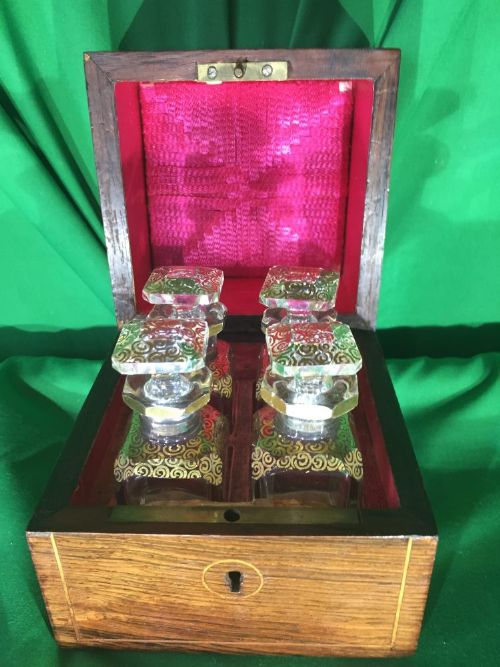
When you search for a nineteenth century vanity box, you encounter pieces designed for travel and dressing table organisation. These items range from simple rosewood workboxes to elaborate coromandel cases equipped with internal compartments and glass bottles.
The versions most frequently met on this page originate from the Victorian and nineteenth century periods, alongside Regency and Edwardian examples. They take forms such as fitted dressing cases, jewellery boxes, and caskets.
Makers utilised exotic timbers like rosewood and coromandel, often embellished with mother-of-pearl inlay or brass mounts. Alongside standard British cabinetry, you find Sorrento ware and Kashmir pieces reflecting global influences.
How they were made
Cabinetmakers constructed the primary carcases using dense hardwoods including rosewood, mahogany, and coromandel, often reinforcing the corners and edges with brass mounts.
Interiors required precise carpentry to create fitted compartments lined with silk or velvet, housing glass scent bottles and mirrors.
Periods represented span the Regency, Victorian, and Edwardian eras, alongside specific mid-nineteenth century dates.
What varies in quality
The standard of timber selection and complexity of the internal fittings dictate the hierarchy of these boxes. Finely figured grains and intricate mother-of-pearl inlay elevate a piece above plain carcases.
The inclusion of original matched components, such as Baccarat perfume bottles or complete tray inserts, separates comprehensive travelling cases from simpler utility boxes.
H Mitchell
The Nineteenth Century Vanity Box Glossary
- Coromandel
- A dense, heavily figured southeast Asian timber prized for its dark brown grain and golden streaks, frequently utilised in high-end Victorian dressing cases.
- Sorrento Ware
- Wooden decorative items featuring intricate micro-mosaic inlay, originating from the Italian town of Sorrento and popular during the nineteenth century.
- Workbox
- A container specifically partitioned for sewing implements, threads, and small textiles, often sharing similar cabinetry with vanity boxes.
- Casket
- A small ornamental box or chest with a hinged lid, typically used for storing valuables, jewellery, or letters.
Nineteenth Century Vanity Box: Frequently Asked Questions
What fits inside a nineteenth century vanity box?
These boxes typically house glass scent bottles, small mirrors, and designated trays for jewellery or sewing accessories. The internal partitions kept personal effects secure during horse-drawn or railway travel.
Many examples feature lift-out trays and secret compartments beneath, designed to hold letters, coins, or loose gems safely out of sight.
How do I identify a coromandel box?
Coromandel displays a rich, dark brown colour with distinctive contrasting amber or yellowish stripes. It is a heavier and harder wood than rosewood.
Cabinetmakers reserved coromandel for superior quality nineteenth century pieces, often pairing the timber with brass banding and inlaid mother-of-pearl.
Where were Sorrento boxes made?
Sorrento boxes originated in the coastal Italian town of Sorrento, where artisans specialised in intricate wood-mosaic and marquetry. These folding travel mirrors and boxes were popular souvenirs for European travellers.
They are recognisable by their geometric or floral inlaid patterns rendered in various natural-coloured woods.
Are these boxes suitable for daily use?
While originally built for frequent travel, antique boxes require gentle handling today due to their age and delicate silk or velvet linings. They function well on a dressing table for storing modern jewellery or trinkets.
Keep them away from direct sunlight and excessive humidity to protect the polished wood exteriors and internal fabric.