


Walnut Dressing Case
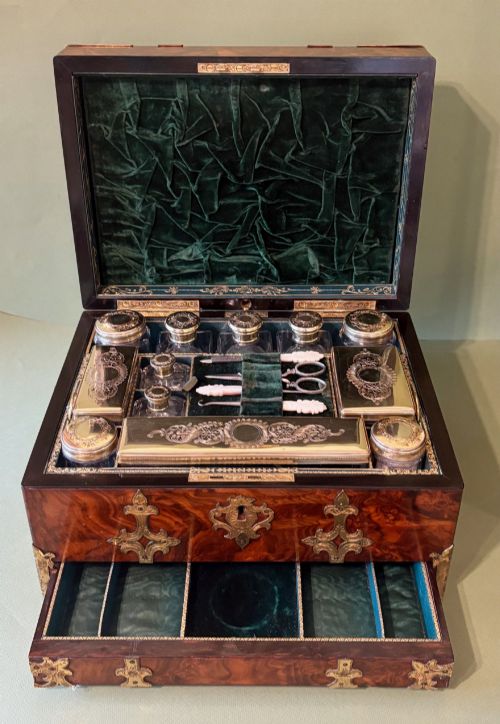
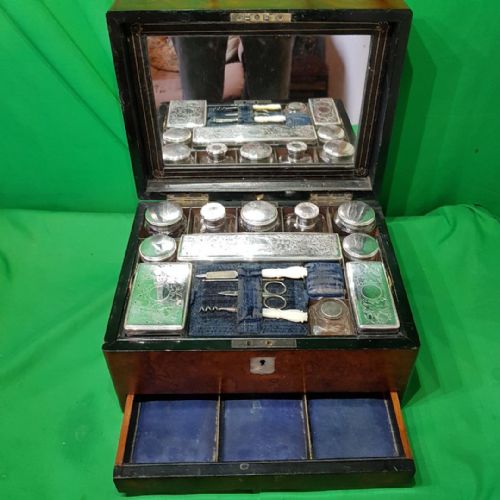
These walnut dressing case examples offer a practical travelling companion for personal grooming, combining fitted interiors with handsome cabinetwork.
Walnut Dressing Case
A walnut dressing case is a portable vanity container designed to hold grooming items, jewellery, and travel accessories securely. Buyers searching for a walnut dressing case typically encounter Victorian and nineteenth-century examples configured with fitted compartments, mirrors, and storage trays.
The objects span varied forms including jewellery boxes, vanity boxes, and travelling sets dating from the Georgian period through to Art Deco production. Most examples utilise timber construction with hinged lids, internal partitions, and occasionally integrated writing or sewing provisions.
How they were made
Maker construction relies heavily on walnut and burr walnut veneers applied to a foundational carcass, often enhanced by figured grain patterns. Brass is frequently employed for corner mounts, banding, and secure lock mechanisms.
Interiors utilise velvet, silk, and glass components alongside fitted compartments designed to hold silver or hallmarked accessories. Mother of pearl is occasionally incorporated for escutcheons or subtle decorative highlights within the fitted layout.
Form variations include vanity boxes, jewellery caskets, and seven-day razor sets.
What varies in quality
Quality rests upon the selection of timber veneers and the precision of the internal cabinetwork. Burr walnut with rich grain figuration denotes superior material choice, distinguishing standard containers from exceptional commissions.
The sophistication of the internal fitments, such as integrated silver tops, original glass bottles, and maker signatures like Parkins & Gotto, separates standard boxes from high-end pieces.
Parkins & Grotto London·Parkins and Gotto·JH Browne of The Waldorf Hotel
The Walnut Dressing Case Glossary
- Burr walnut
- A highly figured timber veneer prized for its swirling grain patterns and decorative appeal on box lids.
- Escutcheon
- A small protective plate surrounding a keyhole, frequently fashioned from brass or mother of pearl.
- Vanity case
- A portable container designed specifically to hold cosmetics, brushes, and personal grooming utensils.
- Fitted interior
- An internal arrangement of compartments, trays, and mirror panels tailored to hold specific accessories.
Walnut Dressing Case: Frequently Asked Questions
What is inside a walnut dressing case?
These boxes typically contain a mirror, compartments for jewellery, and fitted sections for glass bottles or silver-topped jars.
Many examples also incorporate removable trays or hidden drawers beneath the primary storage level for small valuables.
How do I date a walnut dressing case?
Dating relies on stylistic clues, lock hardware, and materials such as burr walnut veneers or brass binding. Nineteenth-century examples often display distinct Victorian proportions and specific internal lining fabrics like velvet or silk.
Maker marks or hallmarks on silver components provide further chronological reference points for the piece.
Were these boxes used for travel?
These containers served as portable travelling sets for wealthy individuals moving between residences or on journeys. The robust timber carcass and secure brass locks protected delicate glass and silver items during transit.
They functioned as mobile dressing tables rather than everyday stationary storage.
How do I care for burr walnut?
Burr walnut benefits from steady room conditions away from direct sunlight and excessive moisture. Gentle dusting and occasional wax polishing help preserve the natural lustre of the veneer.
Care should be taken to protect the interior velvet and silk linings from dampness.