



Blue Velvet Dressing Box
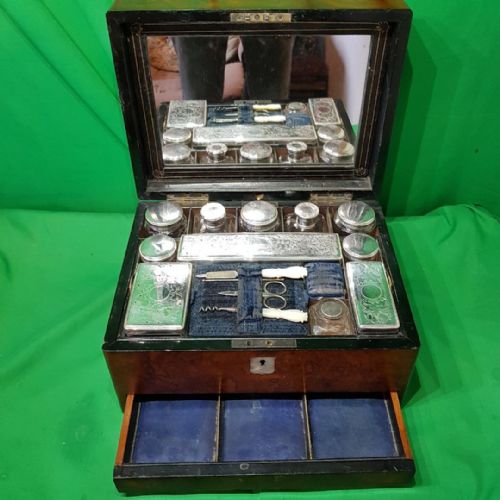
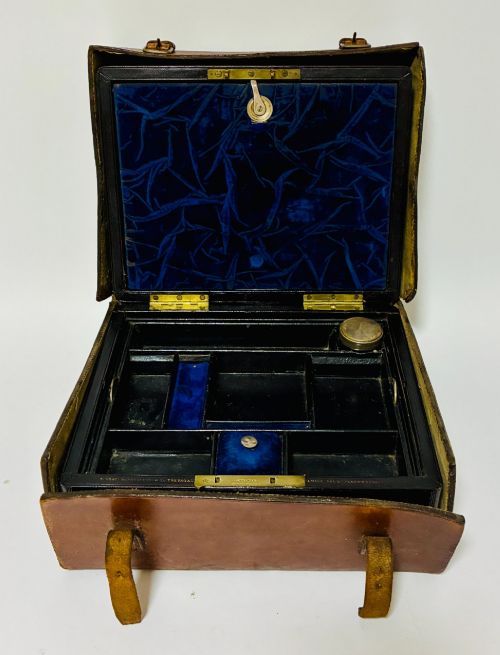
A blue velvet dressing box brings together rich tactile textiles and fitted compartments for personal treasures from the nineteenth century.
Blue Velvet Dressing Box
When you search for a blue velvet dressing box, you are looking at portable compartments designed for cosmetics, jewellery, and grooming implements during the nineteenth century. These containers span the Regency, Victorian, and Edwardian periods, reflecting the travel habits and dressing rituals of the wealthy.
You are most likely to meet examples housed in wood carcasses such as burr walnut, rosewood, and kingwood, or lined with or trimmed in textile and leather alongside glass and silver fittings. These pieces functioned as travelling dressing tables or static vanity chests for home use.
The objects take various forms including jewellery boxes, vanity cases, and fully fitted dressing boxes with internal trays and compartments. Their outer shells protect delicate interior arrangements meant to organise personal effects during journeys.
How they were made
Cabinetmakers constructed the main bodies of these boxes using dense timbers like rosewood and burr walnut, often selecting veneer for rich grain patterns. These wooden frames were then fitted with brass hardware, locks, and hinges.
Interiors incorporated textile linings such as velvet alongside leather elements to cushion glass bottles and silver-hallmarked containers. Metals like sterling silver were worked into lids, brushes, and instrument handles to match the interior storage slots.
Blue Velvet Dressing Box Retail Price Guide 2026
Typical asking prices for blue velvet dressing box among the pieces listed under this phrase on Sellingantiques today, from the lower quarter to the upper quarter. They describe what is for sale here now, not the wider market.
Listings for a blue velvet dressing box span the Victorian, Regency, and Edwardian periods, utilising materials like burr walnut, silver, and glass.
What varies in quality
The standard of a box depends upon the complexity of its internal fitting and the completeness of its original contents, such as silver-hallmarked bottles and glass jars. Pieces that retain their matched sets demonstrate higher original status.
The choice of cabinet wood and the precision of the brass or silver mounts separate standard containers from finer luxury items. Intricately grained burr walnut or kingwood veneers indicate more expensive commission work.
F. West·H. Matthews
The Blue Velvet Dressing Box Glossary
- Dressing box
- A portable container fitted with compartments, jars, and mirrors for personal grooming and cosmetics. These boxes were essential for travel in the nineteenth century.
- Vanity case
- A compact box designed to hold makeup and small grooming accessories. They often feature mirrored lids and specialised internal trays.
- Burr walnut
- A wood harvested from the wart-like growths on walnut trees, yielding highly figured and swirling grain patterns. It was favoured for luxury nineteenth-century furniture and boxes.
- Sterling silver
- An alloy of silver containing 92.5 percent pure silver and 7.5 percent other metals, usually copper. It appears in hallmarked lids, jars, and implements inside better boxes.
- Regency
- An English design period spanning the early nineteenth century, known for classical restraint and elegant proportions. Pieces from this era often display clean architectural lines.
Blue Velvet Dressing Box: Frequently Asked Questions
What is a blue velvet dressing box?
A blue velvet dressing box is a nineteenth-century portable container designed to hold grooming items, cosmetics, and jewellery.
These pieces feature internal compartments and often include glass jars and silver fittings for travel or home use.
How were these boxes used?
Owners used them to store and transport personal valuables and daily grooming preparations securely.
They sat upon dressing tables or accompanied travellers on carriages and early trains.
How do I date a dressing box?
Dating relies on stylistic clues, construction methods, and associated hallmarks on silver components.
Periods range from the Regency era through the Victorian decades and into the Edwardian period.
What materials are common in these boxes?
Common materials include hardwoods like rosewood and burr walnut, alongside brass hardware and leather.
Interiors frequently incorporate velvet, glass, and sterling silver elements.