


Fitted Vanity Box
A fitted vanity box holds the essentials of personal grooming in a compact, compartmentalised case designed for travel or boudoir use.
What a fitted vanity box is
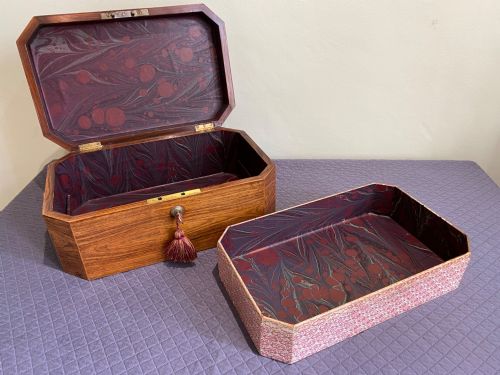
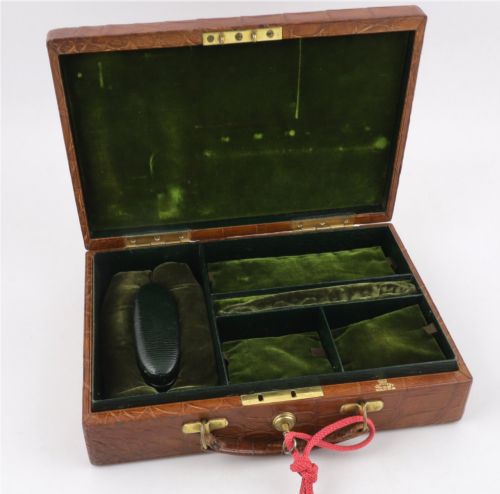
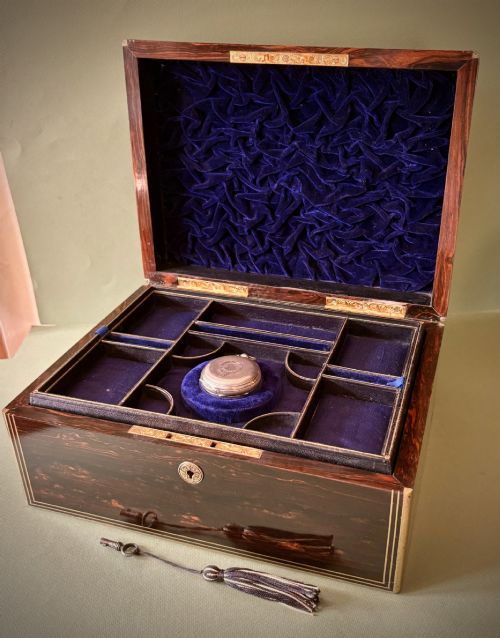
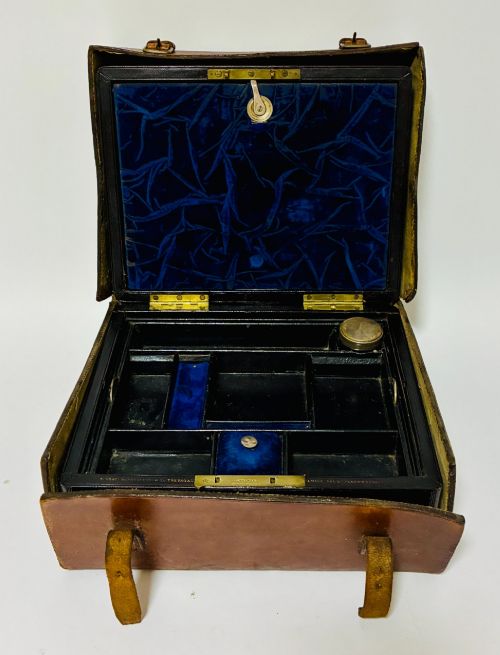
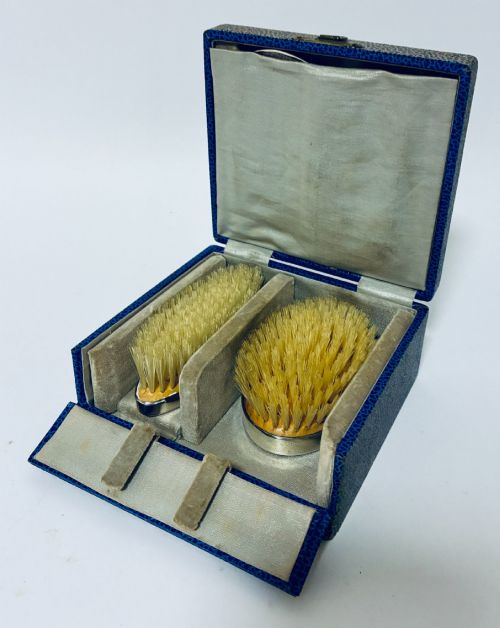
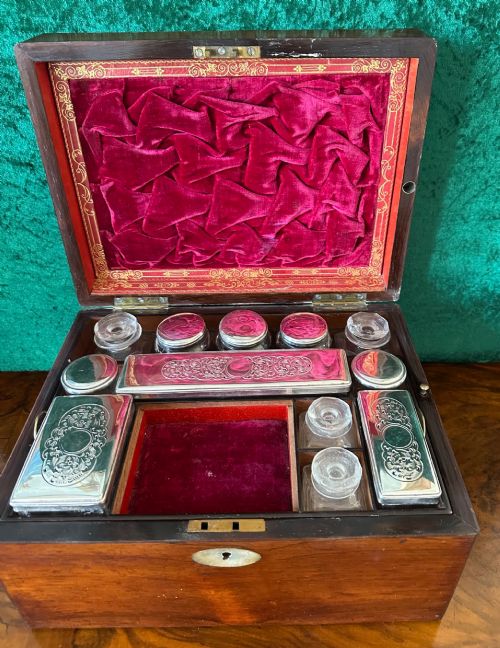
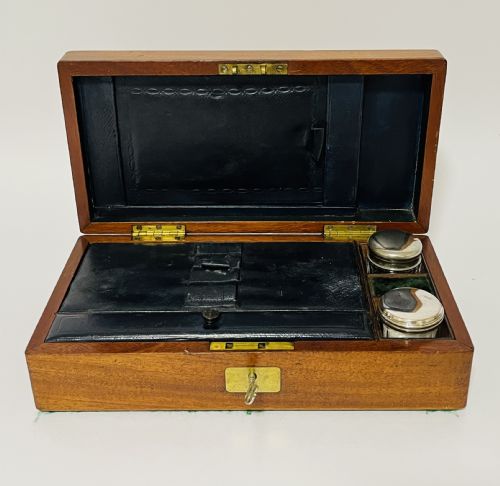
A fitted vanity box is a portable case designed to hold grooming implements, bottles and personal items, appearing in forms such as dressing boxes, vanity cases and vanity dressing boxes. Buyers searching for a fitted vanity box encounter examples primarily from the Victorian and Edwardian eras, alongside pieces dated around nineteen-ten.
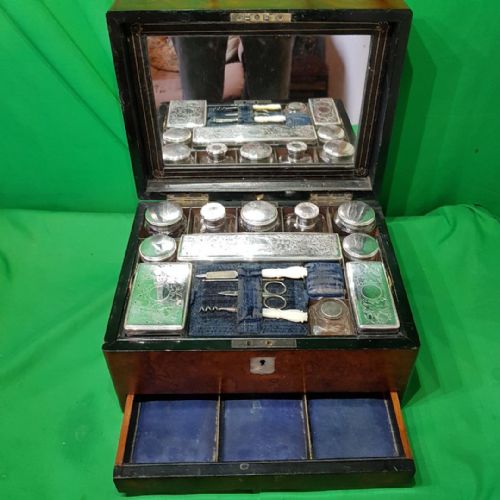
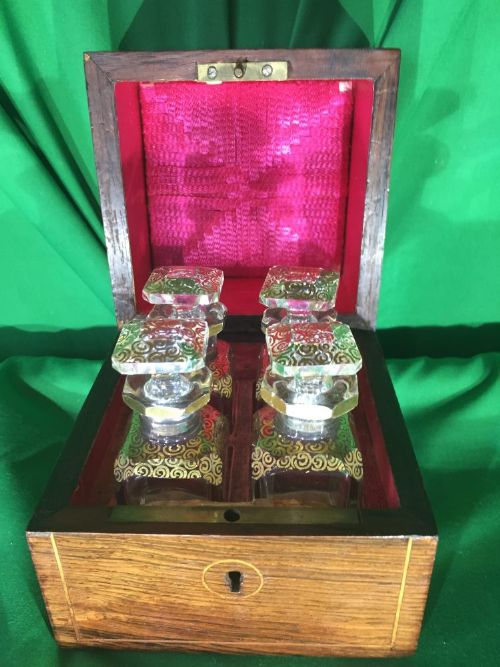
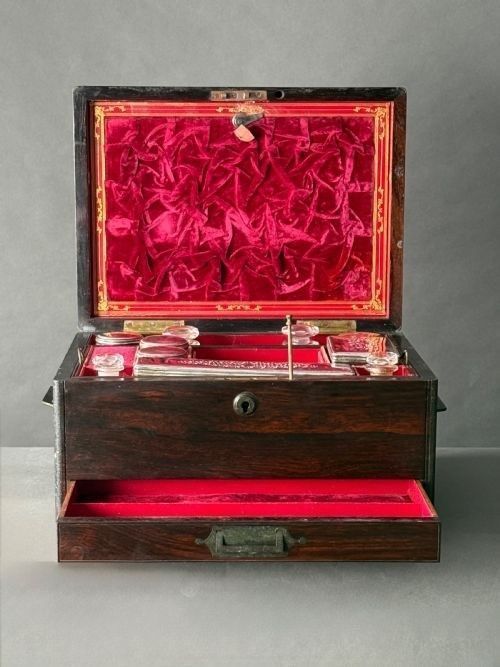
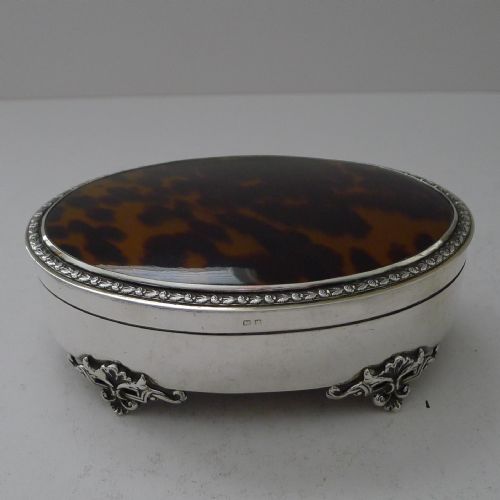
The objects seen here span the nineteenth century and the early twentieth century, reflecting the materials and construction methods of those periods. These pieces serve as both decorative desk or dressing table accessories and functional containers for valuables.
How they were made
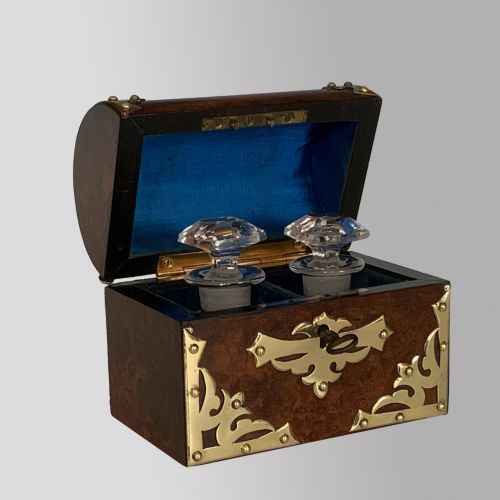
Craftsmen built these boxes using dense timbers such as coromandel, coromandel-wood, satinwood, mahogany, rosewood, burr walnut, calamander and maple, sometimes applying cross-banding for visual contrast. Surfaces frequently incorporate decorative details like brass binding and mother-of-pearl inlay.
Interiors are lined with materials such as silk to protect the contents and accommodate dedicated compartments for bottles and tools. Metal elements, including silver-plated pots and sterling silver fittings, complement the woodwork.
Retail Price Guide 2026
Typical UK retail prices for fitted vanity box, calculated from the Sellingantiques database of over a million retail prices indexed since 2003. This retail price guide relies exclusively on Sellingantiques data; no external sources or auction records are used, so the figures do not describe the wider market.
Periods represented in the archive and current selection span the Victorian era, nineteen-ten and the nineteenth century generally.
What varies in quality
Quality in a fitted vanity box is determined by the choice of timber and the precision of the cabinetwork, particularly in the execution of cross-banding and inlay work using brass or mother-of-pearl. The complexity of the internal arrangement and the presence of signed maker details elevate the standing of a piece.
The integrity of the internal lining, whether silk or velvet, and the preservation of original internal fittings such as pots and bottles influence the overall character. Maker marks from established firms provide a distinct indication of workshop origin.
Mappin and Webb·H Mitchell·Goodman·Maple and Co·Betjemman
The Fitted Vanity Box Glossary
- Coromandel
- A dense, dark-grained timber imported from Asia, highly valued in the nineteenth century for luxury boxes. Its striking striped figure made it a primary choice for high-end cabinetmakers.
- Satinwood
- A luminous, yellowish wood used extensively in Edwardian pieces for a smooth, reflective surface. It provides a lighter contrast to the darker coromandel and mahogany commonly seen in earlier boxes.
- Cross-banding
- A decorative technique where a border of veneer is applied perpendicularly to the grain of the main surface. This frames the top or front of a box with a contrasting strip of timber.
- Mother-of-pearl
- The iridescent inner layer of certain mollusc shells, utilised for inlaid geometric patterns or escutcheons. It catches the light against dark wood backgrounds.
Frequently Asked Questions
What is inside a fitted vanity box?
These boxes contain internal compartments designed to hold glass pots, bottles, grooming tools and personal accessories. Many retain their original silk linings and dedicated slots for specific items.
Some examples include silver-plated or sterling silver fittings, reflecting the comprehensive nature of nineteenth-century travelling cases.
How do I date a fitted vanity box?
Dating relies on the choice of timber, construction methods and stylistic markers associated with specific periods like the Victorian or Edwardian eras. Woods like coromandel and rosewood predominate in mid-nineteenth-century examples.
Maker marks and engraved inscriptions on internal silver or brass components can provide more precise chronological clues.
Were these boxes meant for travel?
Many examples were constructed as travel cases, featuring robust timber carcases, brass binding for reinforcement and secure locks. Their portable nature allowed owners to transport personal grooming items safely.
Others functioned primarily as static dressing table accessories, remaining in the home to store jewellery and small valuables.
What maintenance do these boxes need?
Maintenance involves keeping wooden surfaces clean and conditioned with appropriate wax while protecting delicate internal silk linings from moisture and direct sunlight. Brass and silver elements require gentle polishing to prevent tarnish without damaging adjacent wood or fabric.
Handling mechanisms carefully preserves the structural integrity of internal folding trays and lid supports.