




Victorian Rosewood Slope
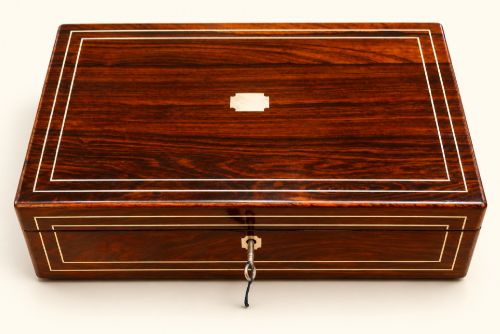
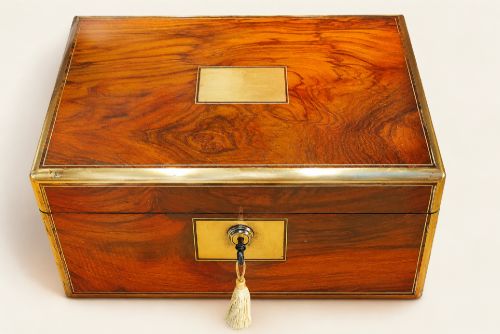
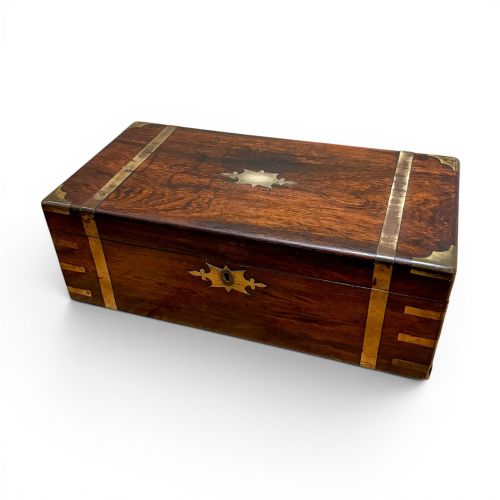
A victorian rosewood slope offers a heavy, dark timber grain and brass corners designed for portable writing.
Victorian Rosewood Slope
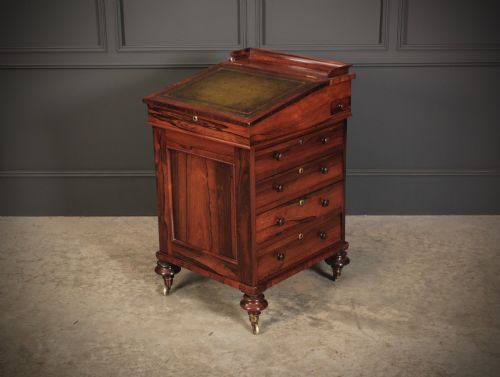
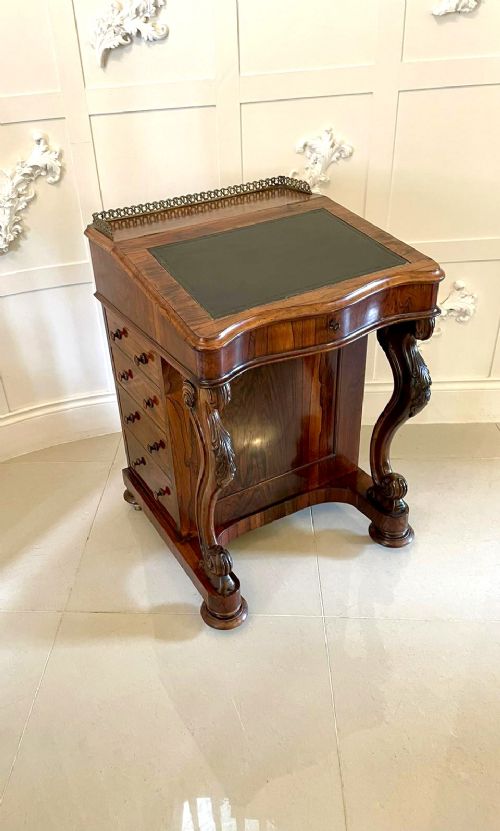
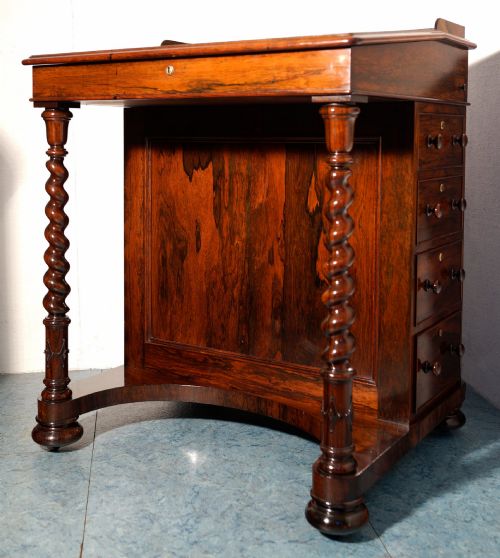
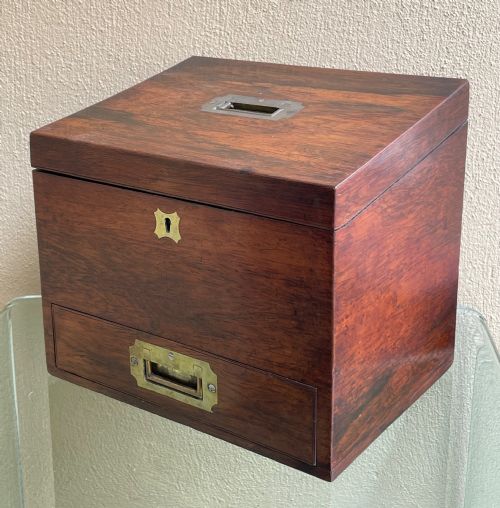
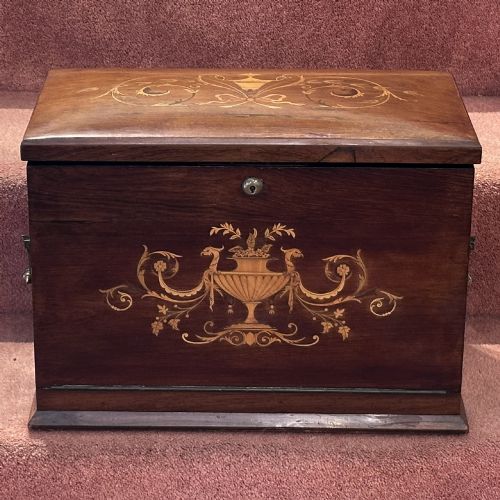
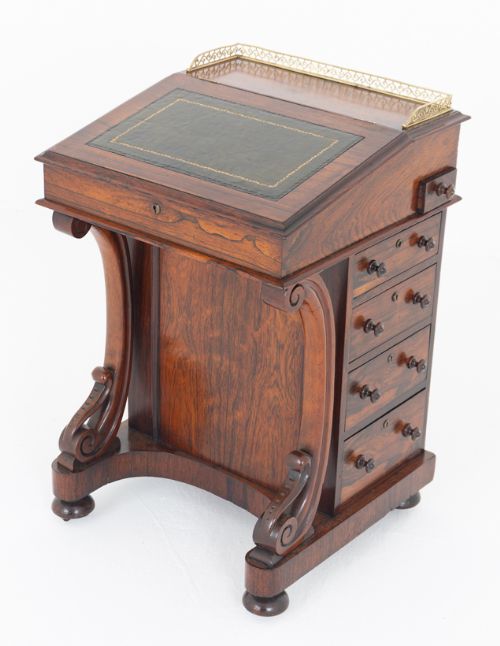
A victorian rosewood slope is a portable desk designed to fold open into an angled writing surface lined with leather. These pieces range from compact table boxes to freestanding Davenport desks and stationery chests originating mainly in the nineteenth century.
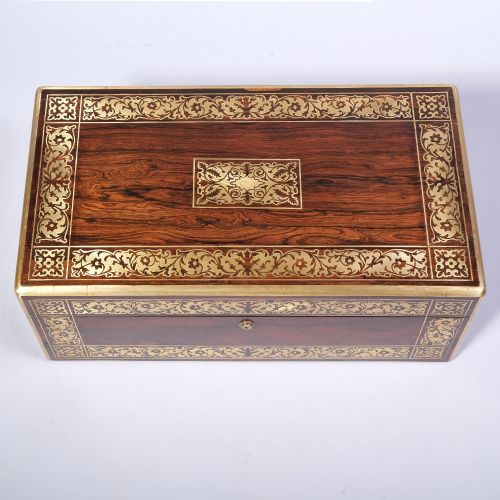
The version most commonly met on this page is the brass bound or mother of pearl inlaid folding box. Such examples open to reveal velvet or leather skivers, pen trays, and hidden compartments concealed behind dummy panel walls.
Makers also produced related forms in this timber during the Georgian, William IV, and Regency periods. These variations span from simple travelling boxes to elaborate bonheur du jour writing desks.
How they were made
Cabinet makers utilised dense tropical rosewood veneers laid over secondary framing timbers like oak or pine. The rich purple brown grain was frequently enhanced with boxwood, satinwood, or pewter stringing.
Structural edges were reinforced with inset brass corner straps and flush carrying handles to withstand heavy travel. Inlays of mother of pearl and abalone shell added shimmering contrast against the dark polished surfaces.
Interiors combined turned wooden pen wells, lidded compartments, and secret drawers activated by releasing concealed spring latches. Writing surfaces were inset with tooled leather or velvet skivers for a smooth grip.
Victorian Rosewood Slope Retail Price Guide 2026
Typical asking prices for victorian rosewood slope among the pieces listed under this phrase on Sellingantiques today, from the lower quarter to the upper quarter. They describe what is for sale here now, not the wider market.
Listings feature items from the Georgian, Regency, William IV, and Victorian periods executed in rosewood.
What varies in quality
Construction standards depend on the precision of the brass binding and the tightness of the mitred corner joints. Superior boxes display crisp inlay work where shell and light wood sit completely flush with the surrounding grain.
Internal complexity sets finer examples apart from standard portable desks. The presence of well fitted secret drawers, original leather work, and matching inkwells elevates the standard of a piece significantly.

George Austin Dublin
The Victorian Rosewood Slope Glossary
- Writing slope
- A portable box that opens to form an inclined surface for writing letters. These units contain internal storage for paper, pens, and ink.
- Davenport
- A compact pedestal desk featuring a sloping writing surface above a set of side drawers. This form became popular during the nineteenth century.
- Skiver
- A panel of leather inset into the writing surface of a desk or slope. It provides a smooth texture suited for handwriting.
- Tunbridge Ware
- Small wooden objects decorated with mosaic patterns created from tiny tinted wood blocks. This craft centred on the spa town of Tunbridge Wells.
Victorian Rosewood Slope: Frequently Asked Questions
What is a secret drawer?
A secret drawer is a hidden compartment built into the interior framework of a writing box. These compartments are typically accessed by removing a false panel or releasing a concealed wooden spring.
Craftsmen included these spaces to secure private letters, stamps, and valuables away from casual view. They represent a hallmark of thoughtful nineteenth century cabinet making.
How do I use a writing slope?
Place the closed box on a stable table and unlock the brass or key mechanism. Fold open the top sections downward to reveal the sloping leather writing surface.
The interior compartments hold fountain pens, blotting paper, and stationery supplies. When finished, fold the panels back together and secure the lock to store your correspondence.
Why is rosewood used?
Rosewood was chosen for its exceptional hardness, durability, and deep natural colour. The heavy timber resisted the knocks and strains of frequent travel.
Its striking dark grain took a high polish, making it a status material for household furnishings. Makers utilised both solid cuts and fine veneers to display the wood to best effect.
How do I date a piece?
Dating relies on examining the construction methods, hardware styles, and decorative motifs present in the wood. Brass bound edges and mother of pearl inlay point firmly toward the Victorian era.
Earlier Regency and Georgian examples tend to feature simpler brass stringing or unadorned timber surfaces. Cabinetmakers occasionally signed their work inside the pen trays or on lock plates.