



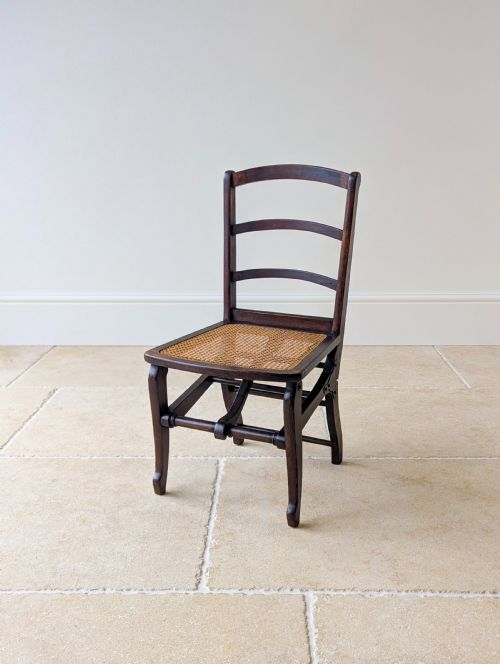


Vintage Portable Desk
A vintage portable desk brings writing slopes, campaign boxes and folding tables together for travel and home use.
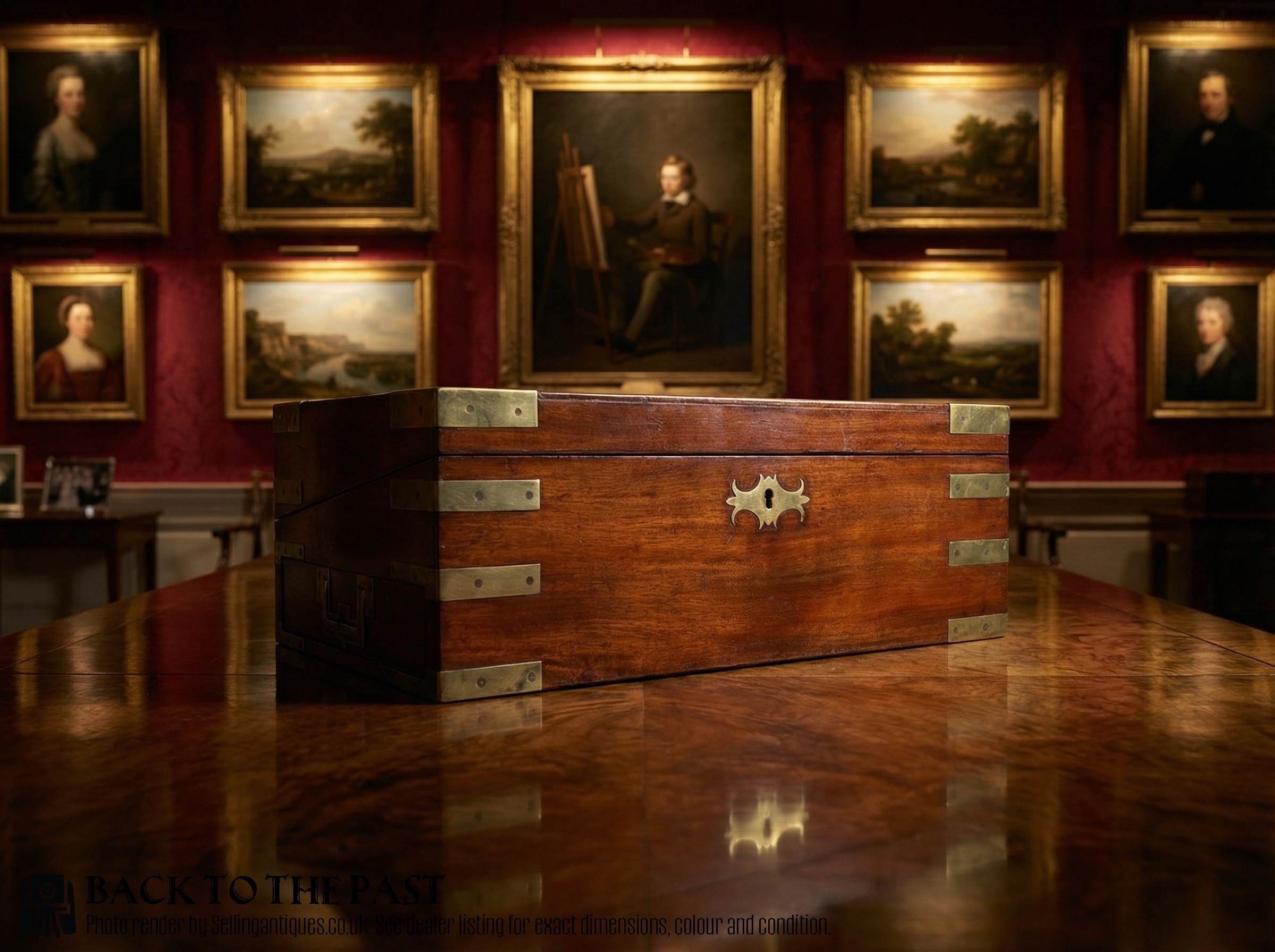
Vintage Portable Desk
A vintage portable desk encompasses items designed for writing and travel, spanning writing slopes, writing boxes, campaign desks and folding tables. These pieces emerge from the Georgian, Victorian and Edwardian periods, reflecting an era when correspondence required dedicated travelling containers.
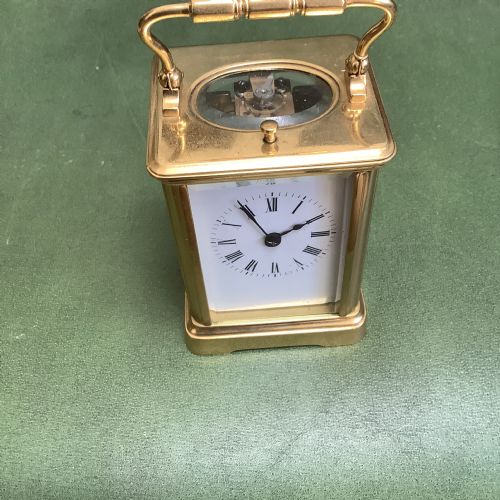
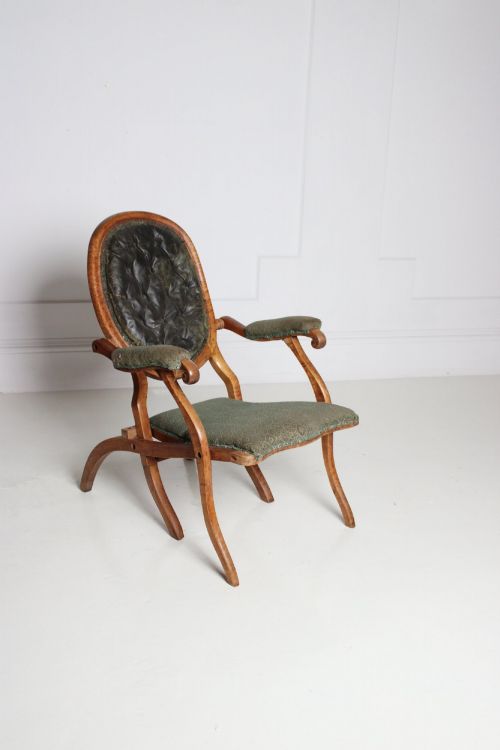
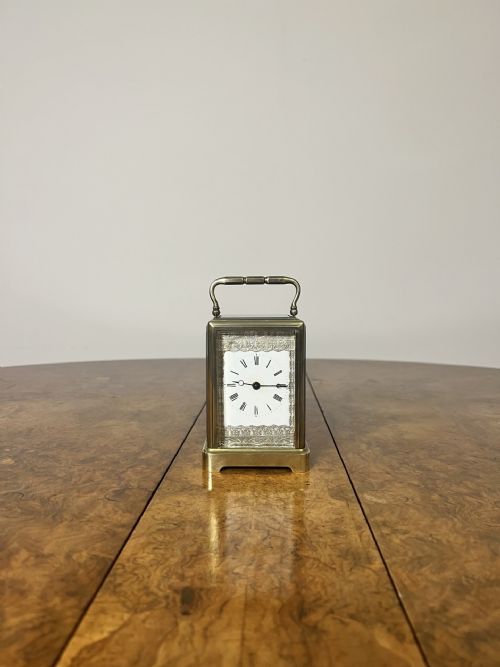
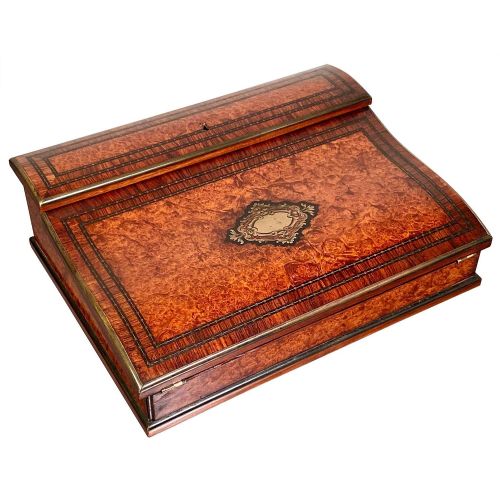
The most frequent examples found in this selection are mahogany and burr walnut writing slopes bound in brass, alongside various carriage clocks and campaign seating. Such pieces typically feature fitted interiors with compartments for ink, pens and paper.
Origins vary from English workshops to French makers and Anglo-Indian production, using woods like rosewood, coromandel and pollard oak. They offer compact storage that transforms into a functional writing surface.
Materials and construction methods
Cabinet makers built these pieces using dense hardwoods such as mahogany, rosewood, burr walnut and pollard oak, often reinforcing corners and edges with brass binding and inset brass corners to withstand travel. Surfaces frequently incorporate leather writing inserts and secret drawers concealed behind dummy partitions.
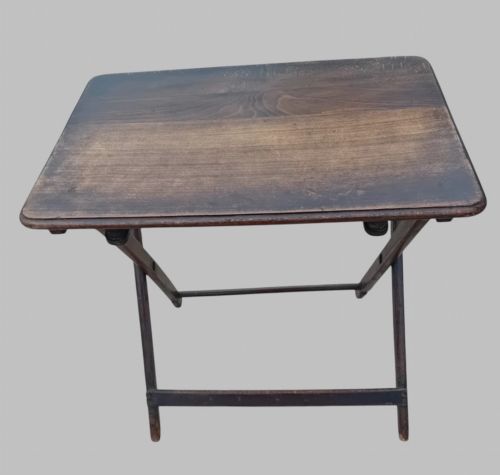
Metalwork played a structural and decorative role, utilising gilt brass, nickel plating and enamel across carriage clocks, travelling lamps and desk accessories. Folding items employed hinged joints and collapsible beech or teak frames to ensure easy transport.
Listings feature items from the Georgian, Victorian and Edwardian eras, constructed in mahogany, brass, rosewood and burr walnut.
Quality variations in portable desks
Quality rests in the precision of the cabinet work, particularly the tightness of the brass inlay, the seamless fit of internal secret drawers and the retention of original leather writing surfaces. Superior pieces utilise solid figured timbers like coromandel or pollard oak rather than simple veneers.
The complexity of the internal mechanism dictates distinction, separating standard folding tables from sophisticated metamorphic desks and signed travelling pieces. Original fitted glass inkwells and matching travel cases elevate an object above standard utilitarian examples.
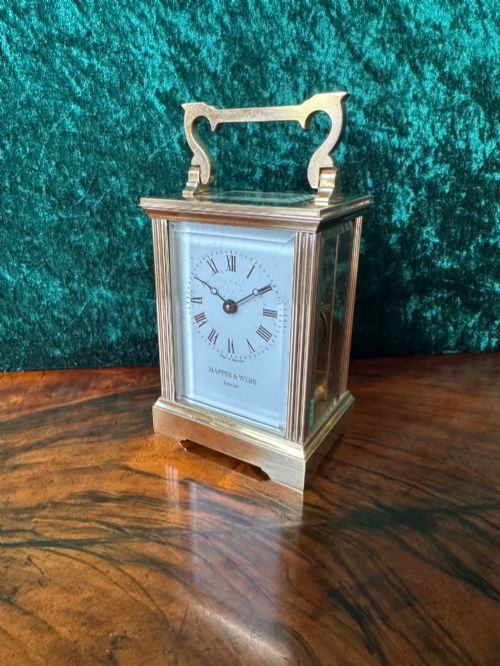
Henri Jacot·Mappin and Web·Pickford of London·Latshea and Sons·J C Vickery·Veritas Lamp Works·Paul Garnier
The Vintage Portable Desk Glossary
- Writing slope
- A portable box with a sloping hinged lid designed to hold stationery and provide an angled surface for writing. They often open flat to reveal pen trays and inkwell compartments.
- Campaign style
- Furniture constructed for military use or travel, characterised by folding frames, recessed brass handles and sectional designs that dismantle easily. This style prioritises durability and space efficiency.
- Carriage clock
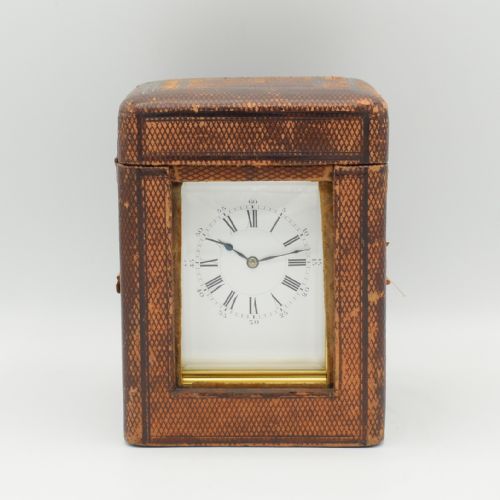
- A small, spring-driven clock designed for travellers, typically housed in a brass case with glass panels. They frequently include travel cases and originated in the nineteenth century.
- Divit Qalamdan
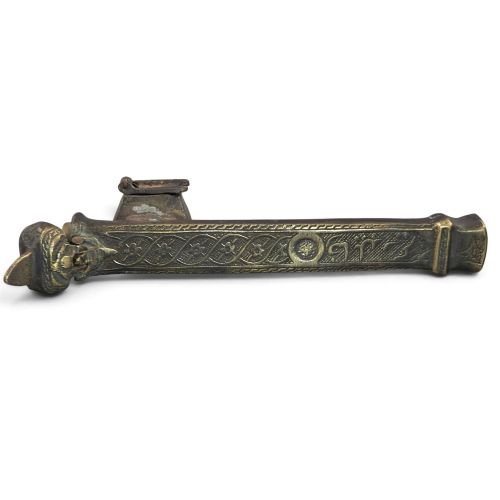
- A traditional travelling pen case and inkholder combined into a single portable unit, often fashioned from brass or metal. These items reflect Middle Eastern or Armenian craftsmanship.
- Metamorphic desk
- A piece of furniture engineered to transform from one form into another, such as a compact box expanding into a fully functional writing desk. These rely on intricate hidden hinges and sliding compartments.
Vintage Portable Desk: Frequently Asked Questions
What is a campaign desk?
A campaign desk is a portable writing station built for military officers on the move, featuring robust timbers and folding or sectional elements.
These pieces use brass corners and inset handles to protect the wood from knocks during transport.
How do you use a writing slope?
A writing slope opens along a central hinge to create an angled board for paper, with internal wells for ink and quills.
Lifting the writing surface reveals hidden compartments used for storing letters and personal documents.
What woods were used for portable desks?
Cabinet makers relied on dense, durable hardwoods including mahogany, rosewood, burr walnut, coromandel and pollard oak.
These timbers resisted warping and sustained the heavy knocks associated with nineteenth century travel.
How are secret drawers found?
Secret drawers are typically concealed behind removable partitions, dummy pen trays or false bottoms within the interior of writing boxes.
Accessing them usually requires sliding panels or lifting specific wooden stops inside the main compartment.