
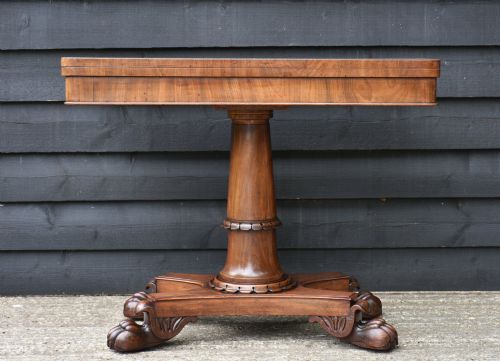
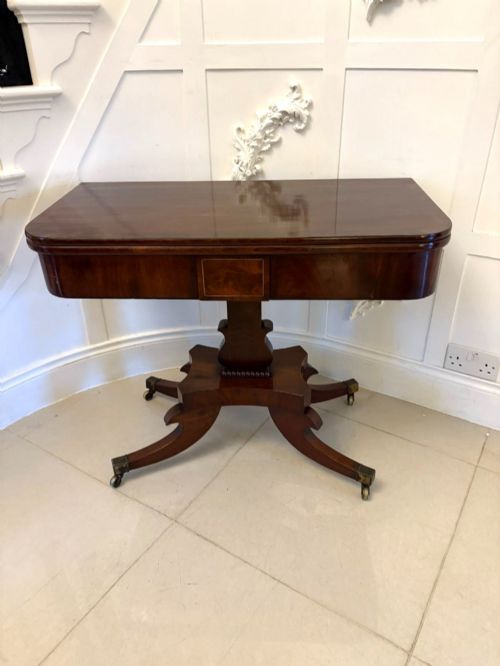
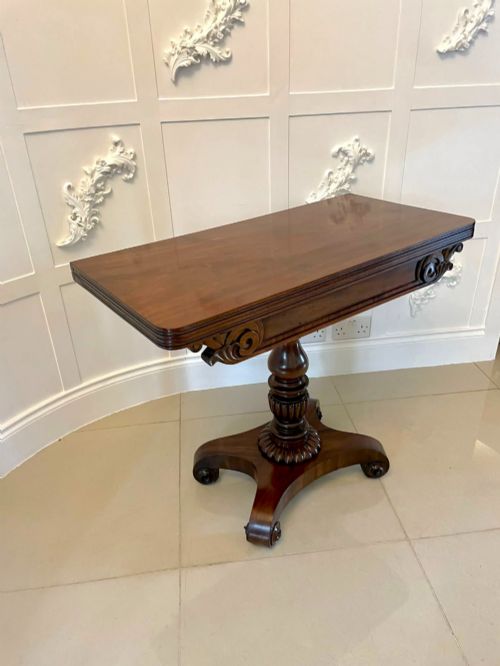
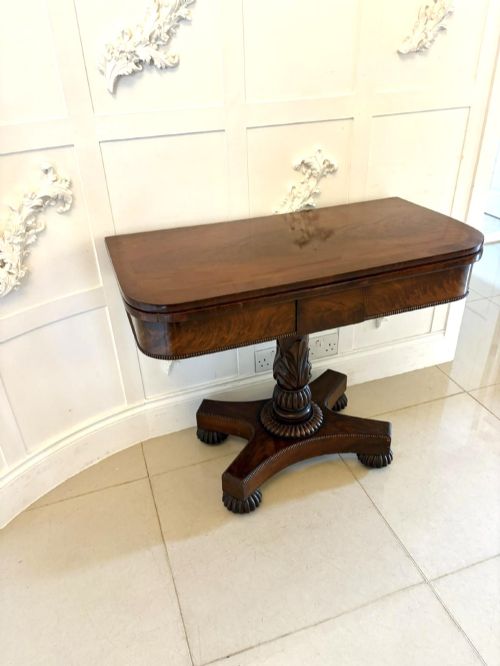


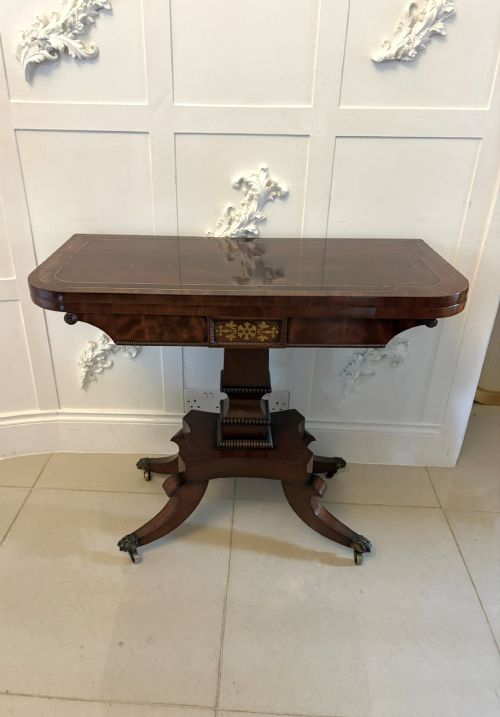
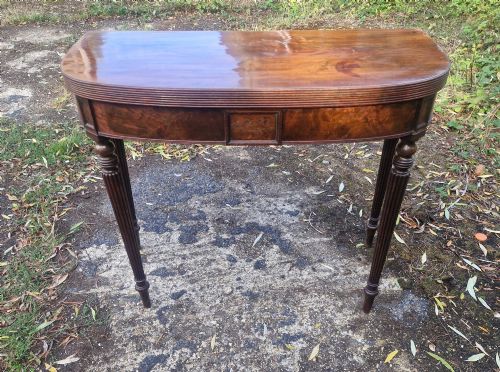
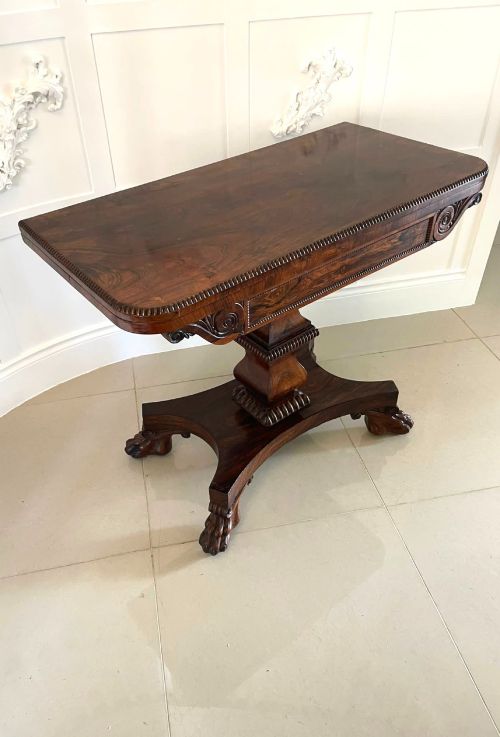
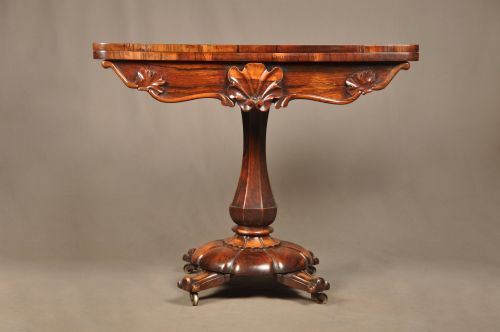
Regency Folding Table
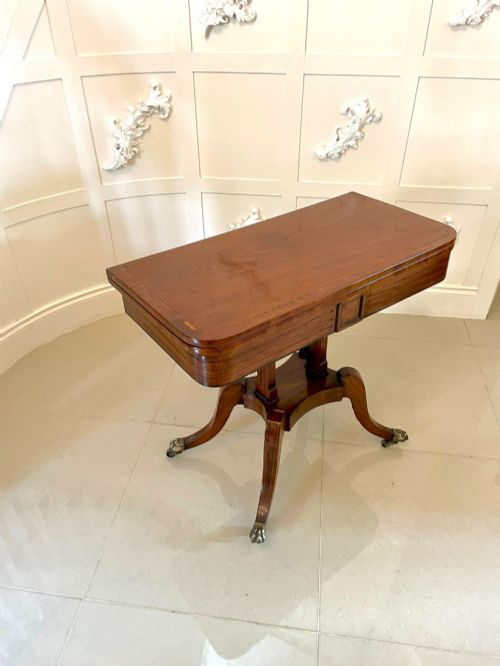
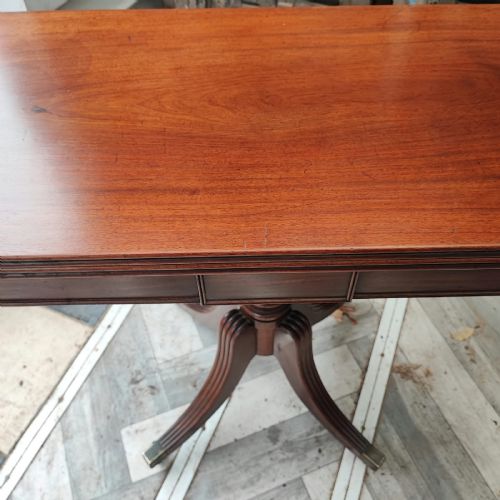
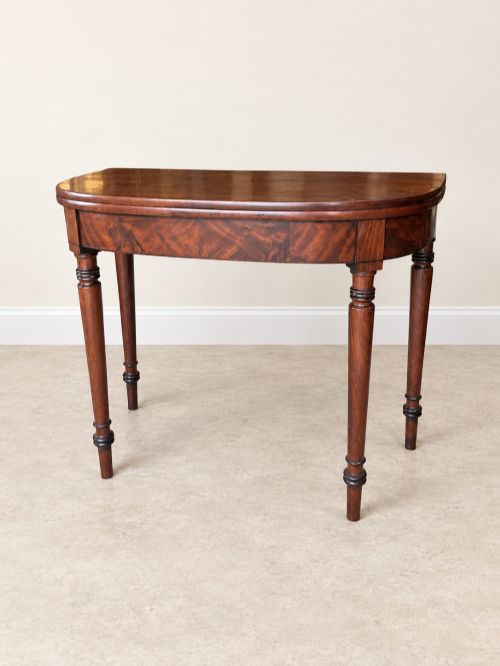
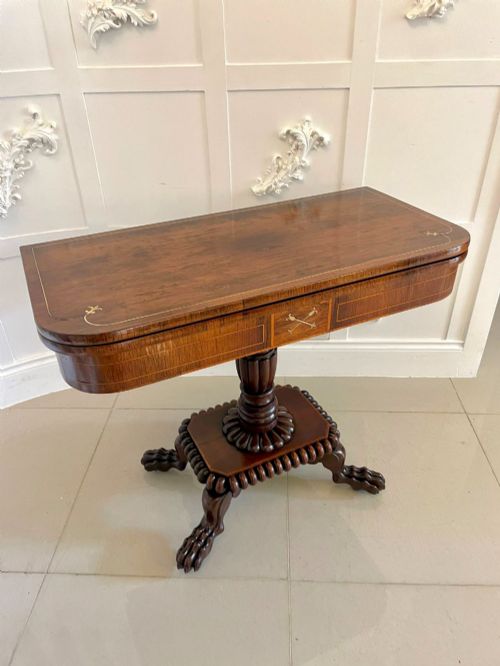
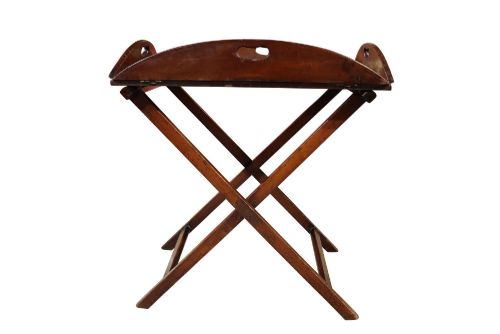
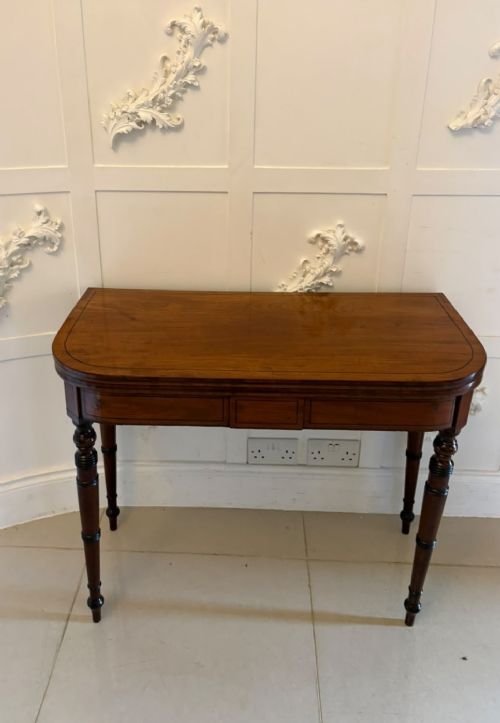
A regency folding table brings clever engineering and rich timber together, offering a versatile surface that transforms from a console to a card or tea table.
Regency Folding Table
When searching for a regency folding table, a buyer encounters a variety of adaptable surfaces designed for entertaining, dining, and display. The most common forms met on this page include card tables, tea tables, and games tables that open on hinges to reveal polished timber tops.
These pieces date predominantly from the 19th Century, spanning the Regency, George III, George IV, and William IV periods, alongside Late Georgian and 18th Century examples. Makers utilised clever folding mechanisms, concertina actions, and rotating tops to allow compact console pieces to double in surface area.
How They Were Made
Cabinet makers constructed the framework primarily using solid mahogany, rosewood, and occasional satinwood or burr yew, frequently applying flame mahogany veneers to visible surfaces. Richly grained timbers were chosen to catch the light when the leaves were unfolded.
Detailing often included contrasting boxwood stringing and inlaid brass lines set flush into the timber. Supports ranged from slender sabre legs and scroll pedestals to lyre forms and carved columns.
Some tables hid your losing hands in clever secret compartments beneath the baize.
What Varies in Quality
The standard of a regency folding table rests largely on the choice of timber and the precision of its veneers. Highly figured flame mahogany and richly contrasted rosewood command attention for their visual depth.
Construction intricacy also dictates worth, seen in smooth concertina actions that expand the frame evenly and crisp, deliberate brass inlay rather than simple painted decoration.
George Bullock·Gillows
The Regency Folding Table Glossary
- Card table
- A specialised folding table designed for evening gaming, often lined with baize or felt on the interior surface.
- Concertina action
- An expandable framework that pulls outward when a folding table opens, allowing the rear legs to move centrally and support the extended top.
- Crossbanding
- A narrow strip of veneer applied to the border of a table top so that the grain runs at right angles to the central panel.
- Demi-lune
- A half-moon shape characteristic of console and card tables designed to sit flush against a wall when folded closed.
- Stringing
- Inlay work consisting of very thin contrasting lines of wood, such as boxwood, embedded into the primary timber.
Regency Folding Table: Frequently Asked Questions
How do you open a card table?
Most folding tables utilise a rotating top that pivots on a central pivot pin before swinging open to reveal the hidden compartment or gaming surface below.
Concertina versions require pulling the rear rail outward, causing the hinged frame to expand and provide balanced support for the newly doubled leaf.
Where were these placed in rooms?
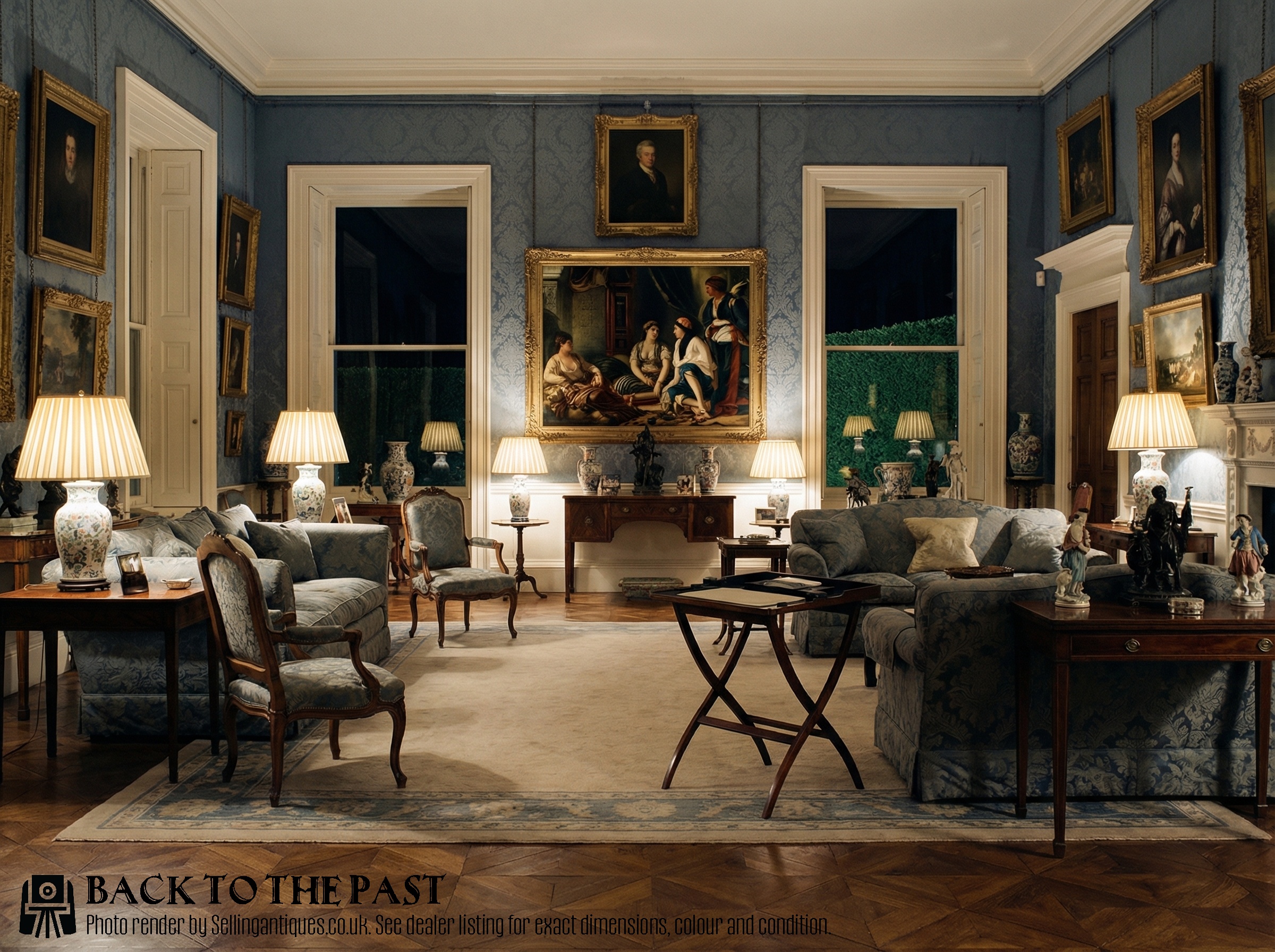
A regency folding table stood typically against a drawing room or parlour wall as a slender console when closed.
Hosts moved the piece into the centre of the room and unfolded the leaves whenever guests arrived for tea or card games.
What is the difference between tea and card tables?
Tea tables generally feature plain wooden interiors designed to hold porcelain and silver during evening refreshment.
Card tables usually contain lined interiors, sometimes with small corner wells intended to hold counters or coins during games.
How do you identify the period?
Period indicators include timber choices like rosewood and flame mahogany, alongside structural traits such as brass inlay and carved pedestal bases.
Earlier examples favour delicate tapering legs and stringing, while later William IV pieces lean towards heavier scroll pedestals and substantial mahogany.