





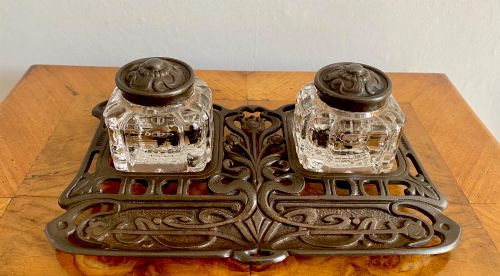


Art Nouveau Inkstand
An art nouveau inkstand brings organic fluidity and sinuous plant forms straight to the desk, offering a tactile piece of domestic design history.
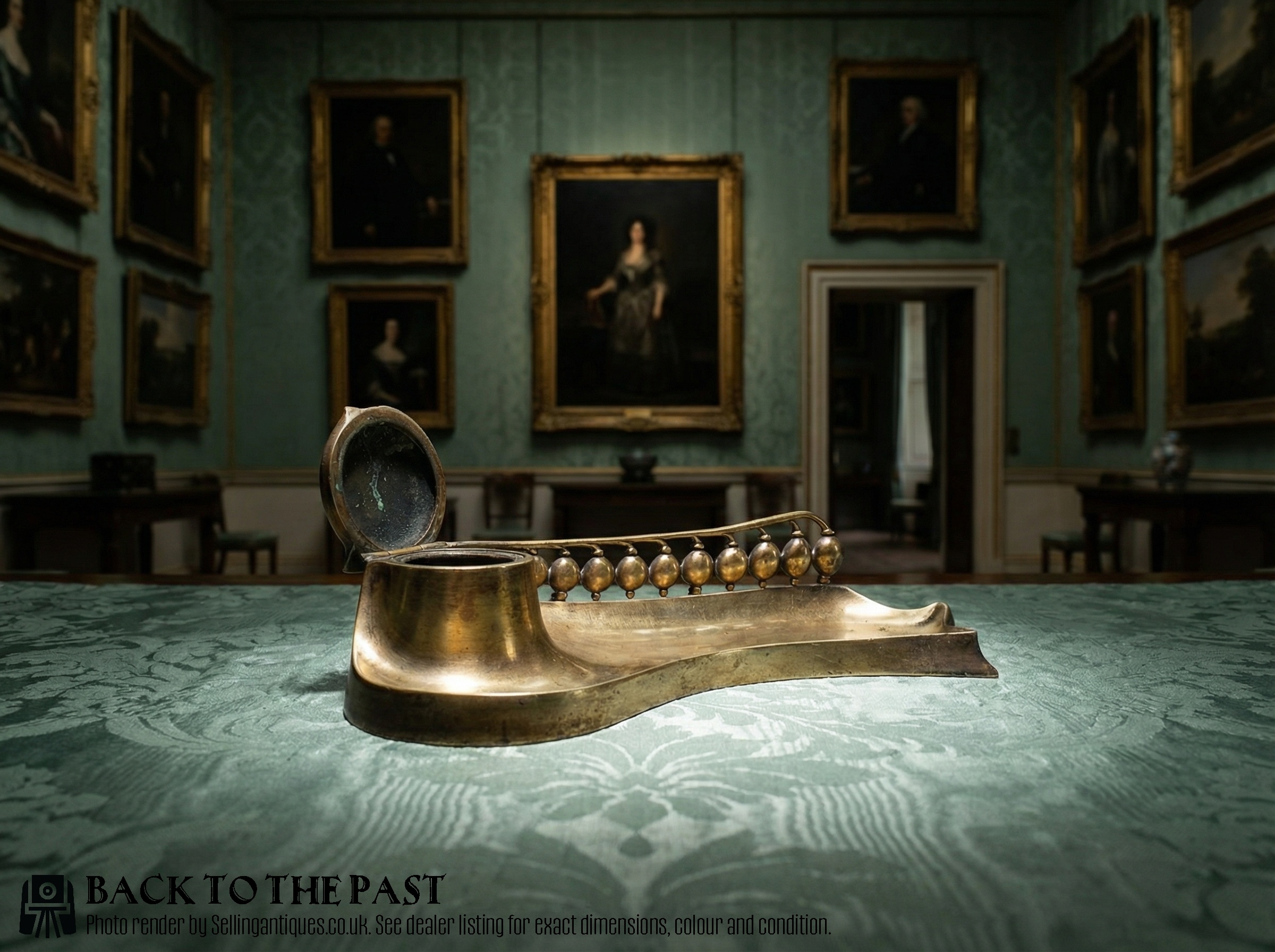
Art Nouveau Inkstand
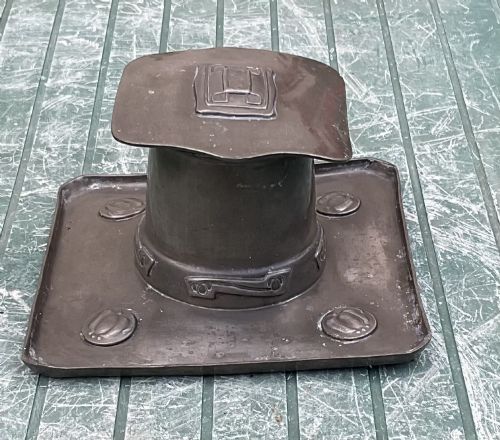
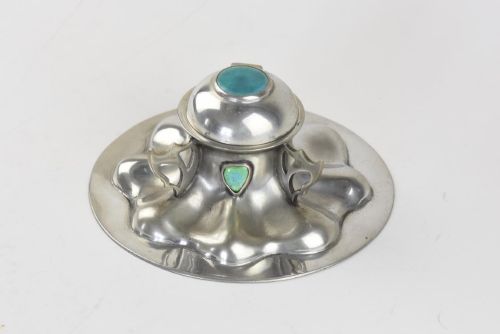
An art nouveau inkstand combines practical desk accessories with the swirling, plant-inspired motifs characteristic of the turn of the twentieth century. These pieces range from single glass wells mounted in metal to elaborate stands incorporating figural bronze and marble.
The versions most commonly met on this page date predominantly from around nineteen hundred, capturing the height of the style alongside related Arts and Crafts examples. Forms vary from simple pen trays with integrated inkwells to double inkstands fitted with original glass bottles.
Origins span across British, French, and German workshops, reflecting how widely the aesthetic was adopted across Europe. Makers utilised materials such as pewter, bronze, and iridescent glass to create functional objects that doubled as small sculptures.
Judging quality in design and execution
Quality rests heavily on the crispness of the casting and the integration of the materials within the design. Superior examples display carefully finished details in the metalwork and retain their original components, such as glass inserts and matching pen rests.
The reputation of the designer or metalworking house also elevates a piece, as seen in signed works by known bronze sculptors and recognised pewter manufacturers. The presence of specialised decorative elements, such as genuine iridescent glass or high-fired ceramic cabochons, separates standard production items from finer studio pieces.
Art Nouveau Inkstand Retail Price Guide 2026
Typical asking prices for art nouveau inkstand among the pieces listed under this phrase on Sellingantiques today, from the lower quarter to the upper quarter. They describe what is for sale here now, not the wider market.
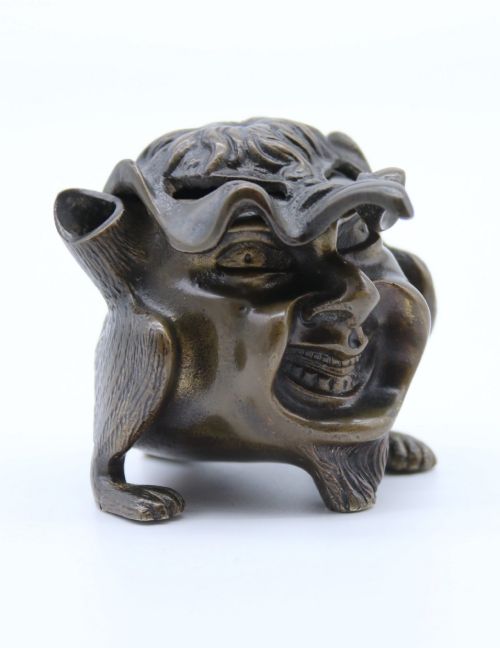
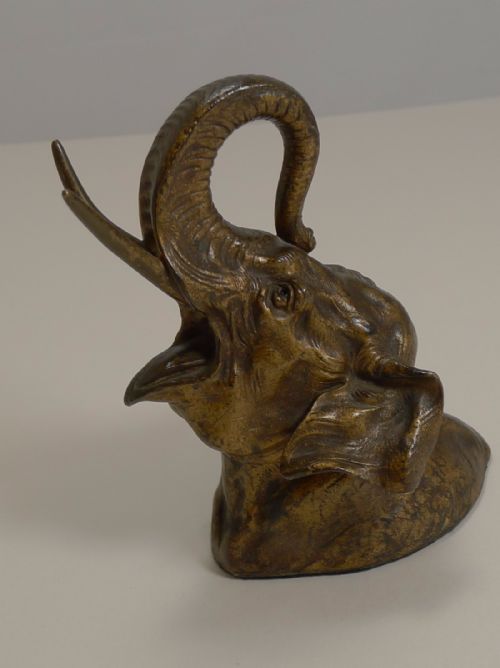
Several desk sets swap standard botanical motifs for sculptural fauna, including a French bronze elephant and a rather grumpy grotesque creature.
Archibald Knox Liberty Tudric·William Hutton·WMF·Albert Marionnet·Maurice Dufrene·Ernest Louis Adnin
The Art Nouveau Inkstand Glossary
- Cabochon
- A polished, convex gem or ceramic piece lacking facets, frequently set en cabochon into metalwork to add colour and texture. Ruskin cabochons are particularly characteristic of the Arts and Crafts movement.
- Tudric
- The trade name used by Liberty and Co. for their range of pewter wares produced during the early twentieth century. These pieces often featured distinct organic motifs associated with the period.
- Iridescent glass
- Glass treated with metallic salts while hot to produce a shimmering, rainbow-like sheen on the surface. Makers such as Loetz utilised this technique to catch the light on small desk vessels.
- Britannia metal
- A specific type of pewter alloy composed largely of tin, antimony, and copper, chosen for its silvery appearance and ease of casting into intricate shapes. It served as a common base for plated desk accessories.
- Pen tray
- A shallow, elongated recess or dish incorporated into a desk stand designed to hold writing implements when not in use. These often echoed the flowing botanical contours of the main inkstand base.
Art Nouveau Inkstand: Frequently Asked Questions
What is an art nouveau inkstand?
An art nouveau inkstand is a desk accessory designed during the late nineteenth and early twentieth centuries, featuring the characteristic flowing lines and natural motifs of the movement. These objects typically hold one or more inkwells alongside space for pens.
They combine utility with decorative sculpture, often utilising cast metals, glass, and marble to adorn writing desks of the period.
How were these inkstands used?
These pieces served as the centrepiece of a Victorian or Edwardian writing desk, holding the liquid ink required for daily correspondence with dip pens. The integrated trays kept pens at hand whilst protecting the desk surface from ink drips.
Beyond basic function, they demonstrated the owner's taste through artistic metalwork and decorative glass on prominent display in the home or office.
How do I care for antique pewter and bronze?
Preserving these materials requires gentle dusting with a soft, dry cloth to prevent the accumulation of dirt in intricate cast crevices. Avoid harsh chemical cleaners and abrasive polishes that can strip the historic surface patination.
For pieces with glass or ceramic components, remove the inserts carefully for cleaning when necessary, ensuring the metal housing remains dry to prevent corrosion.
Are original glass inserts important?
Original glass bottles and inserts contribute significantly to the completeness and integrity of a desk stand. Finding pieces that retain their matching glass components adds to their historical value.
Replacements are sometimes encountered, so examining the fit and age of the glass relative to the metal base helps determine originality.