



Art Nouveau Maiden Dish
An art nouveau maiden dish brings the fluid grace of the turn of the century directly to a desk or salon table.
Art Nouveau Maiden Dish
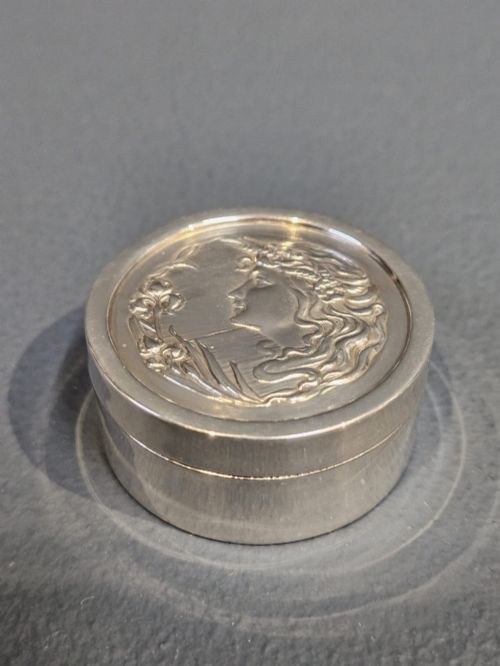
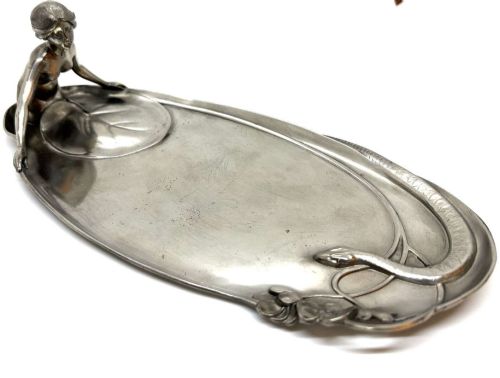
An art nouveau maiden dish centres on a female figure intertwined with natural motifs, functioning variously as a desk accessory, card tray, or bonbon dish. These decorative pieces emerge from the Victorian, Edwardian, and 19th Century periods, capturing the characteristic flowing lines of the style.
Buyers will encounter forms ranging from simple pen trays to more elaborate centrepieces and flower dishes. German workshops and European factories produced these figural works in metal and ceramic.
How they were made
Makers utilised metals such as pewter, Britannia metal, and silver plate, alongside glass, porcelain, and gilt. Pewter and Britannia metal castings allowed for deep, sweeping relief work depicting hair and drapery.
Ceramic examples like Royal Dux porcelain pieces combined moulded porcelain bodies with painted or gilded finishes. Metal vessels often integrated glass inserts or relied on patinated surfaces to accentuate the figural elements.
Art Nouveau Maiden Dish Retail Price Guide 2026
Typical asking prices for art nouveau maiden dish among the pieces listed under this phrase on Sellingantiques today, from the lower quarter to the upper quarter. They describe what is for sale here now, not the wider market.
Several pieces feature maidens leaning directly on oversized seashells, blending marine forms with botanical curves.
What varies in quality
The sophistication of the figural modelling determines the standing of a piece, separating dynamic, deeply undercut figures from stiff or generic castings. Crisp detailing in the maiden's hair and the surrounding flora indicates superior workmanship.
Material choice and surface preservation dictate the overall character. Intact gilding, original glass inserts, and well-maintained pewter patination elevate the distinction of the work.
WMF·Royal Dux
The Art Nouveau Maiden Dish Glossary
- Vide poche
- A small tray or bowl designed for emptying pockets of coins, keys, or cards. This French term translates literally to empty pocket.
- Britannia metal
- A tin-based alloy often used as a base for silver plating or finished directly as pewter. It provided a smooth surface suited to detailed casting.
- Bonbon dish
- A small decorative vessel intended for holding sweets or confections. These often feature low sides and handle configurations.
- Centrepiece
- A prominent decorative object placed in the middle of a table. In this context, they frequently incorporate figural maidens supporting bowls or flower holders.
- Relief
- Sculptural technique where the figures project from a background plane. Art nouveau pieces relied on high relief to create depth in botanical and hair designs.
Art Nouveau Maiden Dish: Frequently Asked Questions
What is an art nouveau maiden dish?
An art nouveau maiden dish is a decorative vessel featuring a female figure designed during the late nineteenth and early twentieth centuries. These objects served functional roles on desks and tables.
They combine sculpture and vessel design, often depicting stylized women with flowing hair amid plant forms.
How were these dishes used originally?
These dishes held small items like visiting cards, pens, bonbons, or coins in domestic settings. Desk accessories managed writing equipment, while larger versions acted as centrepieces.
They added artistic flair to Victorian and Edwardian parlours and writing rooms.
What materials are common in these pieces?
Makers most frequently used pewter, Britannia metal, and porcelain to form the figures and vessels. Silver plate, gilt, and glass also appear across the surviving inventory.
Each material lent a different texture and weight to the finished sculpture.
How do I identify the period of a dish?
Dating relies on stylistic markers from the Victorian, Edwardian, and early twentieth-century periods. Metal alloys, factory marks, and manufacturing techniques help narrow the production era.
Characteristics typical of the Art Nouveau movement point toward the 1900 to 1910 timeframe.