




German Jugendstil Metalwork
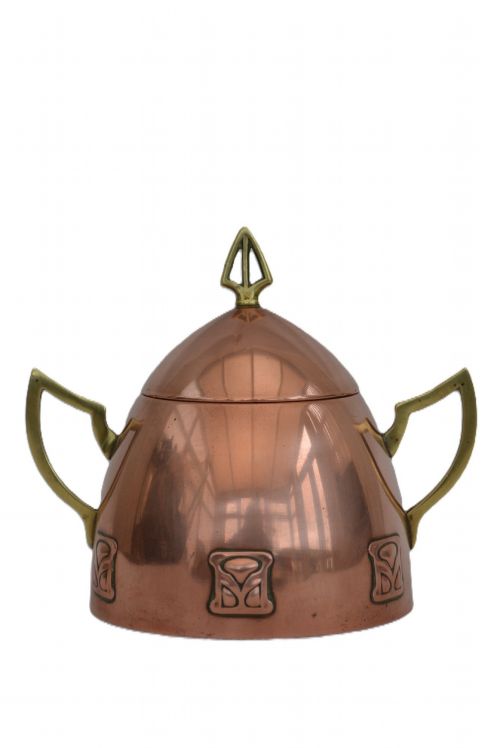
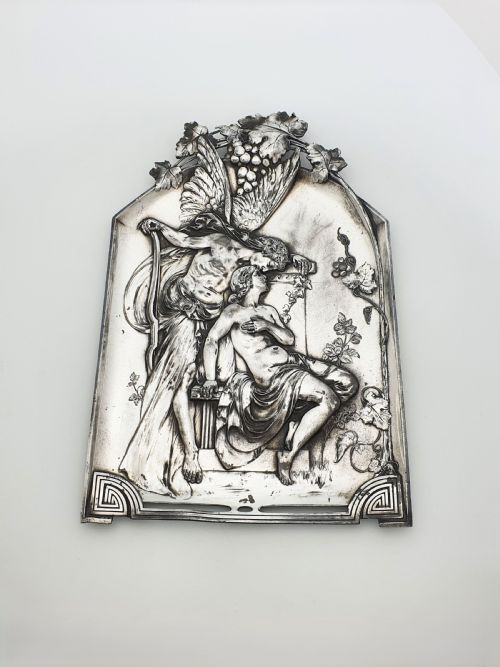
German Jugendstil metalwork brings organic line and floral motifs into domestic spaces, prized for inventive design.
German Jugendstil Metalwork
German Jugendstil metalwork encompasses domestic decorative objects created during the late nineteenth and early twentieth centuries, reflecting continental Art Nouveau and Secessionist movements. When exploring German Jugendstil metalwork, buyers frequently encounter serving vessels, desk accessories, and tabletop items produced by prominent firms.
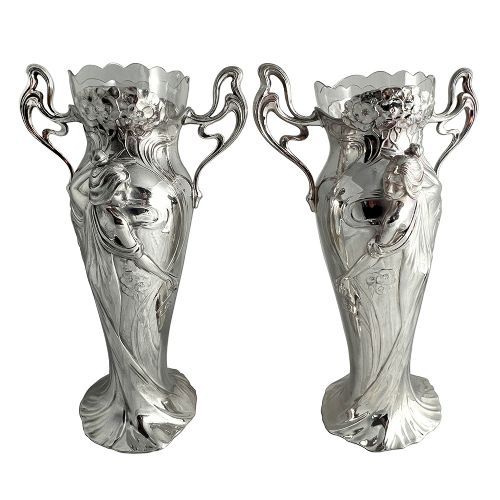
The objects span varied forms such as vases, wall plaques, candlesticks, and centrepieces, often combining metal with coloured glass inserts. Pieces dating from the nineteen hundreds dominate the selection, showing distinct naturalistic curves and stylised floral motifs.
Makers utilised base metals alongside precious plating, shaping everyday functional items into sculptural art. Surviving examples demonstrate the stylistic shift away from historical revivalism towards modern design principles.
Manufacturing and Materials
Craftsmen shaped silvered pewter, copper, and Britannia metal through casting and hand-finishing, achieving tactile surfaces that catch the light. Silver plating and gilding were frequently applied over base metals to provide the lustre of solid silver at a commercial scale.
Glass components, including cameo glass and green glass liners, were blown and fitted directly into pierced metal mounts. These mixed-media constructions required skilled collaboration between metalworkers and glassblowers to secure delicate glass within organic pewter frames.
Several vases and decanters incorporate stylised maiden figures gazing out from woven pewter foliage.
Factors of Quality
Superior examples distinguish themselves through the crispness of the chased or cast detail, particularly in figural elements like maiden motifs. The depth of the silver or gilt surface layer and the preservation of original patination significantly influence the aesthetic impact of a piece.
The integration between glass inserts and metal frames reveals the standard of manufacture, where exact fits and robust mounts indicate higher workshop standards. Original components remaining together without replacement parts elevate the integrity of the object.
WMF·Orivit·Hugo Berger Goberg
The German Jugendstil Metalwork Glossary
- Jugendstil
- The German artistic movement of the late nineteenth and early twentieth centuries, named after the Munich magazine Die Jugend. It translates as youth style and parallels French Art Nouveau.
- Secessionist
- An aesthetic associated with avant-garde artists who seceded from official academies, favouring geometric structure alongside organic curves. This style appears frequently in metalwork from central Europe.
- Silvered pewter
- A tin-based alloy coated with a thin layer of silver, widely utilised for domestic decorative objects. It offered a durable alternative to solid silver while retaining a bright metallic finish.
- Britannia metal
- A specific form of tin-based pewter alloy known for its silvery appearance and smooth surface. Manufacturers used it extensively for hollowware and tableware before plating.
- Tazza
- An ornamental shallow cup or bowl mounted on a stem and foot, used for display or serving fruit and sweets. These elevated vessels often form the centrepiece of a table setting.
German Jugendstil Metalwork: Frequently Asked Questions
What is Jugendstil metalwork?
Jugendstil metalwork refers to decorative household objects produced in Germany and Austria around nineteen hundred, embodying the continental Art Nouveau aesthetic.
These items draw inspiration from natural forms, featuring whipped lines, plant motifs, and stylised female figures applied to utilitarian objects.
What materials were commonly used?
Manufacturers primarily utilised pewter, copper, brass, and Britannia metal as structural bases, frequently applying silver or gold plating over the top.
Many decorative vessels also incorporate blown glass elements, including cameo glass or coloured glass liners fitted into pierced metal frames.
How can I date these pieces?
Dating relies on stylistic markers associated with Art Nouveau and Secessionist movements, combined with manufacturer marks stamped into the base.
The majority of accessible domestic pieces date from the turn of the twentieth century, bridging the late Victorian era and the First World War.