
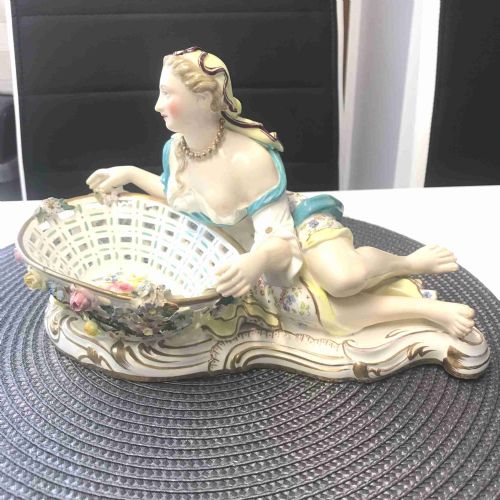


Antique Maiden Bowl
An antique maiden bowl brings figurative sculpture and functional vessel together, offering a centrepiece that captures early twentieth-century design.
Antique Maiden Bowl
When you search for an antique maiden bowl, you encounter sculptural centrepieces, sweetmeat dishes, and decorative bowls that incorporate female figures into their design. The pieces available span from the eighteenth century through the Art Nouveau and Art Deco periods, drawing on European porcelain manufactories and metalwork studios.
The most common examples on this page are Art Nouveau centrepieces and flower dishes featuring figurative elements alongside glass inserts or metal baskets. You will also find porcelain figurines with baskets and chryselephantine sculptures depicting maidens, produced during the early twentieth century by firms such as Royal Dux and WMF.
Forms range from large shell centrepieces and double fruit stands to figural flower baskets and decorative sculptures. The materials vary widely from soft porcelain and hard-paste porcelain to pewter, silver plate, ruby glass, and ivory combined with bronze.
How they were made
Makers utilised moulded hard-paste porcelain and bisque porcelain, often adding hand-painted details and gilding. Metalwork components such as pewter and silver plate were shaped using casting and electroplating techniques to achieve flowing organic lines.
Glass elements, particularly ruby glass inserts, were mouth-blown and fitted directly into pierced metal frames. Chryselephantine pieces combined carved ivory for the figures with cold-painted bronze for the garments and base.
Materials represented across these items include porcelain, pewter, silver plate, glass, bisque porcelain, hard-paste porcelain, enamel, and gold leaf.
What varies in quality
For metal and glass combinations, quality is evident in the weight of the pewter frame and the clarity of the coloured glass insert. Sculptures achieve higher standing when the joinery between different media, such as ivory and bronze, remains flush and secure.
Ferdinand Preiss·Royal Dux·WMF
The Antique Maiden Bowl Glossary
- Chryselephantine
- A sculpture technique combining carved ivory with other materials such as bronze or gold leaf. This method was widely utilised by Art Deco sculptors to render skin tones against metallic drapery.
- Sweetmeat dish
- A small ornamental vessel designed for serving confectionery or dried fruits during formal dining. These dishes often incorporate stands or figural supports.
- Hard-paste porcelain
- A dense ceramic composition fired at very high temperatures, producing a durable body that resists scratching. It forms the base of many eighteenth-century and later European figures.
- Centrepiece
- A large decorative object placed in the middle of a table for display. In these listings, they frequently combine figural sculpture with integrated bowls or flower baskets.
Antique Maiden Bowl: Frequently Asked Questions
How were these centrepieces used?
These pieces functioned primarily as ornamental table centrepieces or flower dishes during formal meals and gatherings. They held fruit, flowers, or confectionery while serving as sculptural conversation pieces.
Over time, many transitioned from dining rooms to display cabinets and drawing rooms as decorative sculptures in their own right.
How do I distinguish Art Nouveau from Art Deco pieces?
Art Nouveau items feature asymmetrical, flowing lines inspired by natural forms such as whiplash curves, plants, and female figures with cascading hair. You will see these traits in the WMF pewter stands and Royal Dux porcelain.
Art Deco works, by contrast, display geometric symmetry, stylised drapery, and streamlined forms, as seen in the chryselephantine sculptures by Ferdinand Preiss.
Where should I place a centrepiece bowl?
These bowls require a stable, central surface with adequate clearance to showcase their three-dimensional figures and glass or metalwork from multiple angles. Dining tables, sideboards, and large console tables suit their scale best.
Avoid placing them in direct, strong sunlight if the piece incorporates coloured glass or delicate painted porcelain surfaces.
What materials are most common?
Porcelain, pewter, and glass dominate the selection, often appearing together in single centrepieces. You will find hard-paste porcelain, bisque porcelain, silver plate, and ruby glass.
Early twentieth-century works also introduce mixed media combinations like ivory and bronze in chryselephantine sculptures.