




Silver Glass Centrepiece
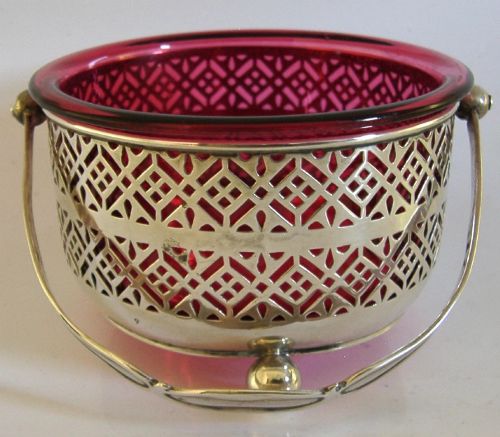
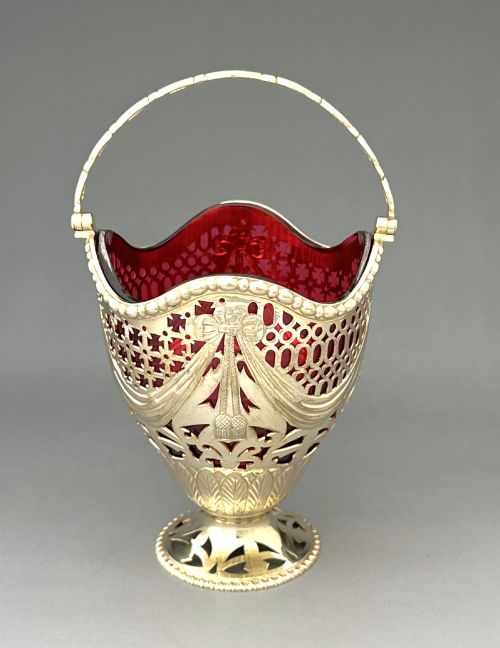
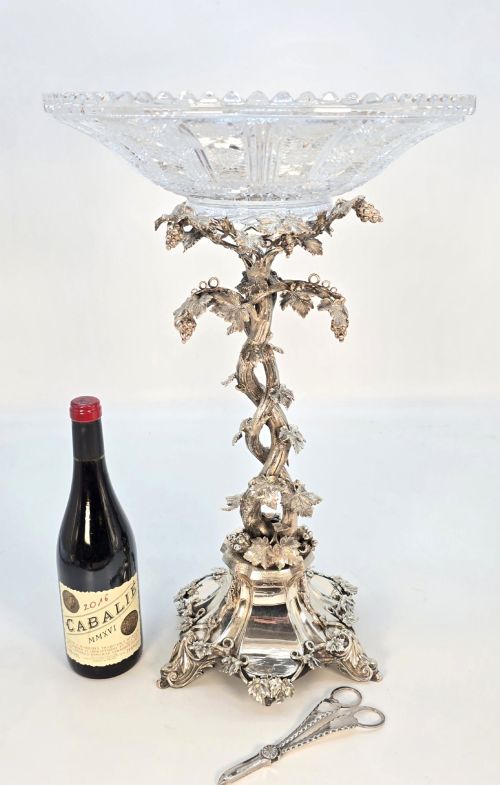
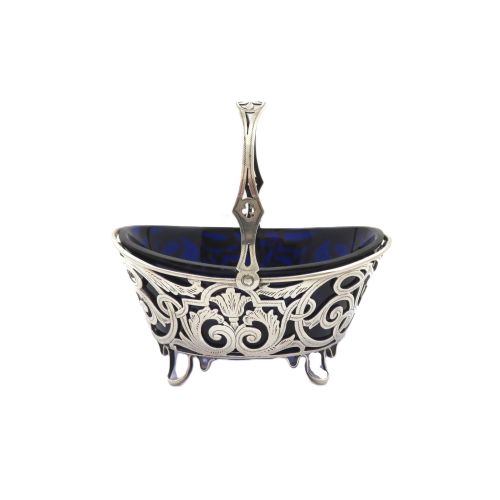
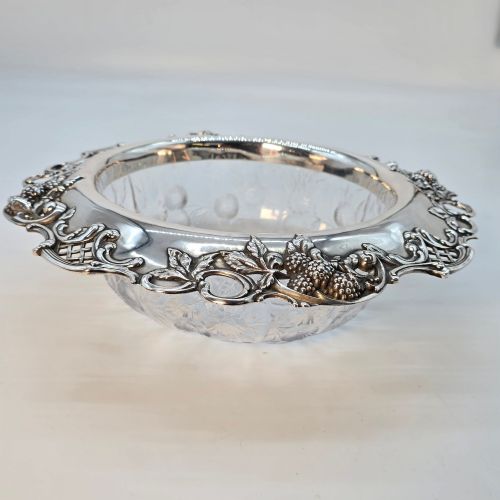
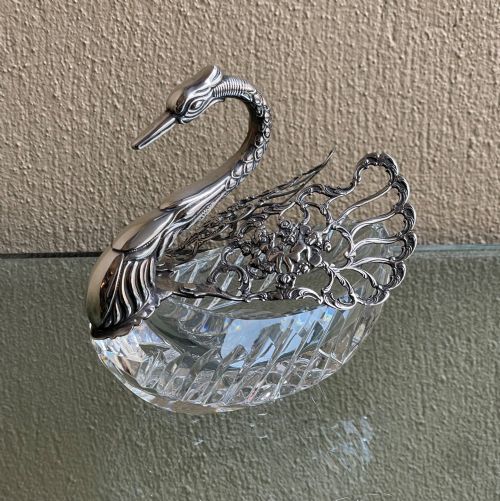
When setting a dining table, a silver glass centrepiece brings together polished metal and coloured glass to hold fruit, flowers or sweetmeats.
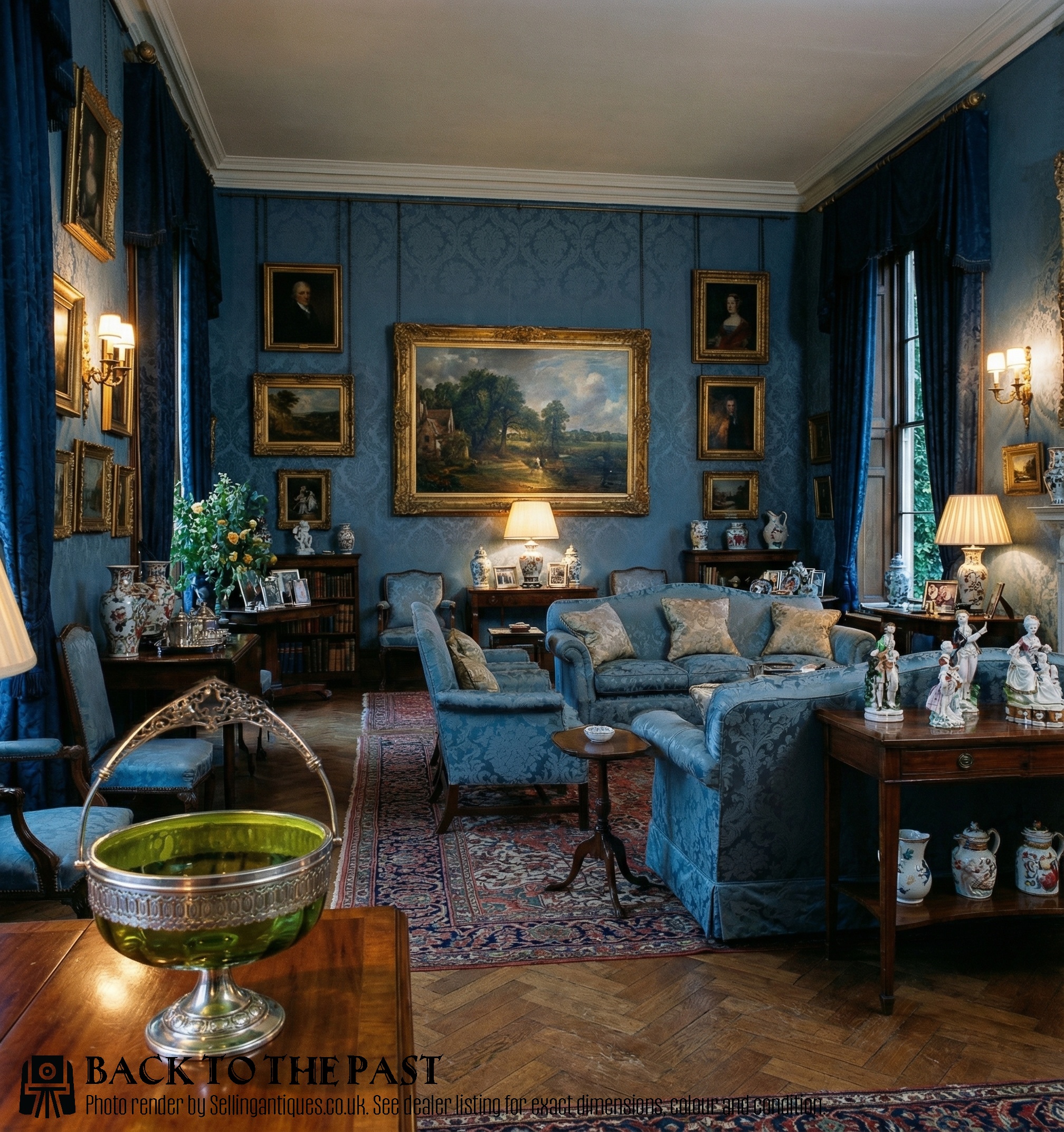
Silver Glass Centrepiece
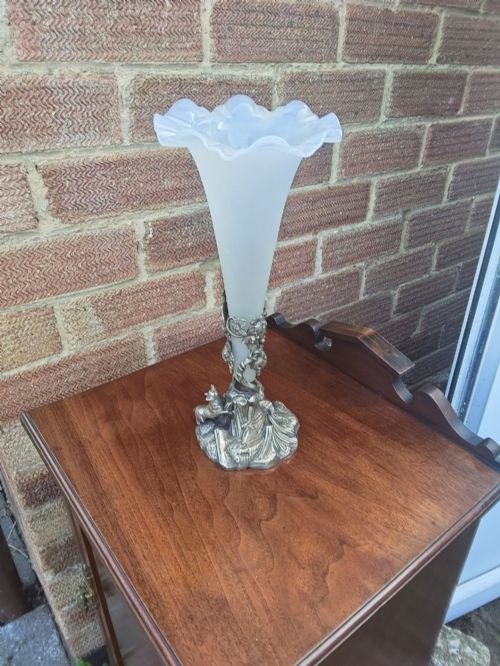
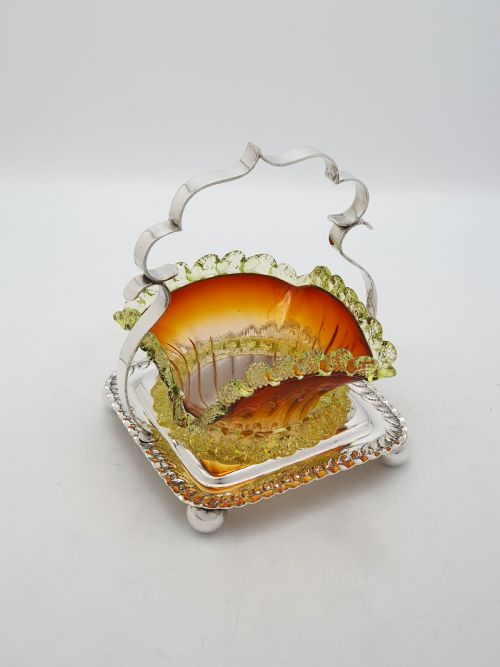
The form appears most frequently in Victorian and Edwardian examples featuring coloured or cut liners, alongside Art Nouveau stands holding vaseline glass bowls.
Beyond formal centrepieces, the category encompasses related dining wares such as epergnes, cruet sets, sugar baskets and decorative bowls sharing the same dual-material construction.
Materials and construction
Makers utilised silver plate, sterling silver, or white metal for the structural frames and mounts, frequently shaping them through piercing, casting, or repoussé work.
The glass elements were produced using techniques such as heavy cutting, moulding, or blowing, yielding distinctive coloured varieties including cranberry, cobalt, and vaseline glass.
Listings feature items spanning the eighteenth century through the twentieth century, encompassing Georgian, Victorian, Edwardian, and Art Deco periods.
Factors of quality
The standard of a piece depends on the weight and crispness of the metal mount, particularly how cleanly pierced or cast details are rendered.
Quality also rests on the integration between the metal frame and its glass liner, where a precise fit and depth of colour in the glass elevate the work.
Tiffany and Co·Loetz Witwe·George Fox·Walker and Hall·Viners·Elkington and Co·Henry Wilkinson and Co·Deykin and Sons·Vincenz Czokally
The Silver Glass Centrepiece Glossary
- Epergne
- A large table centrepiece featuring a central dish surrounded by multiple branching holders for fruit, sweetmeats or flowers. These multi-tiered structures often combine cut glass horns with silver plated frames.
- Vaseline glass
- A type of yellow or greenish glass containing uranium dioxide, which glows under ultraviolet light. It appears frequently in Art Nouveau tablewares.
- Silver plate
- A base metal, such as Britannia metal or copper, coated with a thin layer of silver. Many Victorian dining items utilise this technique to achieve the look of solid silver at a lower cost.
- Cranberry glass
- A rich pinkish-red glass produced by adding gold chloride to the molten batch. It is commonly seen in late nineteenth century baskets and liners.
- Cruet set
- A set of glass bottles or cruets mounted in a metal frame for holding condiments at the table. These frames often match the design style of larger centrepieces.
Silver Glass Centrepiece: Frequently Asked Questions
What is a silver glass centrepiece used for?
These items served as decorative focal points on dining tables during formal meals, holding arrangements of fruit, flowers, or small sweetmeats for guests.
Their tiered or branched designs allowed hosts to present multiple items while displaying the contrast between polished metal and coloured glass.
How do I clean a silver glass centrepiece?
The glass liner should be removed from the metal frame and washed separately in warm soapy water using a soft cloth to protect the surface.
Silver plated or sterling silver mounts require a gentle metal polish applied with care to avoid marking any adjacent glass or enamel.
How do I identify the period of a piece?
Stylistic clues such as floral Art Nouveau whiplash curves or geometric Art Deco lines often point directly to the decade of manufacture.
Maker marks, hallmarks, and registration numbers stamped onto the metal base provide the most precise indication of origin and date.
Can I use these pieces for daily dining?
Many examples remain sturdy enough for regular use, provided they receive careful handling and gentle hand washing rather than machine cleaning.
Items featuring delicate coloured glass liners or intricate silver piercing benefit from being reserved for special occasions to prevent accidental damage.